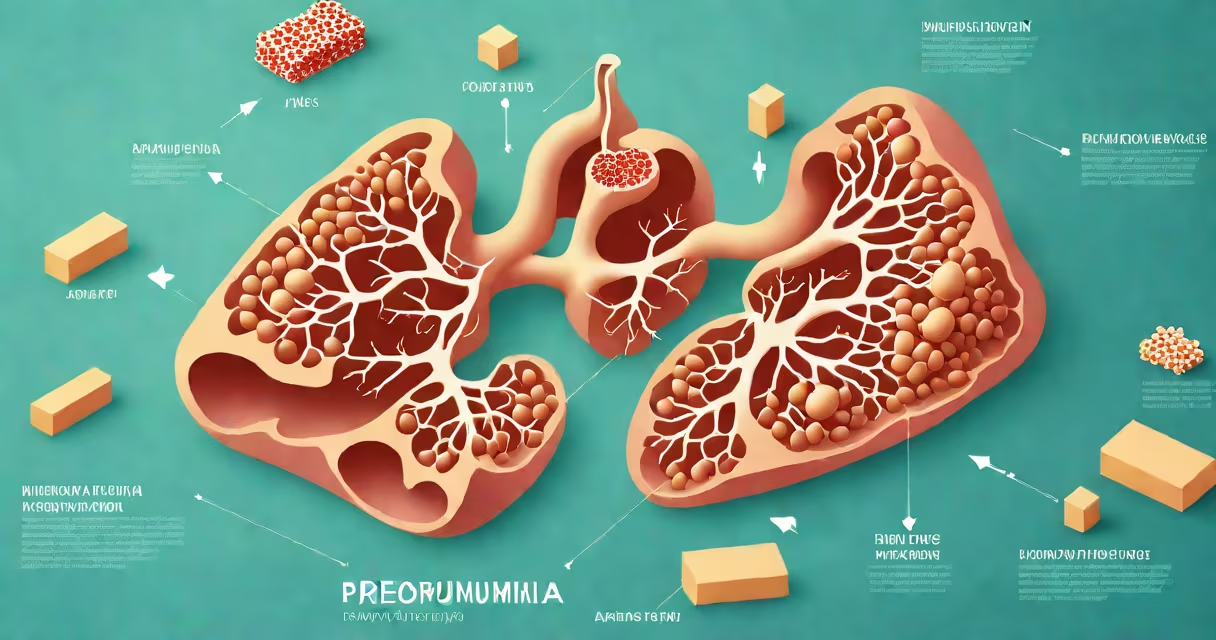
Pneumonia is a lung infection that causes inflammation in the air sacs, filling them with fluid or pus and making breathing difficult. This serious respiratory condition can range -threatening.
When bacteria, viruses, or fungi infect the lungs, the body's immune response triggers inflammation. The air sacs (alveoli) fill with fluid, reducing oxygen intake. Common pathogens include Streptococcus pneumoniae (bacterial) and influenza viruses (viral). Risk factors include age, chronic illnesses, and weakened immunity.
| Type | Cause | Common Sources |
|---|---|---|
| Bacterial | Streptococcus pneumoniae | Community settings, hospitals |
| Viral | Influenza, RSV | Seasonal flu outbreaks |
| Fungal | Histoplasma capsulatum | Bird droppings, soil |
| Aspiration | Food/liquid inhalation | Choking incidents |
Many confuse pneumonia with bronchitis (airway inflammation) or the common cold. Unlike colds, pneumonia attacks lung tissue directly. A 2020 study in Respiratory Medicine found 30% of patients misdiagnosed bronchitis as pneumonia initially.
During flu season, a 70-year-old patient developed fever, chills, and difficulty breathing. Chest X-rays showed fluid-filled alveoli. Doctors prescribed antibiotics for bacterial pneumonia, confirming the diagnosis via sputum culture. Recovery took 10 days with treatment.
Pneumonia means serious lung infection requiring medical attention. Recognizing symptoms early and understanding its types helps prevent complications.