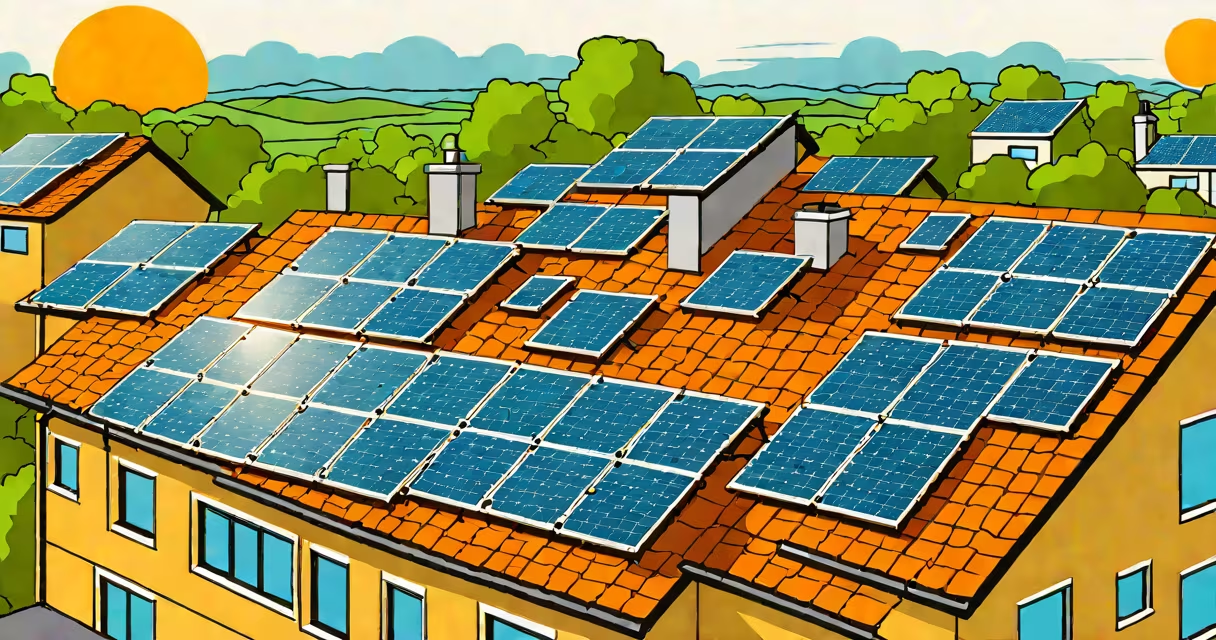
PV stands for "photovoltaic," which describes technology that converts sunlight directly into electricity using semiconducting materials. This process occurs within solar panels, which contain photovoltaic cells.
Photovoltaic cells are made of semiconductor materials, typically silicon. When sunlight hits these cells, it excites electrons, creating an electric current. This direct current (DC) is then converted to alternating current (AC) by an inverter, making it usable for homes and businesses.
Photovoltaic systems consist of several key components:
| Type | Description | Common Use |
|---|---|---|
| Grid-Tied Systems | Connected to the local utility grid, allowing excess electricity to be fed back into the grid. | Residential and commercial properties connected to the grid. |
| Off-Grid Systems | Operate independently of the utility grid, often using battery storage. | Remote locations or areas with unreliable grid access. |
| Hybrid Systems | Combine grid-tied and off-grid features, offering flexibility and reliability. | Properties with high energy demands and unreliable grid access. |
Many people confuse photovoltaic systems with other solar technologies, such as concentrated solar power (CSP). Unlike CSP, which uses mirrors to concentrate sunlight and generate heat, photovoltaic systems convert sunlight directly into electricity without moving parts.
Another misconception is that photovoltaic systems require direct sunlight to function. While they perform best under direct sunlight, they can still generate electricity on cloudy days, though at reduced efficiency.
A typical residential solar installation includes a set of photovoltaic panels mounted on the roof, an inverter to convert the electricity, and sometimes a battery storage system. For instance, a 5 kW system can produce enough electricity to power a medium-sized home, reducing or even eliminating the need for grid electricity.
During my visit to a solar farm in California, I observed how photovoltaic panels covered vast areas, generating significant amounts of electricity. The system was connected to the grid, allowing excess electricity to be sold back to the utility company, demonstrating the practical benefits of photovoltaic technology.
Photovoltaic technology is important for the transition to renewable energy. According to the International Energy Agency, solar power is one of the fastest-growing energy sources worldwide, with photovoltaic systems contributing to this growth. By harnessing the power of the sun, photovoltaic systems reduce reliance on fossil fuels, lower carbon emissions, and provide a sustainable energy solution.