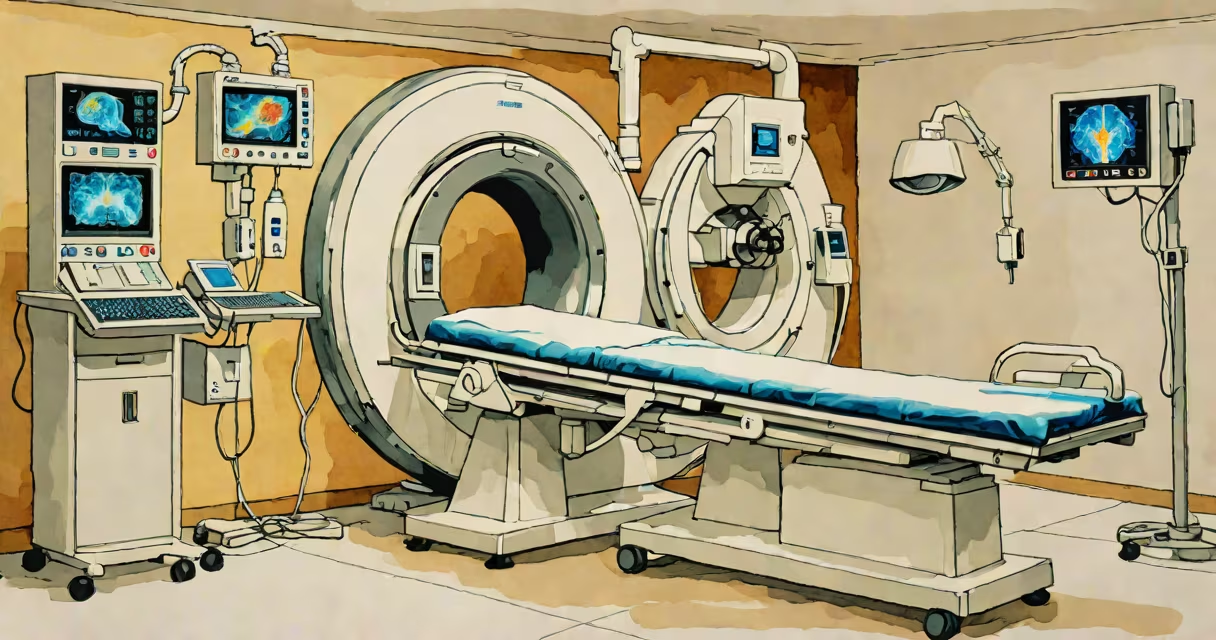
Radiology is the medical field that uses imaging technologies to diagnose and treat diseases. It includes techniques like X-rays, MRIs, and ultrasounds to create images of the body's interior.
Radiologists use different types of energy-like electromagnetic waves or sound-to create images of organs, tissues, and bones. These images help doctors detect and monitor medical conditions without invasive procedures.
For example, an X-ray passes radiation through the body, capturing an image on film. Dense structures like bones appear white, while softer tissues show as shades of gray. This helps identify fractures, infections, or tumors.
Radiology has several branches, each with specific tools and purposes:
| Type | Description | Common Uses |
|---|---|---|
| Diagnostic Radiology | Uses imaging to diagnose diseases. | X-rays, MRIs, CT scans. |
| Interventional Radiology | Uses imaging to guide minimally invasive procedures. | Treating blood clots, tumors, or blocked arteries. |
| Nuclear Medicine | Uses radioactive substances to diagnose and treat conditions. | Thyroid issues, heart disease, cancer. |
| Radiation Oncology | Uses radiation to treat cancer. | Targeted radiation therapy. |
Radiology is essential in hospitals, clinics, and emergency rooms. It helps diagnose conditions like broken bones, heart disease, and cancer. For instance, a CT scan provides detailed cross-sectional images of internal organs, helping doctors assess trauma or plan surgeries.
Radiology also plays a key role in preventive care. Screening tools like mammograms detect early signs of breast cancer, while colonoscopies use imaging to find polyps before they become cancerous.
Many people confuse radiology with nuclear medicine or radiation therapy. While all involve radiation, they serve different purposes. Diagnostic radiology focuses on imaging, while radiation therapy treats cancer using high-dose radiation.
Another myth is that all imaging tests are unsafe due to radiation exposure. Techniques like ultrasound and MRI avoid radiation entirely, making them safe for pregnant women and children.
I once witnessed a radiologist use an ultrasound to guide a biopsy in real time. The precision of the imaging allowed the doctor to extract a tissue sample without surgery, reducing patient risk and recovery time.
Radiology continues to evolve with advancements like AI-assisted diagnostics and 3D imaging. These innovations improve accuracy and efficiency, making radiology a key part of modern medicine.