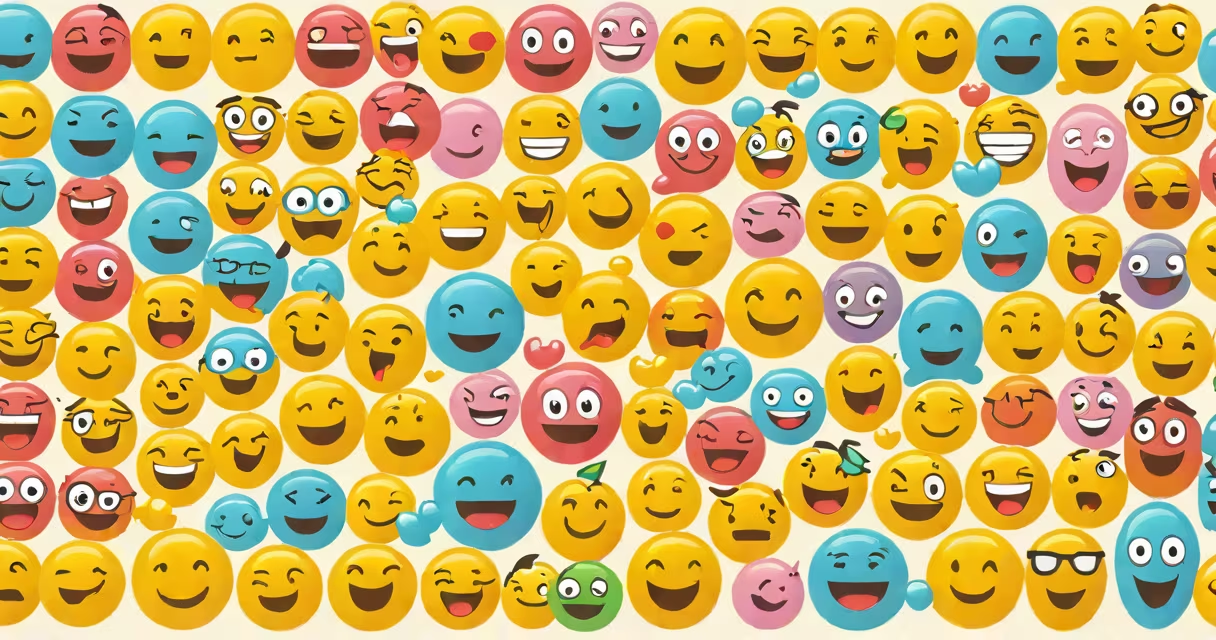
Emoji faces represent emotions and expressions using stylized pictograms. These small images convey feelings like happiness, sadness, anger, or surprise through exaggerated facial features.
Each emoji face combines specific elements to create recognizable expressions. Eyebrows, eyes, mouths, and sometimes additional details like tears or sweat drops modify their meanings. For example, the 😊 Smiling Face With Smiling Eyes emoji uses raised cheeks and closed eyes to show genuine happiness.
| Category | Examples | Common Uses |
|---|---|---|
| Happy Faces | 😀, 😂, 😊, 😍 | Expressing joy, laughter, or affection |
| Sad Faces | 😞, 😢, 😭, 😔 | Showing sorrow, disappointment, or frustration |
| Angry Faces | 😠, 😡, 🤬, 😤 | Conveying anger, irritation, or annoyance |
| Surprised Faces | 😲, 😳, 😮, 😜 | Indicating shock, surprise, or playfulness |
| Neutral/Thinking Faces | 😐, 😑, 😒, 🤔 | Showing indifference, skepticism, or contemplation |
People use emoji faces in digital communication to add emotional context to text messages, social media posts, and emails. They help clarify tone and intent, which can be ambiguous in written language. For instance, adding a 😊 to "I'll be there soon" softens the message and makes it sound friendly.
Emoji faces are particularly useful in casual conversations, where they can replace entire phrases. A single 😂 can communicate laughter, while 😭 can express deep sadness. They also help bridge language barriers, as emotions are universally understood regardless of linguistic differences.
Many people confuse similar-looking emoji faces, leading to misunderstandings. The 😅 Nervous Face With Sweat emoji, for example, often gets misread as laughing instead of showing nervousness or embarrassment. Similarly, the 😏 Smirking Face emoji can be misunderstood as flirtatious rather than mischievous.
To avoid confusion, it's essential to consider the context in which an emoji is used. A single emoji might have different meanings depending on the situation. For example, the 😘 Winking Face Blowing a Kiss emoji can be romantic in one context but playful in another.
Did you know that the 😂 Face With Tears of Joy emoji is the most-used emoji globally? According to Unicode Consortium, it was the top emoji for several years running. This emoji perfectly captures the universal experience of laughing so hard that tears come out, making it a favorite for expressing humor and joy.
Another interesting fact is that emoji faces can evolve over time. New emojis are added regularly to reflect changing cultural trends and needs. For example, the 🧠 Brain emoji was introduced to represent intelligence and thinking, while the 🤎 Brown Heart emoji was added to celebrate diversity.
When I first started using emojis, I struggled with the difference between the 😊 Smiling Face With Smiling Eyes and the 🙂 Slightly Smiling Face. The former shows genuine happiness, while the latter is more subdued. Understanding these nuances helped me communicate more effectively using emojis.
Understanding what each emoji face means enhances digital communication by adding emotional depth and clarity. By learning the different categories of emoji faces and their common uses, you can avoid misinterpretations and communicate more effectively. surprise, emoji faces provide a quick and universal way to share your feelings.