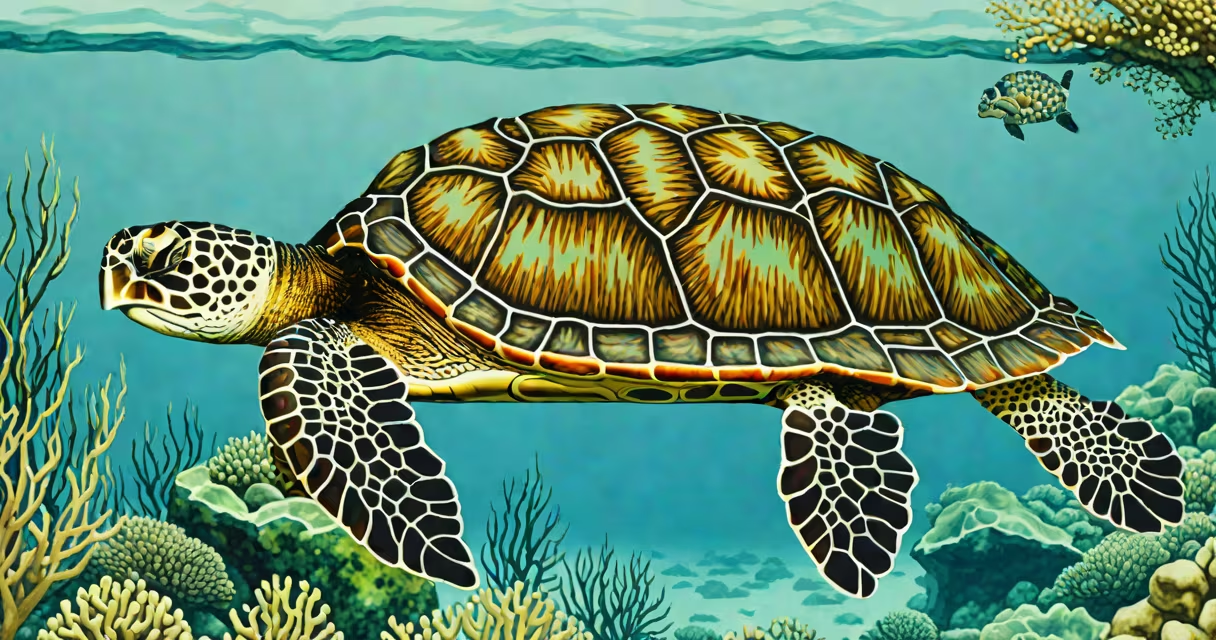
A hawksbill turtle's predators include sharks, octopuses, and large fish, with human poaching being the greatest threat. These turtles face dangers throughout their life stages,.
Hawksbill turtles (Eretmochelys imbricata) encounter different threats at each stage of their lives. Nestling hatchlings are vulnerable to crabs, birds, and small mammals. Juveniles face predation from larger fish and octopuses. Adults, though better protected by their hard shells, still fall prey to sharks, crocodiles, and humans.
| Predator | Where They Encounter Hawksbills | Threat Level |
|---|---|---|
| Tiger shark | Open ocean and coastal waters | High |
| Lemon shark | Shallow waters and seagrass beds | Moderate |
| Octopus | Coral reefs | Low to Moderate |
| Humans | Coastal areas worldwide | Critical |
The greatest danger to hawksbill turtles comes from humans. Poaching for their beautiful shells, which are made into jewelry and decorative items, has drastically reduced their populations. According to the International Union for Conservation of Nature (IUCN), hawksbill turtles are critically endangered due to this persistent threat.
Protecting hawksbill turtles requires addressing both natural predators and human threats. Marine protected areas help reduce encounters with predators like sharks. Anti-poaching laws and enforcement are important for stopping illegal trade in hawksbill products. Organizations like the IUCN Red List track populations and advocate for conservation measures.
Many people assume that crocodiles are the primary threat to adult hawksbill turtles. While crocodiles do prey on them, their impact is localized compared to sharks and humans. Another misconception is that hawksbill turtles have few natural predators due to their hard shells. In reality, their shells provide some protection, but they remain vulnerable to determined predators.
During a dive off the coast of Belize, I witnessed a lemon shark actively hunting near a group of hawksbill turtles. The turtles remained cautious, staying close to coral formations for protection. This interaction highlighted the constant vigilance required for survival in the wild.