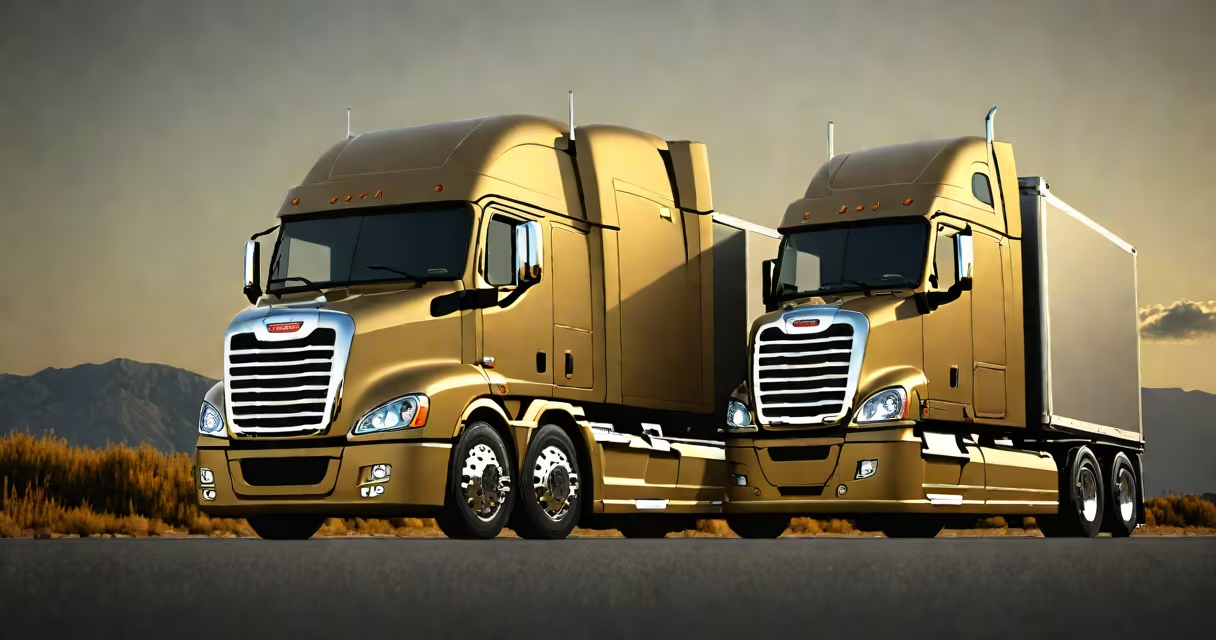
A Coe truck is a semi-truck with the driver's cab mounted directly above the engine, creating a compact design. This configuration saves space and improves maneuverability compared to conventional trucks.
The cab-over-engine (Coe) design places the driver's seat over the front axle, allowing for better visibility and shorter turning radii. The engine is located beneath the cab, reducing the truck's length. This setup is particularly useful in urban environments where space is limited.
Coe trucks come in several configurations, each suited for different applications:
| Type | Use Case | Example Models |
|---|---|---|
| Day Cab | Short-haul deliveries | Freightliner Argosy, Mercedes-Benz Actros |
| Sleeper Cab | Long-haul trips | Volvo VNL, Kenworth K100 |
| Medium-Duty | Local distribution | Isuzu FTR, Hino 268 |
Coe trucks are popular in Europe and Asia due to strict regulations on truck length. In the U.S., they are often used for short-haul and local deliveries where maneuverability is important. The compact design allows drivers to go through tight spaces and congested cities more easily.
Many people confuse Coe trucks with conventional semi-trucks, which have a longer nose and the cab set behind the engine. Unlike conventional trucks, Coe trucks do not have a hood covering the engine, as the cab sits directly over it. This design choice enhances visibility and reduces the truck's footprint.
Another misconception is that Coe trucks are less useful. However, modern Coe trucks are equipped with high-performance engines that match or exceed the power of conventional trucks. For example, the Freightliner Argosy features a useful diesel engine capable of handling heavy loads efficiently.
Coe trucks offer several advantages over conventional trucks, including better visibility, shorter turning radii, and easier access for drivers. However, conventional trucks may provide more comfort for long-haul trips due to their larger cabs and additional storage space.
According to the U.S. Department of Transportation, Coe trucks are increasingly being adopted for urban delivery services due to their efficiency in tight spaces. Their compact design also reduces fuel consumption, making them a cost-effective option for many fleets.
I had the opportunity to drive a Coe truck during a short-haul delivery in downtown Chicago. The improved visibility and maneuverability made going through the city's narrow streets much easier compared to a conventional truck. The shorter turning radius allowed me to make tight turns without difficulty, reducing the time spent on each delivery.
A Coe truck is a semi-truck with the cab mounted over the engine, offering better visibility and maneuverability. This design is ideal for urban environments and short-haul deliveries. While they are less common in the U.S. than conventional trucks, their efficiency and compact size make them a valuable asset for many logistics companies.