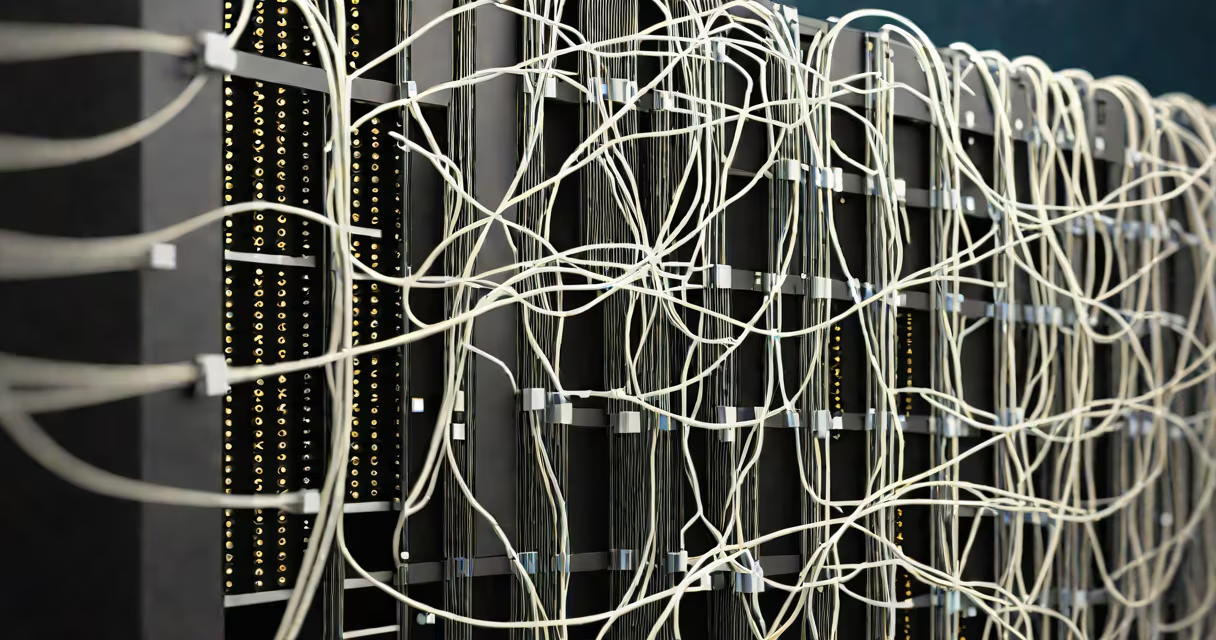
A DWDM (dense wavelength division multiplexing) is a fiber-optic transmission technology that combines multiple data streams into a single light signal using different wavelengths of laser light.
DWDM systems use lasers to transmit data at different wavelengths (colors) of light through a single optical fiber. Each wavelength operates independently, allowing multiple data streams to travel simultaneously without interference. At the receiving end, an optical demultiplexer separates the combined signal back into individual data streams.
DWDM systems consist of several key components:
DWDM is primarily used in long-haul telecommunications networks to increase bandwidth and capacity. It enables internet service providers, cable operators, and enterprises to transmit large volumes of data, voice, and video traffic efficiently. DWDM systems are deployed in undersea cables, terrestrial networks, and metro areas to support high-speed internet, cloud services, and video streaming.
Modern DWDM systems can support hundreds of wavelengths, each carrying data rates from 10 Gbps to 400 Gbps or higher. The technology allows for transmission distances of up to 3,000 kilometers (1,864 miles) without the need for signal regeneration. This makes DWDM ideal for long-distance communication links, such as those connecting continents via undersea cables.
For example, the MAREA cable, a transatlantic submarine communications cable, uses DWDM technology to provide a transmission capacity of 24 Tbps (terabits per second) across a distance of 6,600 kilometers (4,100 miles).
DWDM is often compared to coarse wavelength division multiplexing (CWDM), another fiber-optic multiplexing technology. The key differences between DWDM and CWDM are:
| Feature | DWDM | CWDM |
|---|---|---|
| Channel spacing | 0.8 nm to 1.6 nm | 20 nm |
| Number of channels | 80 to 160+ | 18 |
| Data rate per channel | 10 Gbps to 400 Gbps | 1 Gbps to 10 Gbps |
| Distance | Up to 3,000 km | Up to 80 km |
| Cost | Higher | Lower |
While DWDM offers higher capacity and longer reach, CWDM is more cost-effective for shorter distances and lower data rates. DWDM is typically used for long-haul and ultra-long-haul networks, while CWDM is employed in metropolitan area networks (MANs) and access networks.
In my experience working with telecom infrastructure, I've observed that DWDM systems require precise temperature control and stabilization to maintain optimal performance. Even slight variations in temperature can cause wavelength drift, leading to signal degradation or loss. This is why DWDM equipment often includes advanced cooling and monitoring systems to ensure reliable operation.
DWDM technology is important for modern optical networks, enabling high-capacity, long-distance data transmission. By combining multiple data streams into a single light signal, DWDM systems support the growing demand for bandwidth in telecommunications, data centers, and cloud services.