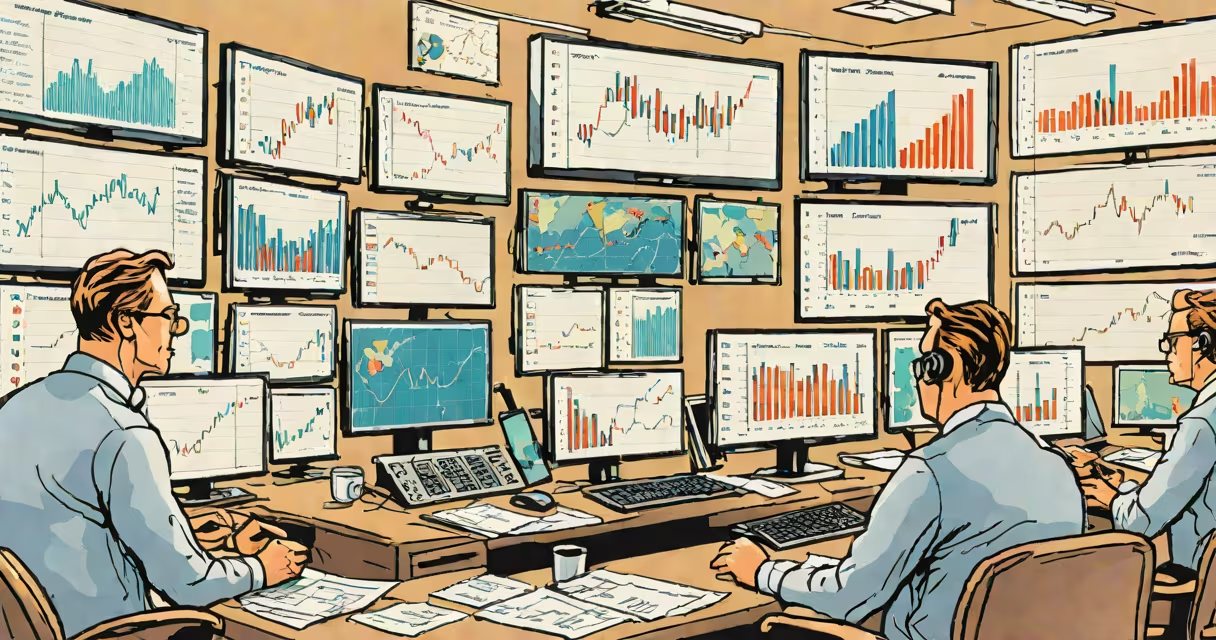
A financial trader buys and sells assets like stocks, bonds, commodities, or currencies to profit from price movements. These professionals analyze markets, execute trades, and manage risk to capitalize on short-term or long-term opportunities.
Traders use various strategies to make decisions. Some rely on technical analysis, studying historical price data and patterns to predict future movements. Others use fundamental analysis, evaluating economic indicators, company performance, or geopolitical events. High-frequency traders use algorithms to execute thousands of orders per second.
For example, a day trader might buy shares of a tech company at $100 in the morning, sell them at $102 in the afternoon, and repeat this process daily. A swing trader might hold the same shares for weeks, betting on a larger upward trend.
| Type | Time Horizon | Example Strategy |
|---|---|---|
| Day Trader | Minutes to hours | Scalping small price gaps |
| Swing Trader | Days to weeks | Catching medium-term trends |
| Position Trader | Months to years | Investing in long-term growth |
| High-Frequency Trader | Seconds to minutes | Using algorithms for rapid trades |
Trading occurs in various markets. Stock traders operate in equity markets like the New York Stock Exchange (NYSE) or NASDAQ. Forex traders exchange currencies in the decentralized foreign exchange market. Commodity traders deal in physical goods like oil, gold, or agricultural products. Cryptocurrency traders speculate on digital assets like Bitcoin or Ethereum.
Most trading happens electronically through brokerage platforms or exchanges. Some traders work for institutions like hedge funds or investment banks, while others trade independently from home.
Many people confuse trading with investing. Investing typically involves holding assets for years, focusing on long-term growth. Trading, however, aims to profit from short-term price fluctuations. While both require research and strategy, their time horizons and risk profiles differ.
Another myth is that trading guarantees quick riches. In reality, most traders lose money, especially beginners. Success requires discipline, continuous learning, and strict risk management.
When I tried day trading stocks for a month, I learned how challenging it is to consistently predict market movements. Even with thorough research, external factors like unexpected news or economic reports can drastically impact prices. This experience reinforced the importance of setting stop-loss orders to limit potential losses.