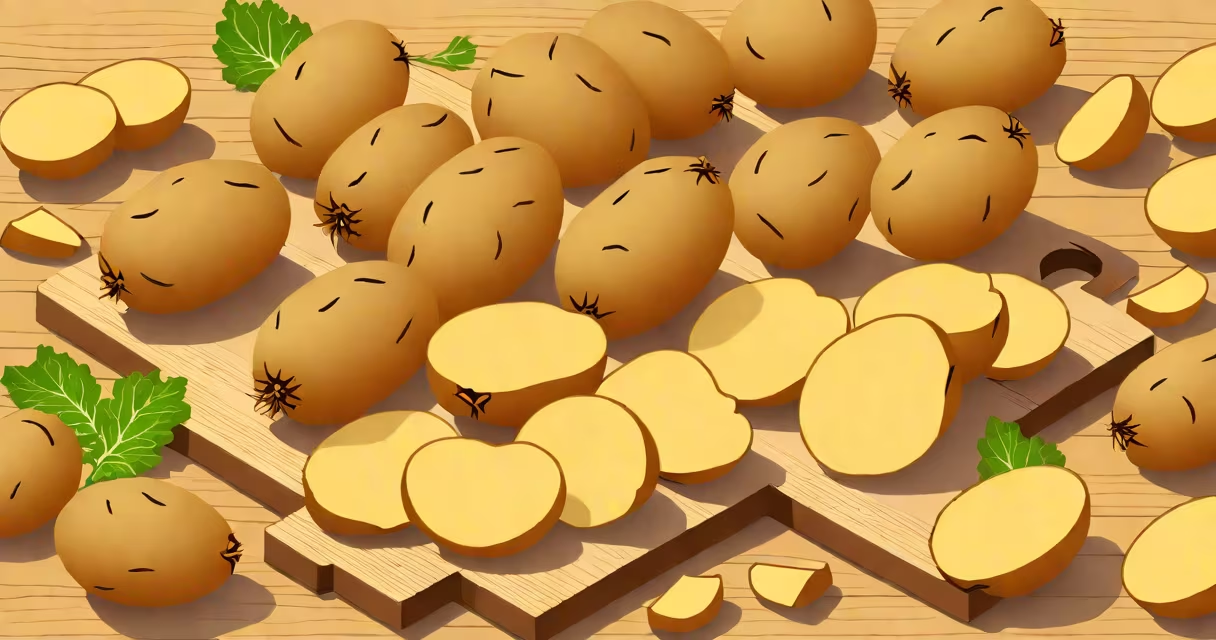
A potato is an edible starchy tuber of the plant Solanum tuberosum, a perennial nightshade grown as an annual crop. This versatile root vegetable serves as a dietary staple worldwide.
Potatoes grow underground as swollen storage organs called tubers. The plant produces flowers above ground, but the edible part develops from enlarged parts of underground stems. Farmers plant seed potatoes-small pieces of mature potatoes with buds-to grow new plants.
Potatoes fall into categories based on starch content and texture. The USDA classifies them into seven groups:
| Type | Starch Level | Best Uses |
|---|---|---|
| Russet | High | Baking, frying |
| Red | Medium | Boiling, salads |
| White | Medium | All-purpose |
| Yellow | Low | Roasting, mashing |
| Fingerling | Varies | Roasting, grilling |
| Purple/Blue | Medium | Boiling, roasting |
| Petite | Varies | Steaming, roasting |
The potato originated in the Andes region of South America around 7,000-10,000 years ago. Spanish explorers brought it to Europe in the 16th century, and it spread globally due to its high yield and nutritional value. Today, China produces the most potatoes annually, followed by India and Russia.
Potatoes contain vitamins C and B6, potassium, and fiber. A single medium potato (about 213 grams) provides 45% of the daily recommended intake of vitamin C and 27% of potassium. However, they also contribute to digestive issues like gas when consumed in excess, as explained in our guide on why potatoes cause gas.
Many people confuse sweet potatoes with regular potatoes. While both are root vegetables, they belong to different plant families-Sweet potatoes are Ipomoea batatas (morning glory family), whereas regular potatoes are Solanum tuberosum (nightshade family). Sweet potatoes have sweeter taste and orange flesh, while regular potatoes have white, yellow, or purple flesh.
Another myth is that potatoes are inherently fattening. A plain baked potato contains only about 160 calories. The added toppings like butter, sour cream, and cheese increase calorie count.
Potatoes appear in countless dishes worldwide. In France, they make pommes frites (French fries). In Germany, kartoffelsalat (potato salad) is a staple. India features aloo gobi (potato and cauliflower curry). Peru's causa limeña uses mashed potatoes as a base for layered fillings.
I once prepared a traditional Irish dish called colcannon-mashed potatoes mixed with cabbage or kale. The dish required careful balancing of textures and flavors, demonstrating how potatoes absorb and complement other ingredients.