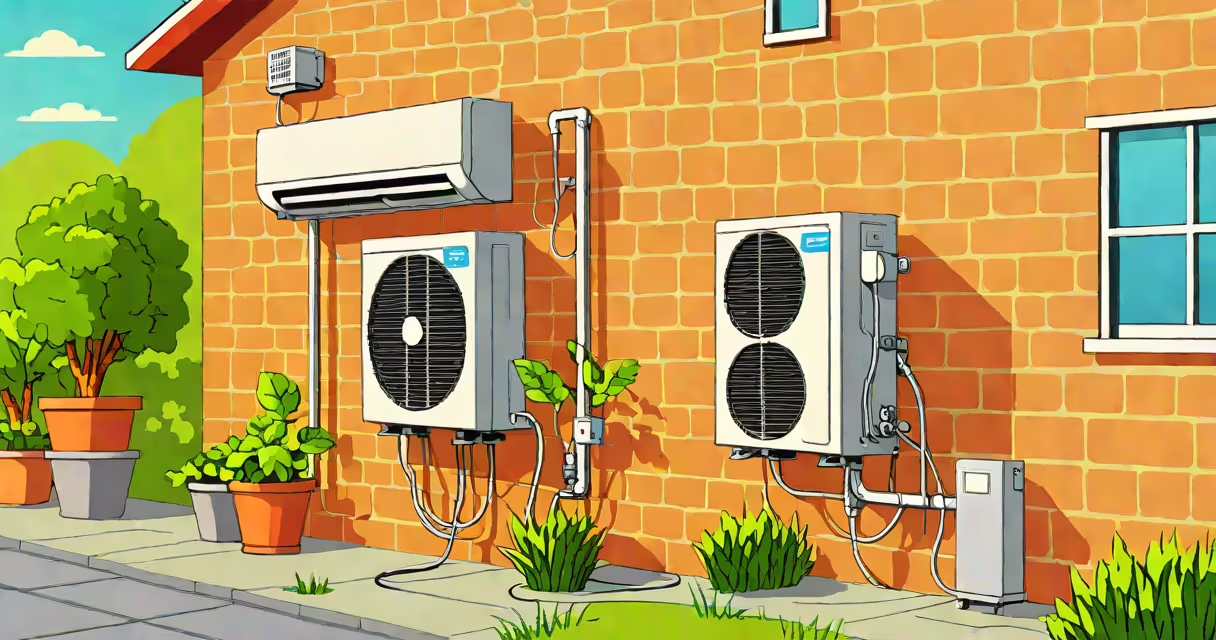
Air conditioning is a system that cools and dehumidifies indoor air by removing heat through a refrigeration cycle. These systems regulate temperature, humidity, and air quality in residential, commercial, and automotive environments.
Modern air conditioning uses a closed-loop system containing refrigerant that changes and back again. The process starts when warm air from inside passes over evaporator coils filled with cold, low-pressure refrigerant. Heat transfers from the air to the refrigerant, cooling the air before it's circulated back into the room. The now-warmed refrigerant travels to the compressor, where pressure raises its temperature. It then moves to the condenser, where it releases heat outside before returning to the evaporator as a cool liquid.
Air conditioning systems come in several types, each suited to different environments:
| Type | Description | Best For |
|---|---|---|
| Window units | Self-contained systems installed in windows | Small rooms, apartments |
| Split systems | Two-part systems with indoor and outdoor units | Homes, offices, businesses |
| Central air | Whole-house systems using ductwork | Large homes, buildings |
| Portable units | Freestanding units on wheels | Renters, temporary cooling |
Many people confuse air conditioning with simple fans or assume all systems work the same way. Unlike fans that circulate existing air, air conditioners remove heat and humidity. Another misconception is that air conditioning only cools - modern systems also filter pollutants and control humidity levels.
The U.S. Department of Energy notes that air conditioning accounts for about 6% of U.S. electricity use. Choosing energy-efficient models and proper sizing improves performance. The Seasonal Energy Efficiency Ratio (SEER) measures efficiency - higher SEER ratings indicate better performance. A SEER 16 unit uses about 23% less energy than a SEER 10 unit.
Proper installation and maintenance impact efficiency. Dirty filters, low refrigerant levels, and leaks reduce performance. Regular servicing ensures optimal operation and extends system lifespan.