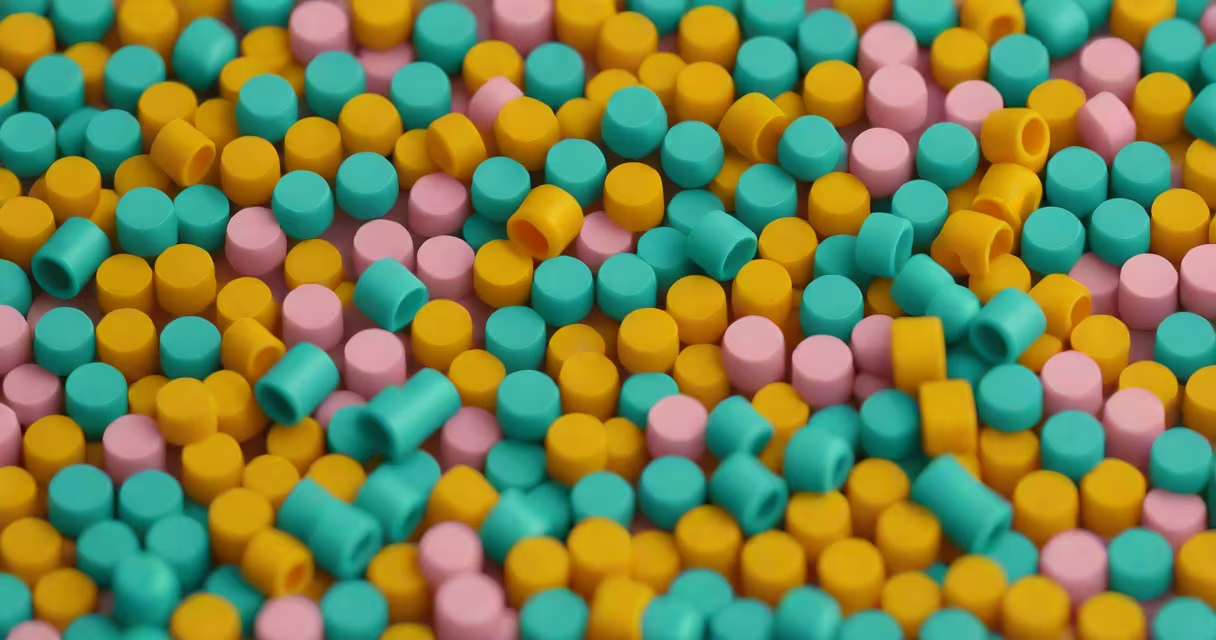
ABS plastic is made from three monomers: acrylonitrile, butadiene, and styrene. These combine through polymerization to create a durable thermoplastic used in automotive parts, electronics, and toys.
ABS is a copolymer, meaning it's produced by polymerizing three different monomers together. The process begins with emulsion or bulk polymerization, where the monomers are chemically bonded into long chains. The resulting material balances strength, rigidity, and toughness due to the unique properties of each monomer.
| Monomer | Role in ABS | Properties Contributed |
|---|---|---|
| Acrylonitrile | Provides chemical resistance | High tensile strength, oil and fuel resistance |
| Butadiene | Adds toughness and impact resistance | Flexibility, durability under stress |
| Styrene | Enhances processability and gloss | Easy molding, smooth surface finish |
ABS is widely used in industries requiring durability and chemical resistance. Automotive components like dashboards and wheel covers often use ABS because of its impact resistance. Electronics casings, such as computer keyboards and phone cases, rely on ABS for its lightweight yet sturdy nature. Even children's toys, like LEGO bricks, are made from ABS due to its safety and longevity.
One common misconception is that ABS is always rigid. While standard ABS is hard, some variants are blended with other materials to create flexible versions. For example, ABS blended with polycarbonate (PC) increases heat resistance, making it suitable for higher-temperature applications.
Many people mistake ABS for polyvinyl chloride (PVC) because both are used in similar applications. However, PVC lacks the toughness and flexibility of ABS. Another common confusion is with polycarbonate (PC), which is more transparent and heat-resistant but less impact-resistant than ABS.
I once tested ABS for a DIY project by drilling, sanding, and painting it. Unlike PVC, which cracks easily, ABS held up well under stress. Its ease of machining made it a great choice for custom parts.
ABS is generally safe for consumer use, but it releases toxic fumes when burned. Proper ventilation is required during manufacturing and processing. The U.S. Food and Drug Administration (FDA) approves food-grade ABS for limited contact with food, but it's not commonly used in food packaging due to potential leaching concerns.
ABS plastic is a versatile material composed of acrylonitrile, butadiene, and styrene. Its unique blend of strength, flexibility, and chemical resistance makes it ideal for automotive, electronic, and toy applications. Understanding its composition helps in selecting the right material for specific needs.