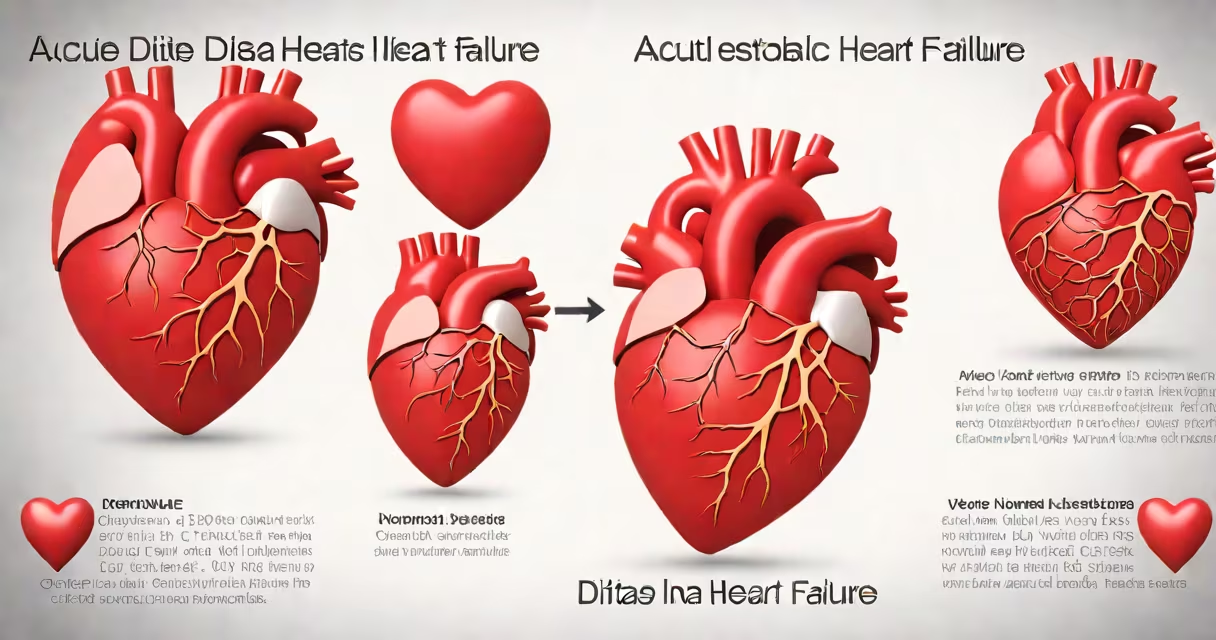
Acute diastolic heart failure happens when the heart's left ventricle can't relax or fill properly during diastole, leading to fluid backup into the lungs. This condition primarily affects the heart's ability to receive blood rather than pump it out.
The heart's left ventricle normally relaxes between beats to fill with blood. In acute diastolic heart failure, this relaxation is impaired, increasing pressure in the lungs. The condition often develops suddenly in people with long-standing high blood pressure or thickened heart muscle.
Acute diastolic heart failure is part of a broader category of heart failure with preserved ejection fraction (HFpEF). Unlike systolic heart failure, where the heart can't pump effectively, diastolic dysfunction involves poor filling despite normal pumping strength.
| Type | Key Feature | Common Cause |
|---|---|---|
| Impaired Relaxation | Slowed filling during early diastole | Hypertension, aging |
| Restrictive Filling | Stiff ventricle walls | Cardiac amyloidosis, sarcoidosis |
Many confuse acute diastolic heart failure with systolic heart failure, where the heart can't contract forcefully. While both cause fluid buildup, diastolic dysfunction involves impaired filling rather than weakened pumping. Another misconception is that it only affects the elderly, though it can occur in younger individuals with severe hypertension or heart valve disorders.
For instance, a 60-year-old patient with long-term uncontrolled high blood pressure may develop acute diastolic heart failure after a sudden stressor, such as an infection or rapid weight gain. Symptoms often include shortness of breath, fatigue, and swollen legs.
According to the American Heart Association, about half of all heart failure cases involve preserved ejection fraction, meaning the heart pumps normally but fills poorly. Proper diagnosis requires echocardiograms to assess ventricular relaxation and stiffness.
Treatment focuses on managing underlying causes like hypertension and reducing fluid retention. Medications such as diuretics, beta-blockers, and calcium channel blockers may help. In severe cases, procedures like septal ablation or heart valve repair might be necessary.
Unlike other forms of heart failure, acute diastolic heart failure often requires careful monitoring of fluid intake and blood pressure. Patients may need to limit salt intake and avoid excessive exertion to prevent worsening symptoms.