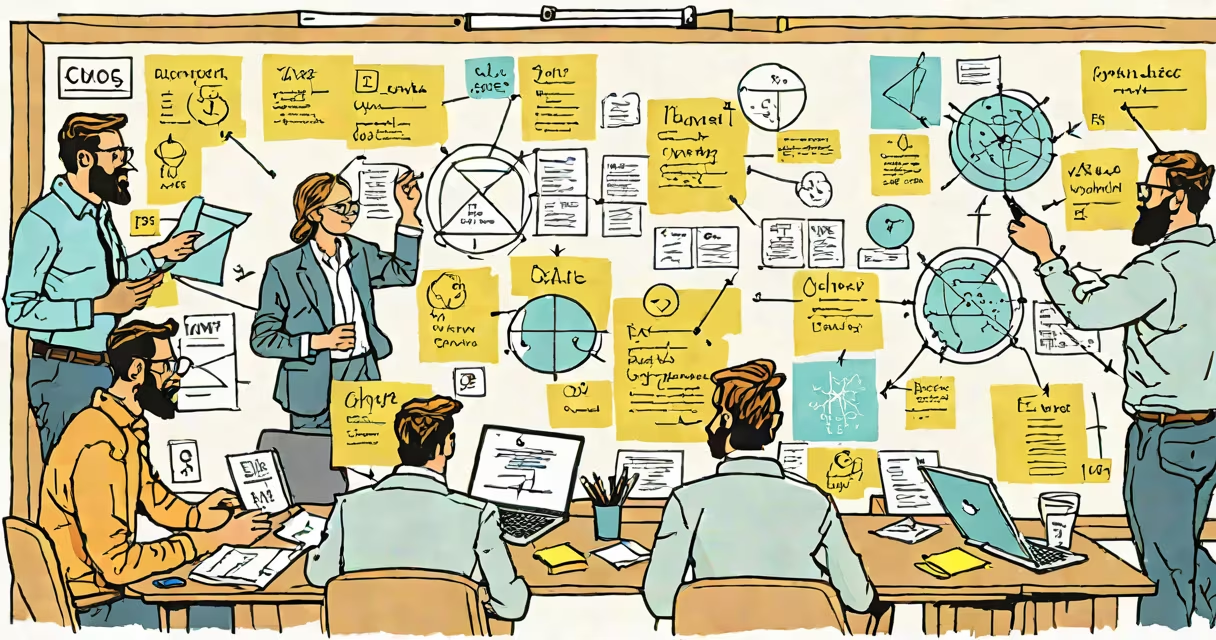
Agile programming is an iterative approach to software development that prioritizes flexibility, collaboration, and customer feedback. It breaks projects into small, manageable tasks completed in short cycles called sprints.
Unlike traditional waterfall methods, agile programming embraces change and continuous improvement. Teams work in short cycles (usually 1-4 weeks), delivering functional software increments at the end of each cycle. This allows for frequent reassessment and adaptation based on stakeholder feedback.
Agile programming encompasses several methodologies, each with unique practices:
Agile programming is widely used in startups and enterprises alike due to its adaptability. For example, Spotify uses agile to manage its complex music-streaming platform, allowing rapid updates and feature additions based on user feedback. Agile's iterative nature reduces the risk of building the wrong product by incorporating feedback early and often.
Many people confuse agile programming with being a lack of structure or discipline. In reality, agile requires rigorous practices like daily standups, retrospectives, and continuous testing. Another misconception is that agile is only for small teams. Large organizations like Microsoft and IBM have successfully scaled agile practices across thousands of developers.
I've seen agile in action while working on a small e-commerce project. The team used Scrum, holding daily standups to discuss progress and blockers. After each two-week sprint, we demoed new features to stakeholders and adjusted our backlog based on their feedback. This iterative process ensured we delivered a product that met user needs without unnecessary features.
For beginners, learning the basics of C programming can provide a solid foundation before diving into agile methodologies. Understanding core programming concepts makes it easier to adopt agile practices like test-driven development and continuous integration.
Agile programming is a flexible, collaborative approach to software development that emphasizes iterative progress and continuous improvement. By breaking projects into small, manageable tasks and incorporating feedback regularly, teams can deliver high-quality software that meets evolving user needs.