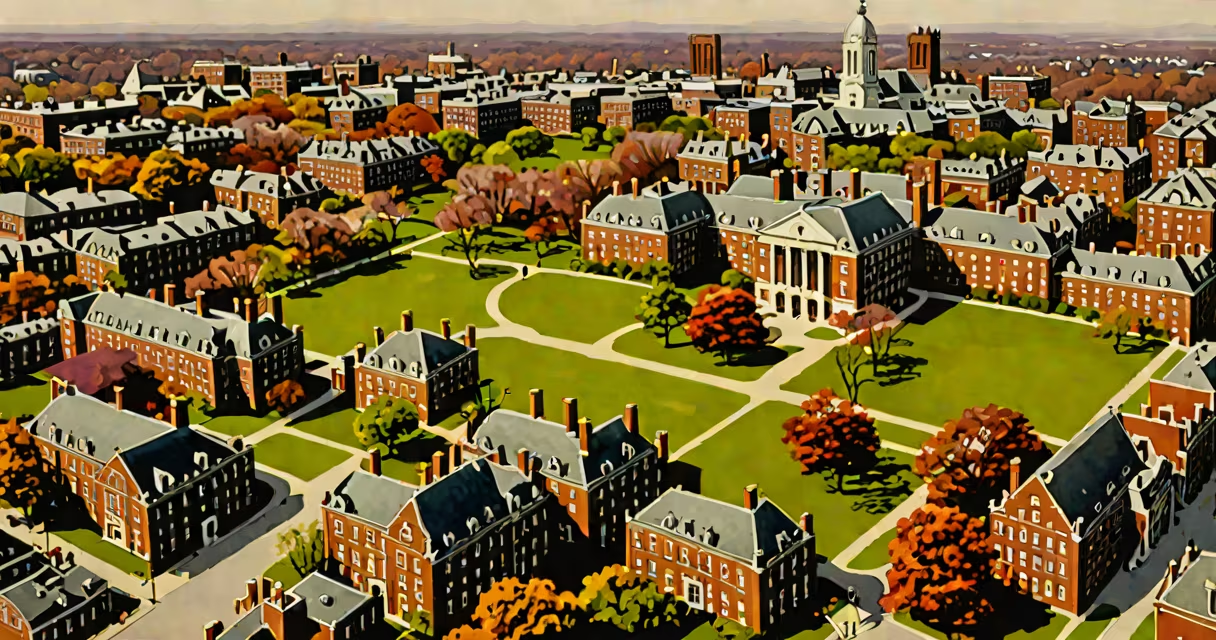
Brown University stands out for its student-centered Open Curriculum and leadership in medical research and innovation. As one of eight Ivy League institutions, Brown combines rigorous academics with a flexible learning approach.
Unlike most colleges, Brown doesn't require core courses. Students explore subjects freely before declaring majors. This approach fosters interdisciplinary thinking - 30% of undergraduates complete double concentrations.
For example, a student might study computational biology alongside theater arts. The median time to declare a concentration is sophomore year, showing students' thoughtful exploration.
Brown invests $600 million annually in research across 80+ centers. Its medical school and engineering programs rank among the top 20 nationally according to U.S. News & World Report.
Brown's liberal arts foundation supports creative problem-solving. The university produces leaders in diverse fields - from Supreme Court Justice Stephen Breyer to actress Emma Watson.
Its Engineering Design Program requires undergraduates to create real-world solutions. Recent projects include low-cost prosthetics and sustainable housing designs.
Over 50% of undergraduates study abroad, with programs in 60+ countries. Simultaneously, Brown partners with Providence community organizations through its Swearer Center for Public Service.
This dual focus earned Brown recognition as one of Princeton Review's top schools for community service participation.
Contrary to popular belief, Brown accepts more applicants than other Ivies - its 7.6% acceptance rate in 2023 was higher than Harvard's 3.4%., while known for humanities, Brown graduates more STEM majors than arts and sciences combined.