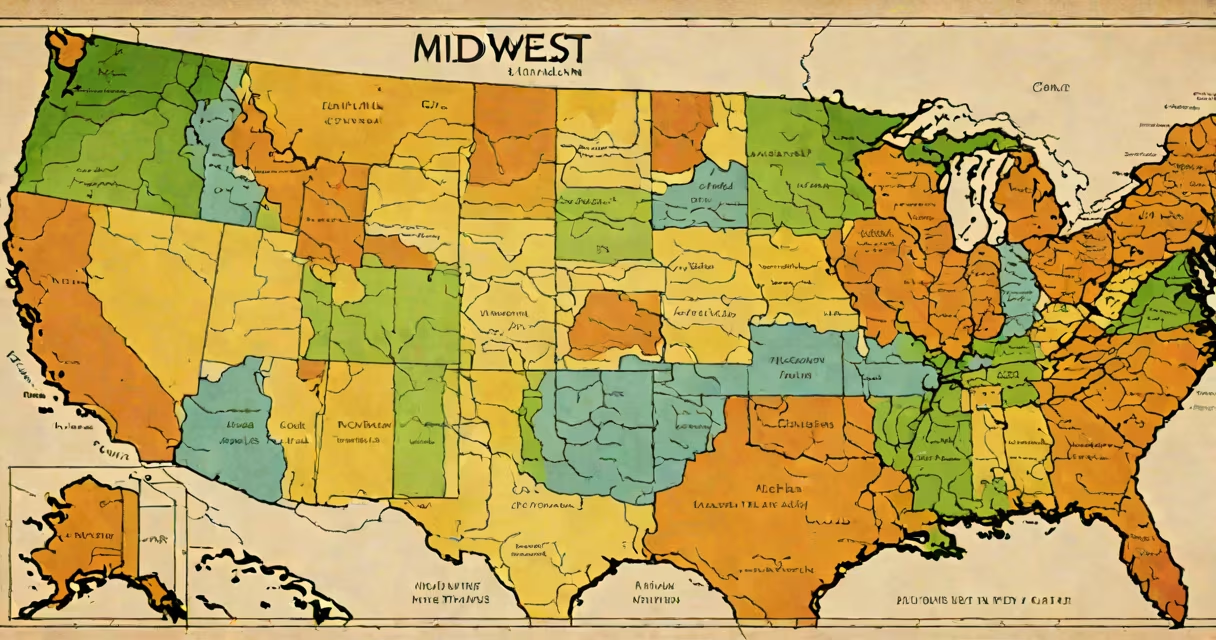
The Midwest is a region of the United States consisting of 12 states: Illinois, Indiana, Iowa, Kansas, Michigan, Minnesota, Missouri, Nebraska, North Dakota, Ohio, South Dakota, and Wisconsin. This area is known for its agricultural heartland, industrial centers, and distinct cultural identity.
The Midwest is one of four census regions designated by the U.S. Census Bureau. It is further divided into two subregions: the East North Central states (Illinois, Indiana, Michigan, Ohio, and Wisconsin) and the West North Central states (Iowa, Kansas, Minnesota, Missouri, Nebraska, North Dakota, and South Dakota). These designations help organize data collection and analysis.
The Midwest is bordered by the Great Lakes to the north and east, the Mississippi River to the west, and the Ohio River to the southeast. This geographical positioning has historically influenced trade, transportation, and economic development in the region.
The Midwest is often divided into two main categories based on geography and economy:
| East North Central | West North Central |
|---|---|
| Illinois, Indiana, Michigan, Ohio, Wisconsin | Iowa, Kansas, Minnesota, Missouri, Nebraska, North Dakota, South Dakota |
The East North Central states are generally more industrial and urban, while the West North Central states are more rural and focused on agriculture.
The Midwest is important for the U.S. economy, particularly in agriculture, manufacturing, and transportation. The region is often referred to as the "breadbasket of America" due to its vast farmlands and production of key crops like corn and soybeans., cities like Chicago, Detroit, and Minneapolis serve as major hubs for industry and commerce.
The Midwest is also significant culturally, known for its friendly people, love of sports, and contributions to music and literature. The region has produced influential figures in various fields, from musicians like Prince and Bob Seger to writers like Ernest Hemingway and Mark Twain.
One common misconception is that the Midwest is entirely rural. While the region does have vast farmlands, it also includes major metropolitan areas like Chicago, Minneapolis, and Detroit. Another myth is that the Midwest is culturally homogeneous. In reality, the region is diverse, with significant populations of German, Scandinavian, and African American heritage, among others.
Some people confuse the Midwest with the South or the Northeast. However, the Midwest has its own distinct identity, shaped by its history, geography, and cultural traditions. For example, the Midwest is known for its love of college sports, particularly football and basketball, which is different from the South's focus on professional sports.
Growing up in Ohio, I experienced firsthand the unique culture of the Midwest. From attending high school football games on Friday nights to enjoying homemade casseroles at potlucks, the sense of community was strong. The region's blend of urban and rural life offered a mix of opportunities, from accessing big-city resources to enjoying the tranquility of the countryside.
The Midwest is a important region of the United States, encompassing 12 states known for their agricultural productivity, industrial strength, and cultural richness. Understanding what is considered the Midwest helps appreciate its significance in shaping the nation's economy and identity.