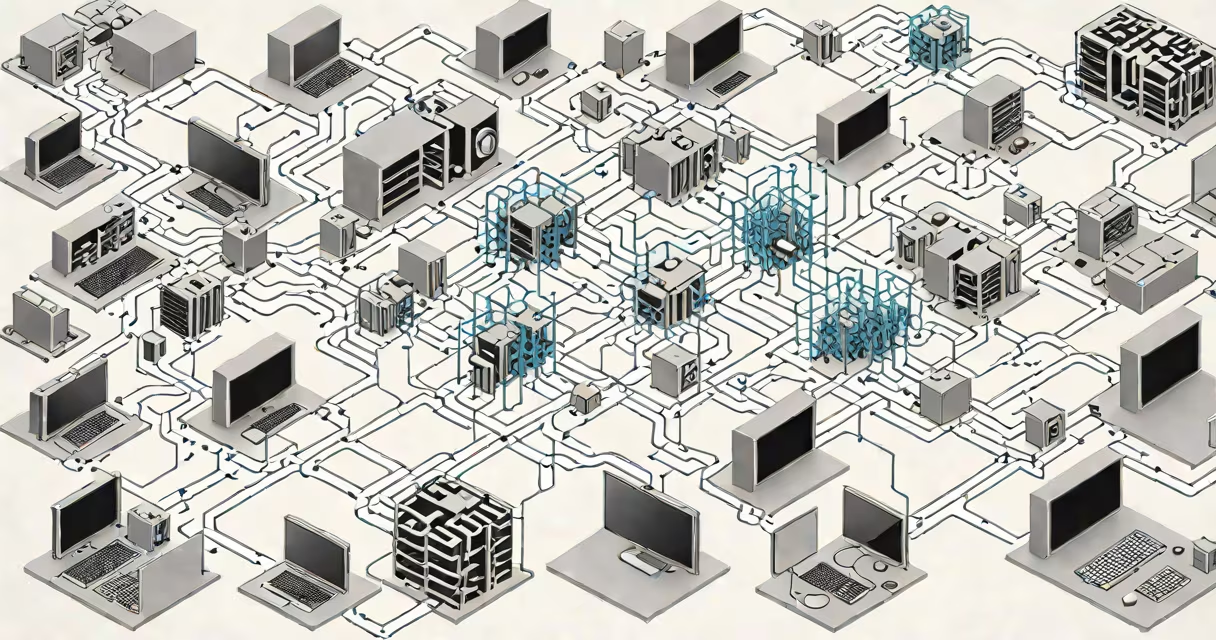
Data networks are systems that transmit and receive data between devices using shared protocols and infrastructure. They enable communication and resource sharing among connected devices.
Data networks operate by converting information into packets, which travel through various mediums like cables or wireless signals. Routers and switches direct these packets to their destinations, where they are reassembled into usable data. This process ensures efficient and reliable communication between devices.
Data networks come in several forms, each suited to different environments and needs:
| Type | Description | Example |
|---|---|---|
| Local Area Network (LAN) | A network that connects devices within a limited area, such as a home or office. | Office computers connected via Ethernet cables. |
| Wide Area Network (WAN) | A network that spans large geographical areas, connecting multiple smaller networks. | The internet connecting users worldwide. |
| Metropolitan Area Network (MAN) | A network that covers a city or large campus, bridging LANs and WANs. | Cable television networks within a city. |
| Wireless Local Area Network (WLAN) | A wireless version of a LAN, using radio waves to connect devices. | Home Wi-Fi networks connecting smartphones and laptops. |
Network topologies define how devices are arranged and connected within a network. Common types include:
Many people confuse data networks with the internet. While the internet is a vast global network, data networks are the underlying systems that enable communication and resource sharing. The internet itself is a type of wide area network (WAN) that connects millions of smaller networks worldwide.
Another common misconception is that all data networks are wired. In reality, wireless networks, such as Wi-Fi and cellular networks, are just as prevalent and often more convenient for mobile devices.
Consider a typical office environment. Computers, printers, and servers are connected via a local area network (LAN). This network allows employees to share files, access printers, and communicate efficiently. The office LAN might also connect to a wider area network (WAN) to access cloud services or connect with other offices globally. This setup ensures smooth communication and resource sharing across different locations.
Understanding data networks is important for anyone working with technology, as they form the core of modern communication and information sharing. managing an enterprise system, knowing how data networks function can help you make informed decisions and troubleshoot issues effectively.