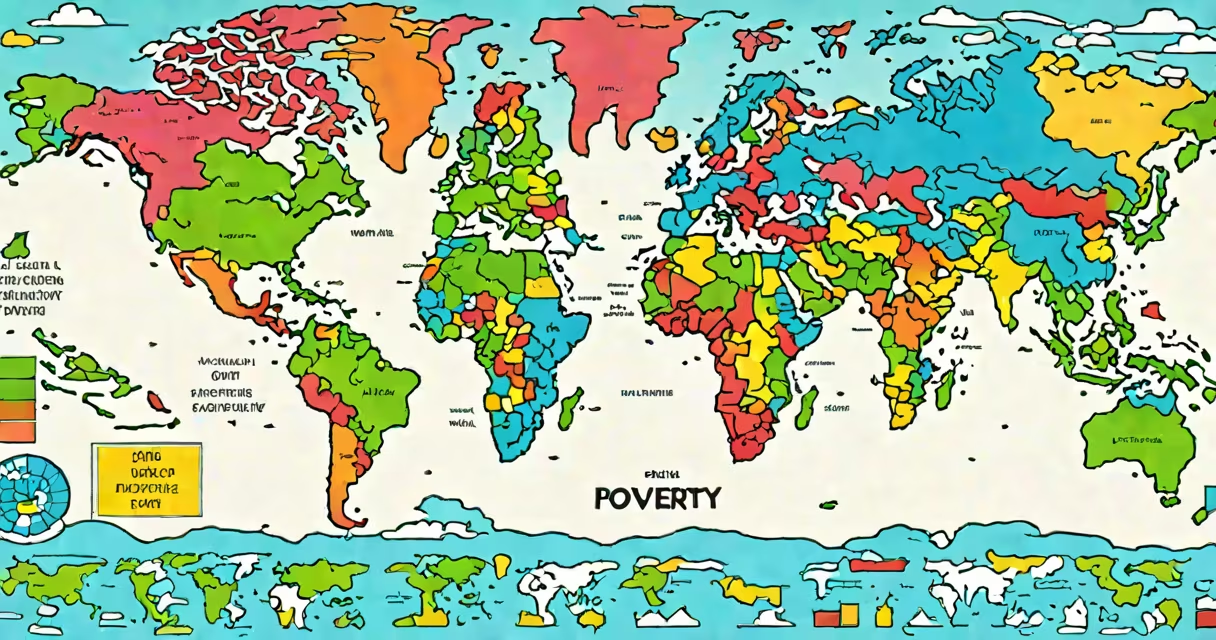
Global poverty refers to the condition of people living below a minimum level of well-being, typically measured by income, access to food, shelter, clean water, and education. As of 2023, about 662 million people live in extreme poverty, surviving on less than $2.15 per day.
The World Bank defines extreme poverty as living on less than $2.15 per day (adjusted for inflation and cost of living differences). This threshold reflects the minimum needed to meet basic human needs. The United Nations uses additional indicators, including access to healthcare, education, and sanitation, to assess multidimensional poverty.
Poverty is categorized into absolute and relative poverty:
| Type | Definition | Example |
|---|---|---|
| Absolute Poverty | Lack of sufficient resources to meet basic survival needs, regardless of local conditions. | A family in rural India earning $1.50 per day. |
| Relative Poverty | Living standards lower than those of other people in the same society. | A single parent in the U.S. earning $15,000 annually while the median income is $60,000. |
Poverty stems from systemic issues, including:
Many assume poverty is solely about income. However, it also involves access to education, healthcare, and social services. For example, in Nigeria, 10.5 million children are out of school despite economic growth (UNICEF, 2023). Others mistakenly believe poverty is inevitable in developing nations, ignoring successful interventions like Bolivia's conditional cash transfer programs, which reduced poverty by 20% in a decade (World Bank, 2021).