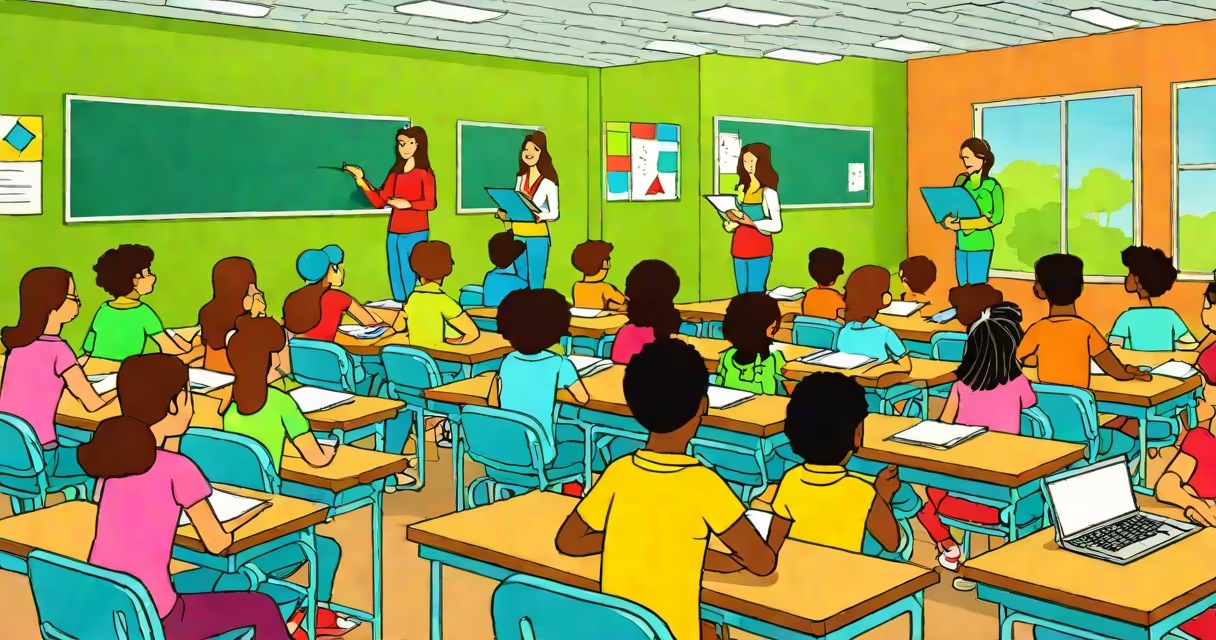
An idea in education is a concept or method designed to improve teaching and learning, grounded in theory and practice. These ideas shape how educators approach curriculum development, instructional strategies, and assessment methods.
Educational ideas often start as theories or hypotheses about how students learn best. Educators test these ideas through research and practical application in classrooms. For example, the idea of differentiated instruction suggests that teachers should tailor their lessons to meet the diverse needs of students. This approach is based on the theory that students learn at different paces and in different ways.
Educational ideas can be categorized into several types, including learning theories, teaching methods, and curriculum models. Learning theories, such as behaviorism, cognitivism, and constructivism, provide frameworks for understanding how students acquire knowledge. Teaching methods, like lecture-based instruction, inquiry-based learning, and project-based learning, offer strategies for delivering content. Curriculum models, such as spiral curriculum and thematic curriculum, organize the content and sequence of subjects taught.
| Type | Description | Example |
|---|---|---|
| Learning Theories | Frameworks for understanding how students learn | Constructivism |
| Teaching Methods | Strategies for delivering content | Project-Based Learning |
| Curriculum Models | Organizes the content and sequence of subjects | Spiral Curriculum |
Educational ideas are used in various settings, including schools, universities, and online learning platforms. They are employed to improve student engagement, improve academic performance, and build critical thinking skills. For instance, the idea of flipped classroom, where students learn content online and apply it in class, has gained popularity for its ability to promote active learning.
One common misconception is that educational ideas are static and unchanging. In reality, they evolve as new research emerges and as societal needs shift. Another misconception is that all educational ideas are equally effective for all students. In practice, the effectiveness of an idea often depends on the context and the specific needs of the learners.
For example, the idea of standardized testing is often criticized for not accounting for individual differences among students. However, when combined with other assessment methods, such as formative assessments and portfolio reviews, it can provide a more complete picture of student learning.
G-TEC education is an example of an new educational idea that combines technology and engineering principles to engage students in hands-on learning. This approach has been shown to increase student interest in STEM fields and improve problem-solving skills. By integrating real-world applications into the curriculum, G-TEC education demonstrates how educational ideas can be practically applied to improve learning outcomes.
Understanding what an idea in education entails involves recognizing its theoretical foundations, practical applications, and evolving nature. By exploring different types of educational ideas and their uses, educators can better adapt their teaching methods to meet the diverse needs of their students.