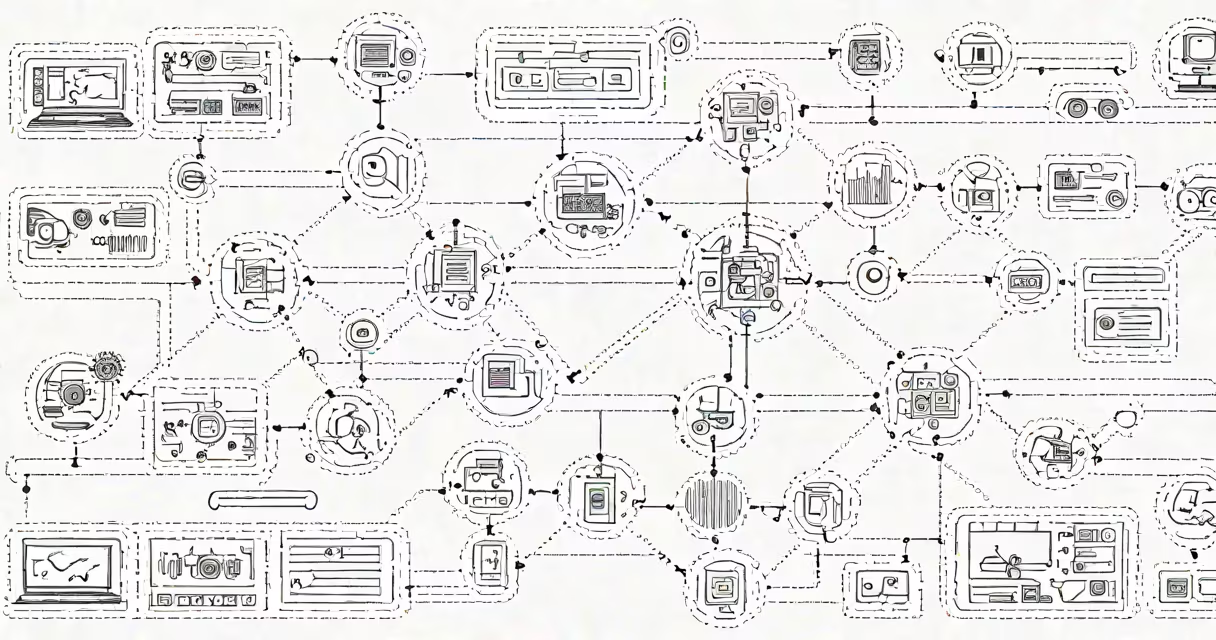
Hyperautomation is a business strategy combining artificial intelligence (AI), machine learning (ML), robotic process automation (RPA), and other technologies to automate complex business processes. It extends beyond traditional automation by integrating multiple tools to handle both routine and exception-based tasks.
Hyperautomation platforms use AI and ML to analyze data, make decisions, and improve processes over time. RPA handles repetitive tasks by mimicking human interactions with software applications. Together, these technologies create end-to-end automation solutions.
For example, a hyperautomation system might use AI to analyze invoices, RPA to enter data into accounting software, and ML to flag anomalies for human review. This combination allows businesses to automate entire workflows rather than isolated tasks.
| Component | Role |
|---|---|
| Artificial Intelligence | Analyzes data, makes decisions, and improves processes |
| Machine Learning | Learns accuracy over time |
| Robotic Process Automation | Handles repetitive tasks by mimicking human interactions |
| Business Process Management | Designs, executes, and monitors business processes |
| Low-Code/No-Code Platforms | Allows non-technical users to build automation solutions |
Hyperautomation is used across industries to improve efficiency, reduce errors, and lower costs. Common applications include:
According to Gartner, hyperautomation is one of the top strategic technology trends due to its ability to drive digital transformation and operational excellence.
Many people confuse hyperautomation with traditional automation. While traditional automation focuses on repetitive tasks, hyperautomation integrates multiple technologies to handle complex, end-to-end processes. Another misconception is that hyperautomation replaces human workers entirely. In reality, it augments human capabilities by handling routine tasks, allowing employees to focus on strategic activities.
For instance, in customer service, hyperautomation can handle basic inquiries through chatbots, freeing human agents to deal with more complex issues that require empathy and judgment.
One company that successfully implemented hyperautomation is Ernst & Young (EY). They used AI, RPA, and ML to automate their audit processes. The system analyzes financial data, identifies patterns, and flags potential issues for further investigation. This has reduced the time and effort required for audits while improving accuracy.
I had the opportunity to observe a hyperautomation implementation firsthand at a client site. The system integrated AI for data analysis, RPA for data entry, and ML for anomaly detection. The result was a 30% reduction in processing time and a 20% increase in accuracy.