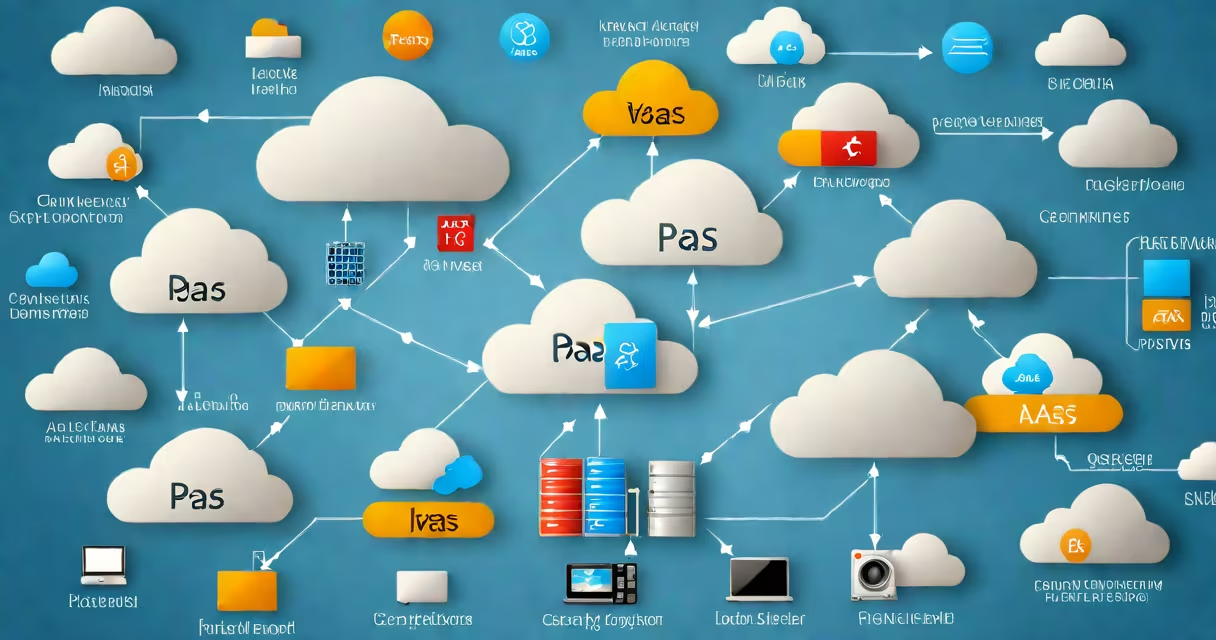
Platform as a Service (PaaS) and Infrastructure as a Service (IaaS) are cloud computing models that provide different levels of abstraction and control over IT infrastructure. PaaS offers a development environment for building applications, while IaaS provides virtualized computing resources.
PaaS delivers a complete development and deployment environment in the cloud. Developers can build, test, and deploy applications without managing the underlying infrastructure. The cloud provider handles operating systems, servers, storage, and networking.
For example, Google App Engine is a PaaS offering that allows developers to deploy applications using various programming languages without worrying about server management.
| Type | Description | Examples |
|---|---|---|
| Public PaaS | Shared infrastructure among multiple tenants | Heroku, AWS Elastic Beanstalk |
| Private PaaS | Dedicated infrastructure for a single organization | OpenShift, CloudStack |
| Hybrid PaaS | Combination of public and private PaaS | Microsoft Azure, IBM Bluemix |
| IaaS | Provides virtualized computing resources over the internet | Amazon Web Services (AWS), Microsoft Azure, Google Cloud Platform (GCP) |
PaaS is commonly used by developers and businesses that want to focus on application development without managing infrastructure. It's ideal for rapid application development, prototyping, and testing. IaaS is used by organizations that need flexible computing resources without investing in physical hardware.
For instance, a startup might use PaaS to quickly develop and deploy a web application, while a growing business might use IaaS to scale its IT infrastructure during peak demand.
Many people confuse PaaS with Software as a Service (SaaS). While SaaS provides ready-to-use software applications, PaaS provides a platform for developing and deploying applications. Similarly, IaaS is often mistaken for traditional hosting services, but unlike traditional hosting, IaaS provides virtualized computing resources that can be scaled dynamically.
According to Gartner, the global cloud infrastructure market, including IaaS, is projected to reach $299 billion by 2027, highlighting the growing adoption of these services.
Consider a developer who wants to create a new mobile app. Using a PaaS like Heroku, they can write the code in their preferred language, push it to the platform, and have it automatically deployed and scaled. The PaaS provider manages the servers, databases, and networking, allowing the developer to focus solely on coding.
However, a company experiencing rapid growth might use IaaS to quickly provision additional virtual machines and storage to handle increased traffic and data storage needs. This avoids the need for expensive hardware purchases and long-term commitments.
I once used an IaaS provider to host a website for a small business. The ability to scale resources up or down based on traffic was important during peak seasons. This flexibility saved costs and ensured a smooth user experience.