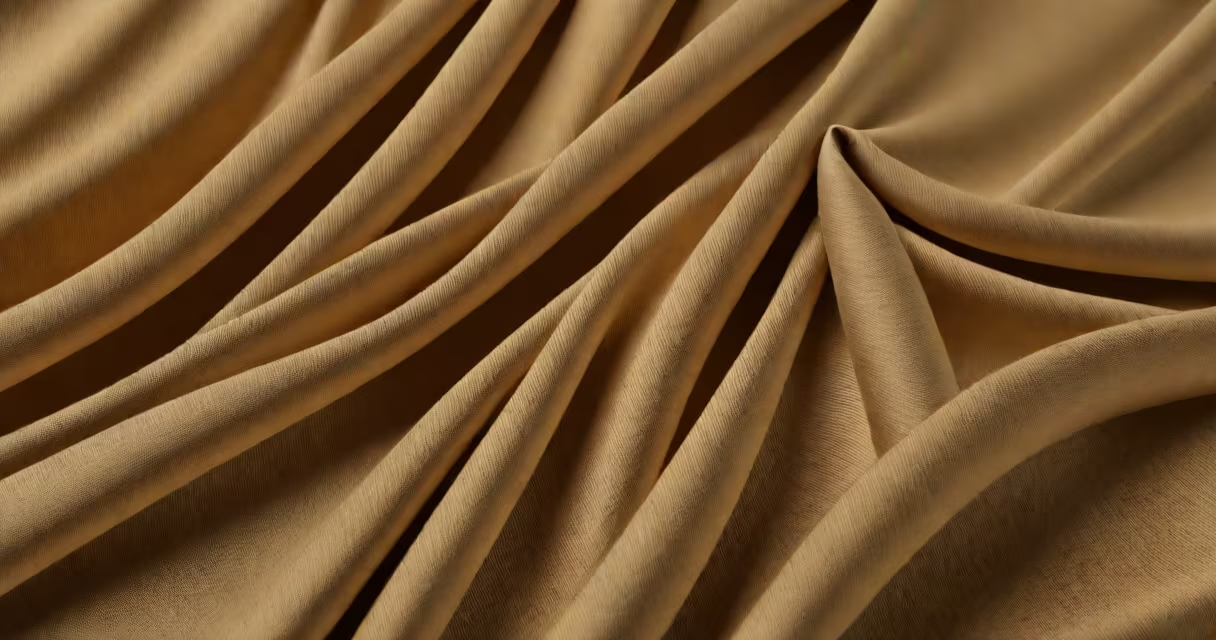
Tencel is a sustainable fabric made from sustainably sourced wood pulp, primarily from eucalyptus, oak, or birch trees. This cellulose fiber undergoes a closed-loop production process that recycles over 95% of the solvents used, making it an environmentally friendly alternative to conventional fabrics.
The production of Tencel involves dissolving wood pulp in a non-toxic solvent called N-methylmorpholine N-oxide (NMMO). The resulting solution is extruded through small holes to form fibers, which are then solidified in a water bath. This process, known as lyocell production, is more eco-friendly than traditional methods like viscose because it recycles nearly all the chemicals used.
| Type | Source Material | Key Characteristics |
|---|---|---|
| Lyocell | Wood pulp (eucalyptus, oak, birch) | Strong, durable, moisture-wicking, biodegradable |
| Modal | Beech tree wood pulp | Soft, breathable, lightweight, less prone to shrinking |
Tencel is favored for its sustainability, softness, and breathability. It's commonly used in clothing, home textiles, and even medical products. Its moisture-wicking properties make it ideal for activewear, while its biodegradability appeals to eco-conscious consumers. Unlike synthetic fabrics, Tencel doesn't shed microplastics, reducing pollution.
Many people confuse Tencel with regular rayon or viscose. While all three are cellulose-based, Tencel's production process is far more sustainable. Traditional rayon often uses toxic chemicals and doesn't recycle solvents, whereas Tencel's closed-loop system minimizes environmental impact. Another misconception is that Tencel is expensive to produce, but its long-term benefits-like durability and reduced water usage-offset initial costs.
For example, a T-shirt made from Tencel requires less water than one made from conventional cotton. According to the Tencel brand website, producing one ton of Tencel fiber saves about 30 tons of CO2 emissions compared to conventional viscose.
I tested Tencel fabric in a summer dress and noticed it stayed cool and comfortable all day, even in high humidity. The fabric's natural drape and softness were noticeable compared to polyester blends, which often feel stiff or clammy. This hands-on experience reinforced why Tencel is growing in popularity among sustainable fashion brands.