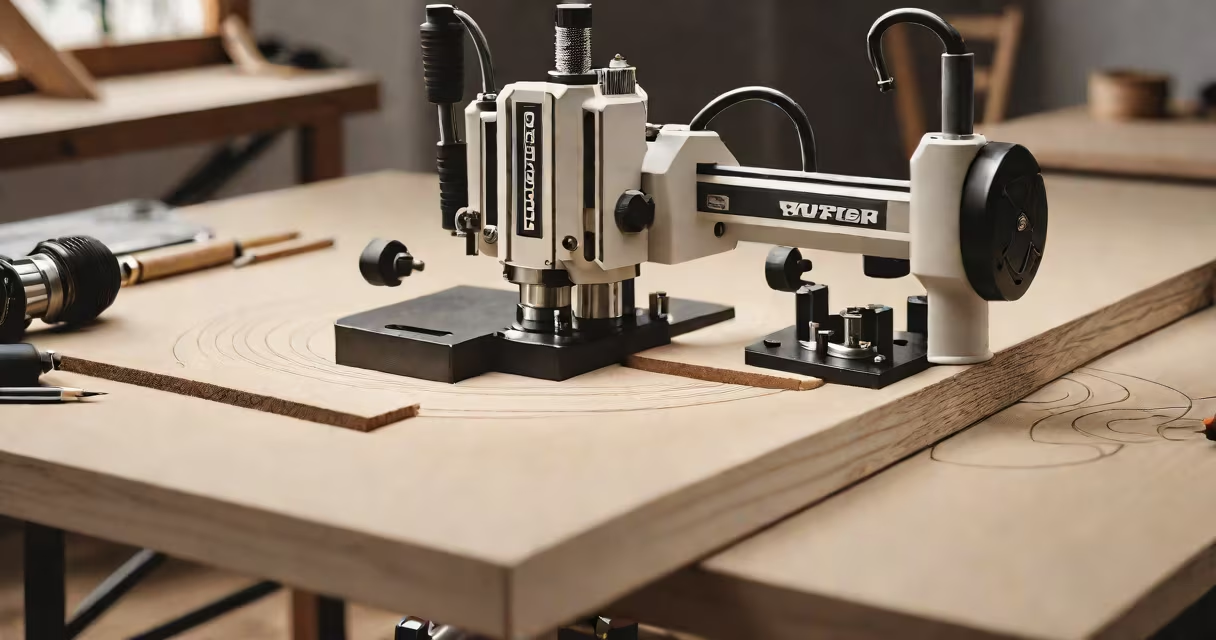
A woodworking router is a handheld power tool that spins a bit at high speed to cut, shape, or hollow out wood. The best routers for woodworking combine variable speed control, useful motors, and precise adjustments to handle tasks like edge profiling, joinery, and decorative cuts.
A router uses a rotating bit to remove material as the tool moves along the workpiece. The bit is mounted in a collet, which is attached to a motor spinning at thousands of RPMs. The depth of the cut is adjusted by lowering or raising the entire router base. Most routers have a plunge mechanism, allowing the bit to drop vertically into the wood for tasks like mortising.
| Type | Best For | Key Feature |
|---|---|---|
| Fixed-base router | Precision work | Stable platform for accurate cuts |
| Plunge router | Versatile tasks | Adjustable depth during operation |
| Combination kit | Professionals | Interchangeable bases for both fixed and plunge routing |
Router bits come in various shapes and sizes, each designed for specific tasks. Straight bits cut dados and grooves, while flush-trim bits level uneven edges. Round-over bits create rounded edges, and chamfer bits bevel them. Specialty bits include dovetail bits for joinery and decorative bits for complex patterns.
A quality router is essential for creating precise joints, smooth edges, and decorative details. It can replace multiple tools by performing tasks like cutting rabbets, tenons, and decorative moldings. A good router improves efficiency and accuracy, making it a key part of any serious woodworking shop.
I've used a combination router for years, and it's saved me countless hours compared to hand-cutting joints. The ability to adjust depth quickly and switch between bases makes it indispensable for both small projects and large-scale work.
Many beginners confuse routers with other power tools like circular saws or jigsaws. Unlike those tools, routers don't cut through the material-they remove small amounts of wood to shape it., routers aren't just for edges; they're also used for joinery, inlays, and even carving.
When selecting a router, consider motor power (measured in horsepower), variable speed control, and ease of adjustment. A 2.25-horsepower motor is sufficient for most tasks, while higher horsepower models handle demanding jobs like cutting hardwoods. Look for routers with ergonomic handles and dust collection ports for cleaner work.
The best routers for woodworking balance power, precision, and ease of use. a professional, investing in a quality router will improve your woodworking capabilities and open up new creative possibilities.