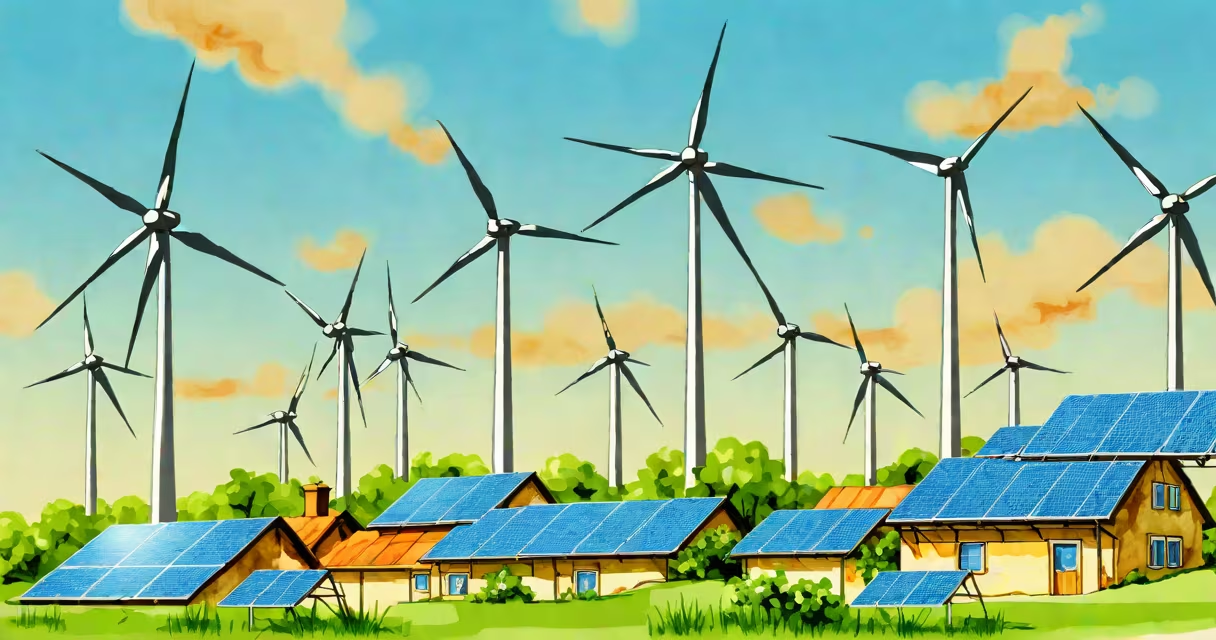
The best renewable energy source depends on location, cost, and application, but solar power leads global capacity additions. Wind energy ranks second, while hydroelectric remains dominant in installed capacity.
Renewable energy converts natural resources into electricity with minimal environmental impact. Unlike fossil fuels, these sources replenish naturally and emit little to no greenhouse gases during operation.
Each renewable source has unique characteristics affecting suitability:
| Type | Capacity (2023) | Key Advantage | Primary Limitation |
|---|---|---|---|
| Solar | 1,278 GW | Rapid deployment | Intermittency |
| Wind | 916 GW | High capacity factor | Geographic constraints |
| Hydro | 1,400 GW | Storage capability | Environmental impacts |
| Bioenergy | 156 GW | Dispatchable | Land use competition |
Source: IRENA
Texas leads U.S. wind generation (30% of national capacity) due to consistent panhandle winds. California prioritizes solar (40% of U.S. capacity) for its sunny climate. Both states achieve high renewable penetration through complementary approaches.
Emerging technologies like enhanced geothermal systems and advanced biofuels may reshape rankings. However, solar and wind will likely maintain leadership due to continuous efficiency improvements and falling costs.