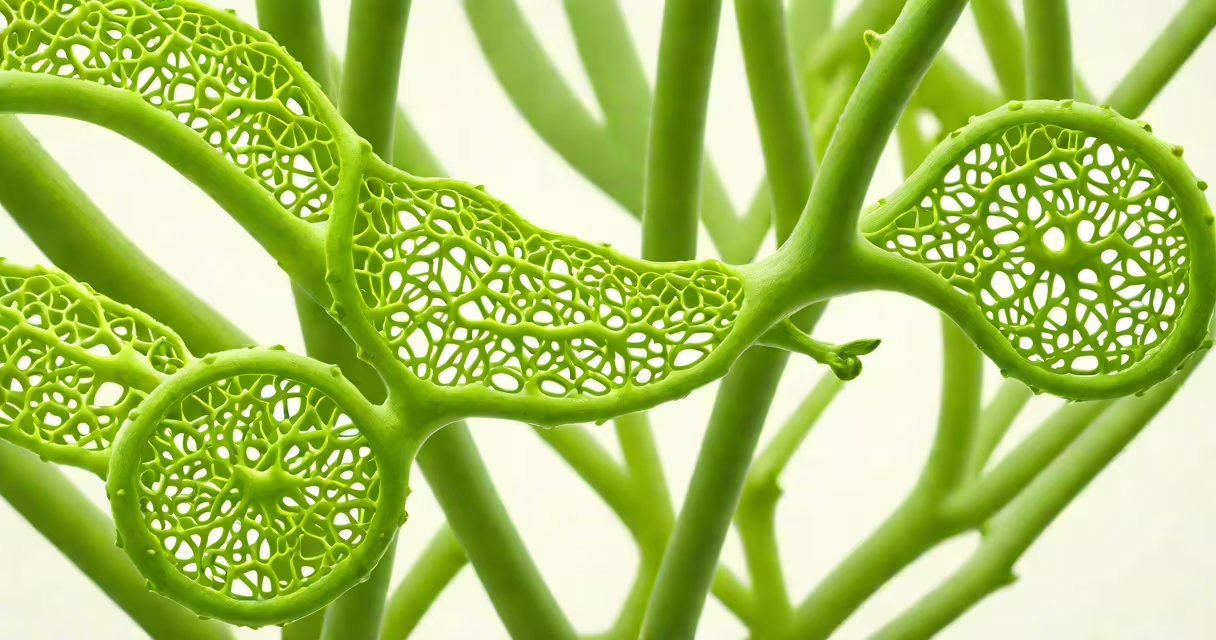
A stem is the main structural axis of a vascular plant that supports leaves, flowers, and fruits while transporting nutrients and water. It connects roots to shoots and contains nodes where leaves and branches form.
Stems serve multiple critical functions in plant biology. They provide physical support, allowing plants to grow upward toward sunlight. This vertical growth is called negative gravitropism. Stems also transport water, nutrients, and sugars between roots and leaves through specialized vascular tissues called xylem and phloem.
Stems store nutrients and energy reserves. Some stems, like those of potatoes, specialize in storing starch. Others, such as cacti, store water to survive arid conditions.
Stems come in various forms, each adapted to specific environments and functions:
| Type | Characteristics | Examples |
|---|---|---|
| Herbaceous | Soft, flexible, green, non-woody | Grasses, sunflowers |
| Woody | Hard, rigid, brown, contains lignin | Trees, shrubs |
| Rhizomes | Horizontal underground stems | Ginger, bamboo |
| Runners | Above-ground horizontal stems | Strawberries, mint |
| Tubers | Enlarged storage organs | Potatoes, yams |
Stems are essential for plant survival and reproduction. They position leaves for optimal photosynthesis and flowers for pollination. In agricultural systems, stems provide the structure for crops. For example, corn stalks support ears of corn, while grapevines produce fruit clusters along their stems.
Some plants, like ivy, use stems to climb and reach sunlight. Others, like cacti, modify stems to store water. The diversity of stem adaptations reflects the wide range of environments plants inhabit.
People often confuse stems with trunks. While both are part of a plant's support system, trunks are specifically the woody stems of trees that extend above ground. Trunks contain bark, which protects the tree from damage and disease.
Another misconception is that all stems are green. While many stems are green due to chlorophyll, others are brown, red, or yellow. Some stems lack chlorophyll entirely and rely on other parts of the plant for energy.
I once observed a fascinating example of stem adaptation during a visit to a desert botanical garden. The ocotillo plant ( Fouquieria splendens ) has thin, spiny stems that resemble cactus arms. These stems store water and can sprout leaves after rare desert rains, demonstrating how plants adapt to extreme environments.
Humans have used stems for centuries for food, medicine, and materials. Bamboo stems, for example, are used to build structures, make paper, and even as scaffolding in construction. Potato tubers provide a major food source worldwide, while ginger rhizomes are used in cooking and traditional medicine.
Understanding stem anatomy and function is important for agriculture, horticulture, and botany. Researchers study stems to improve crop yields, develop disease-resistant plants, and understand how plants respond to environmental changes.