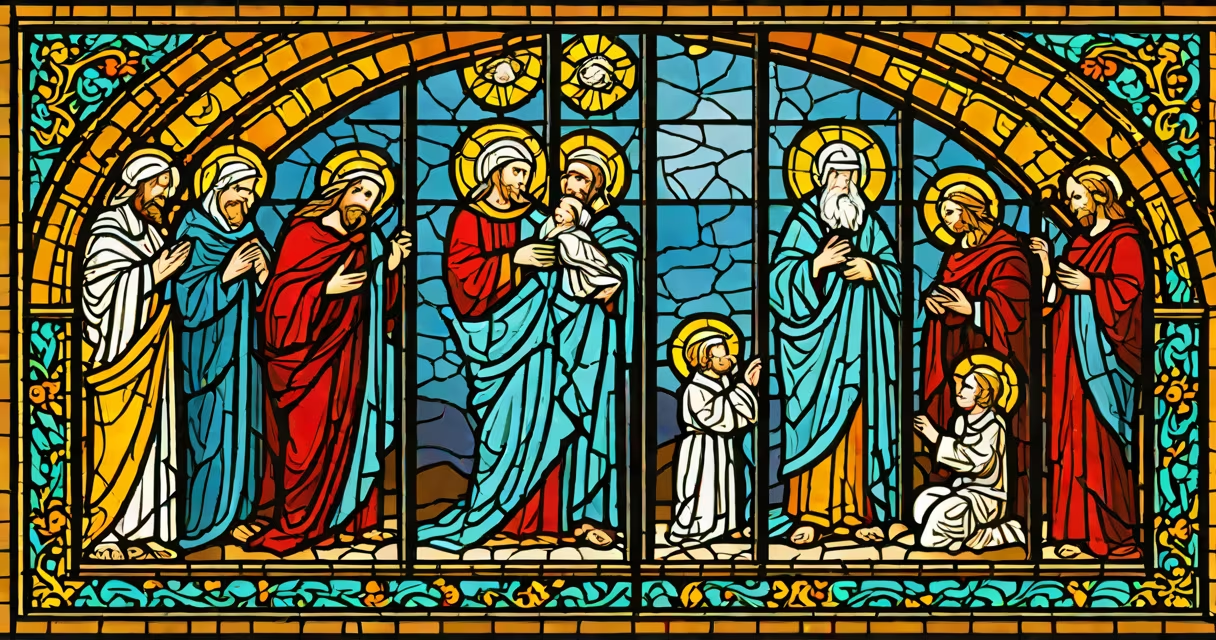
A miracle is an event that defies natural laws, often attributed to divine intervention. These occurrences are typically seen as evidence of supernatural power, though their existence remains debated.
Miracles are generally understood as interventions by a higher power that override or suspend the usual functioning of the physical universe. They are often described as instantaneous, complete, and beneficial. For example, the biblical account of Jesus walking on water (Matthew 14:22-33) is considered a miracle because it defies the natural law of buoyancy.
Miracles can be categorized based on their nature and context:
| Type | Description | Example |
|---|---|---|
| Theophany | Divine manifestation | Burning bush (Exodus 3:2) |
| Healing | Instantaneous cure of illness | Raising of Lazarus (John 11:38-44) |
| Nature | Control over natural elements | Calming the storm (Mark 4:39) |
| Resurrection | Restoration to life | Raising of the widow's son (Luke 7:11-15) |
Miracles are central to many religious traditions, serving as signs of divine presence and power. In Christianity, for instance, miracles are often tied to the ministry of Jesus and the apostles, reinforcing teachings and demonstrating God's authority. The Catholic Church recognizes miracles as part of the process for canonizing saints, such as the inexplicable healings attributed to Saint Padre Pio.
One frequent misunderstanding is equating miracles with mere coincidences or lucky events. True miracles, as defined by religious texts, involve a clear breach of natural laws witnessed by credible observers. Another misconception is assuming all religions view miracles identically. While Christianity emphasizes divine intervention, other faiths may interpret similar events differently. For example, in Hinduism, miracles might be linked to the actions of deities like Krishna, who is believed to have performed supernatural feats.
I once visited the Shrine of Our Lady of Lourdes in France, where thousands claim to have experienced miraculous healings. The medical committee there investigates each case rigorously, yet only a small fraction are recognized as miracles. This highlights the stringent criteria required to classify an event as miraculous.
From a scientific standpoint, miracles are often met with skepticism. The scientific method relies on observable, reproducible phenomena, whereas miracles are typically singular events with no repeatable conditions. However, some scientists argue that certain unexplained phenomena, like spontaneous remissions of disease, could be interpreted as miracles. The Lancet published a study in 1997 detailing cases of unexplained medical recoveries, though it stopped short of attributing them to divine intervention.
The definition of a miracle encompasses events beyond natural explanation, often attributed to divine intervention. Whether viewed through religious or scientific lenses, miracles remain a subject of fascination and debate, shaping beliefs and inspiring awe across cultures.