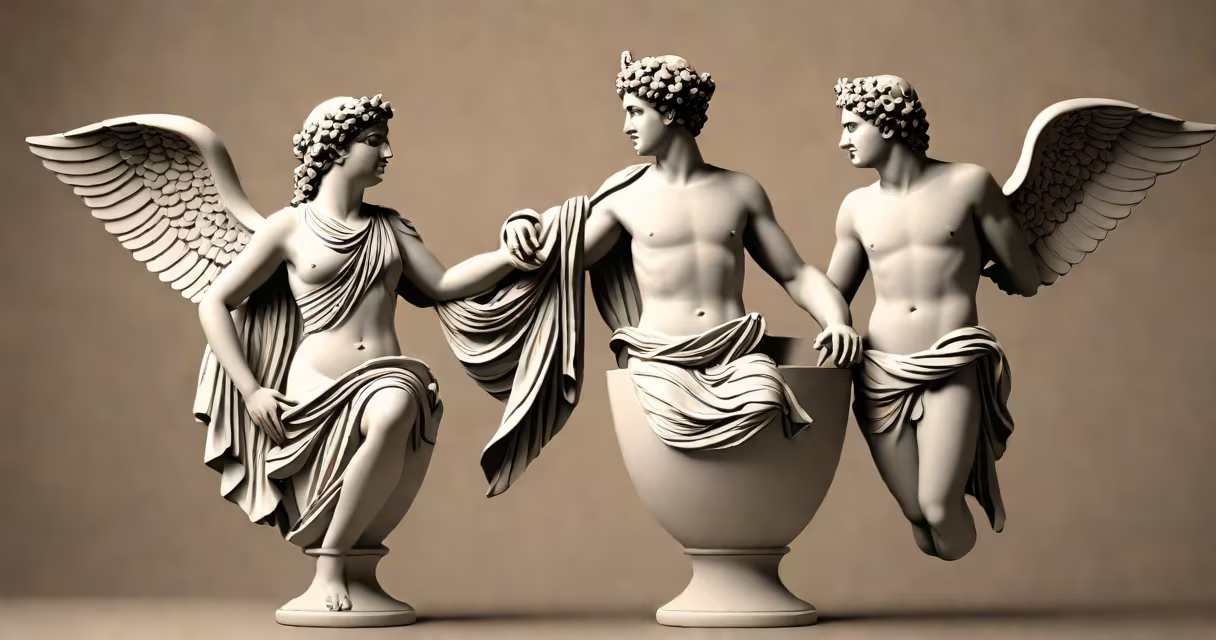
The psyche refers to the human mind, soul, or spirit, originating from Greek mythology and later adopted by psychology. It encompasses conscious and unconscious thoughts, feelings, and experiences.
The term "psyche" comes from the Greek word ψυχή (psukhḗ), meaning "breath," "life," or "soul." In mythology, Psyche was a mortal woman whose story of love and trials with the god Eros was immortalized in Metamorphoses by Apuleius. This narrative symbolizes the struggle between human and divine elements within the psyche.
Modern psychology defines the psyche as the totality of the mind, including conscious and unconscious aspects. Sigmund Freud divided it into three parts: the id (instinctual drives), ego (rational mediator), and superego (moral conscience). Carl Jung expanded this, introducing concepts like the collective unconscious and archetypes.
| Aspect | Psyche | Soul |
|---|---|---|
| Origin | Greek mythology and psychology | Religious and spiritual traditions |
| Focus | Mind, consciousness, and mental processes | Spiritual essence and eternal life |
| Study | Psychology | Theology and philosophy |
A common misconception is equating psyche with soul. While both relate to inner life, the psyche is studied scientifically, whereas the soul is often discussed in religious contexts.
The psyche is central to psychological theories, therapies, and self-help practices. For example, cognitive-behavioral therapy (CBT) targets maladaptive thought patterns within the psyche to improve mental health., the term appears in phrases like "psychological resilience," describing the ability to cope with stress.
I once worked with a therapist who used Jungian analysis to explore a client's psyche through dream interpretation. The process revealed recurring symbols tied to the client's collective unconscious, demonstrating how deeply embedded these concepts remain in psychological practice.
Some confuse the psyche with the brain, but they are distinct. The brain is the physical organ, while the psyche represents mental functions. Others mistake the psyche for the ego, though the ego is just one component of the psyche in Freudian theory.
Another error is assuming the psyche is purely individual. Jung argued that it includes both personal and collective elements, shared across humanity. For instance, the archetype of the "shadow" represents repressed, unconscious aspects present in everyone.
The definition of psyche spans mythology and psychology, representing the complex interplay of mind, soul, and spirit. Understanding its components and historical context clarifies its role in both ancient stories and modern mental health practices.