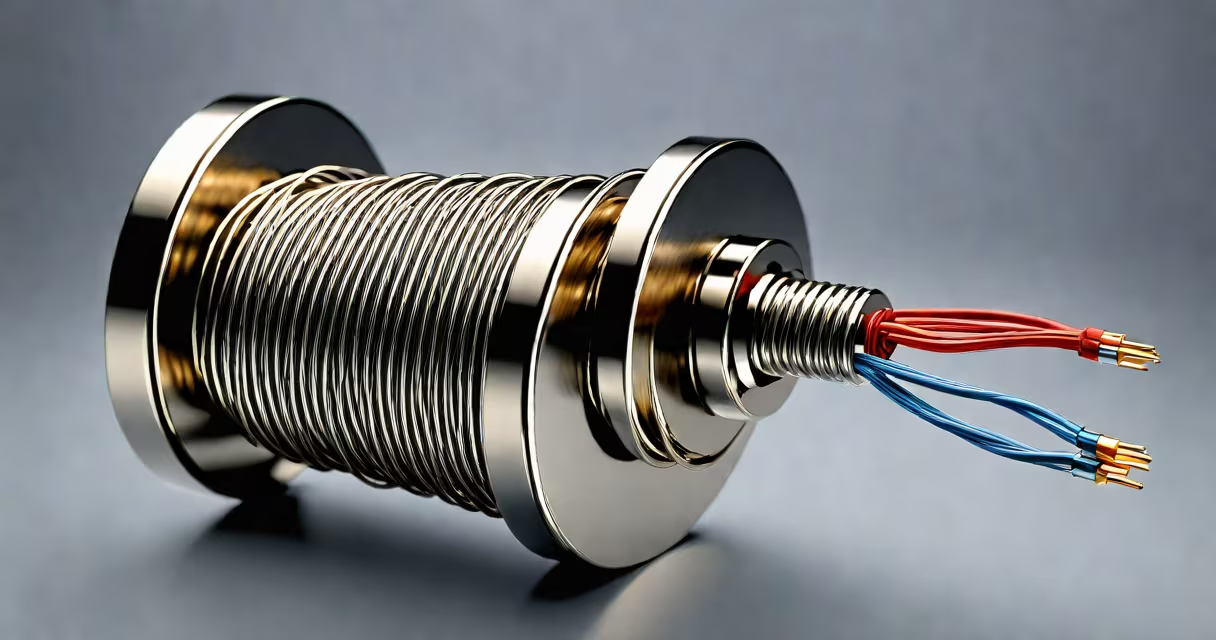
An electromagnet is a device that produces a magnetic field when an electric current flows through it. Unlike permanent magnets, which are always magnetic, electromagnets only generate magnetism when activated.
Electromagnets rely on the principle of electromagnetism, discovered by Michael Faraday in 1820. When electricity flows through a wire, it generates a magnetic field around the conductor. Wrapping the wire into a coil intensifies this effect.
Most electromagnets use an iron core inside the coil. Iron enhances the magnetic field due to its high magnetic permeability. When the current stops, the magnetic field collapses, and the iron core loses its magnetism.
Electromagnets consist of three primary components:
Electromagnets have diverse uses in daily life and industry:
A common misconception is that electromagnets remain magnetic indefinitely. In reality, they only produce a magnetic field while current flows through them. This makes them versatile for applications requiring temporary magnetism.
| Feature | Electromagnet | Permanent Magnet |
|---|---|---|
| Activation | Requires electric current | Always magnetic |
| Strength Control | Adjustable via current | Fixed strength |
| Material | Usually iron core with copper wire | Ferromagnetic materials like neodymium |
For example, the electromagnets in MRI machines can be precisely controlled to create varying magnetic field strengths during imaging procedures. This flexibility is impossible with permanent magnets.
I once observed an electromagnet in action at a recycling facility. A large electromagnet on a crane could be turned on and off to pick up and drop scrap metal. The operator could precisely control when the magnet engaged, making material sorting efficient and safe.
Understanding the meaning of electromagnet reveals how fundamental this concept is to modern technology. From medical equipment to industrial machinery, electromagnets play a important role in countless applications.