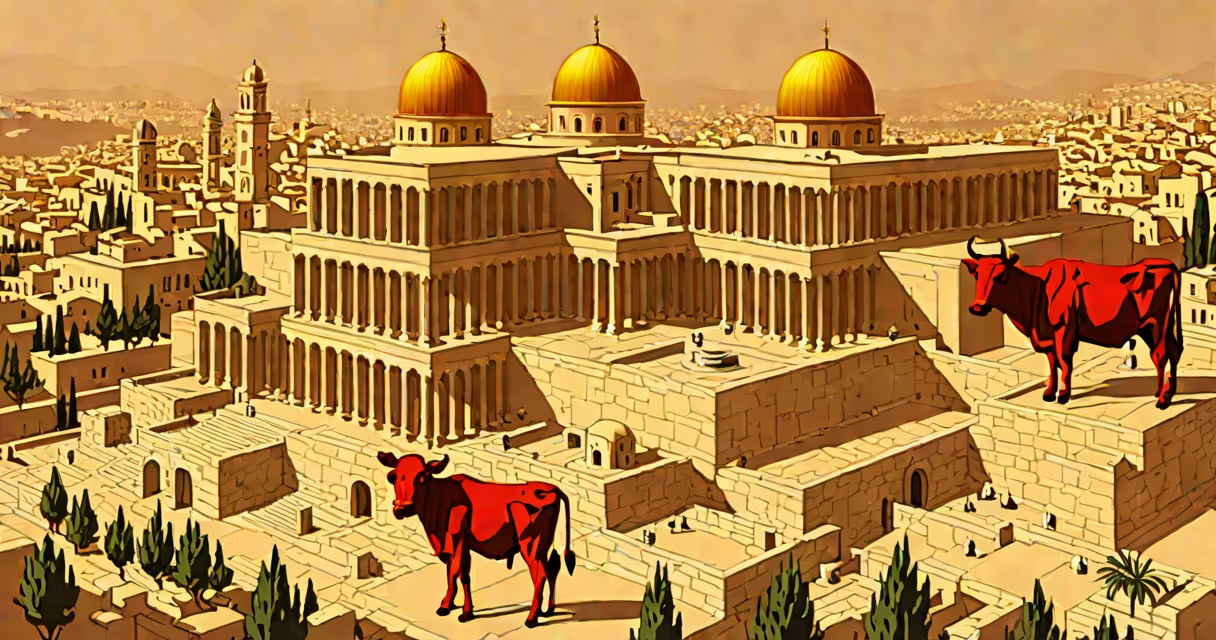
The red heifer is a specific unblemished cow whose ashes were used in ancient Jewish purification rituals, particularly for cleansing people who had come into contact with death. This practice is detailed in the Bible, specifically in Numbers 19.
The red heifer ritual was part of the Jewish Temple service in Jerusalem. According to the Torah, the ashes of a red heifer, mixed with water, were used to purify individuals who had become ritually impure through contact with a corpse. This purification was necessary before they could enter the Temple or participate in religious ceremonies.
The red heifer had to meet strict criteria: it had to be completely red, without any other hair color, and without blemishes. It also had to be three years old. The animal was sacrificed outside the camp, and its ashes were then collected and stored for use in purification rituals. The process was highly ritualized and involved specific actions by the priests.
Today, the red heifer holds significant symbolic value in Jewish tradition. Some religious groups, particularly those advocating for the rebuilding of the Third Temple in Jerusalem, view the discovery of a suitable red heifer as a important step toward resuming ancient Temple rituals. This belief has sparked both excitement and controversy within the Jewish community and among archaeologists and historians.
In recent years, there have been claims of finding potential red heifers, though none have met all the strict biblical criteria. The search for a qualifying red heifer continues to be a topic of interest and debate.
One common misconception is that the red heifer's significance is purely symbolic or metaphorical. However, according to traditional Jewish interpretation, the red heifer's ashes had a very practical purpose in the purification process. The ritual was not merely symbolic but was believed to have real, tangible effects on ritual purity.
During a visit to the Israel Museum in Jerusalem, I saw a display that included a model of the ancient Temple and explanations of various rituals, including the red heifer ceremony. The exhibit highlighted the meticulous nature of the ritual and the importance placed on every detail, from the color of the heifer to the location of its sacrifice.
The red heifer remains a fascinating subject, bridging ancient religious practices and modern interpretations. Its significance continues to be explored and debated, reflecting its enduring importance in Jewish tradition.