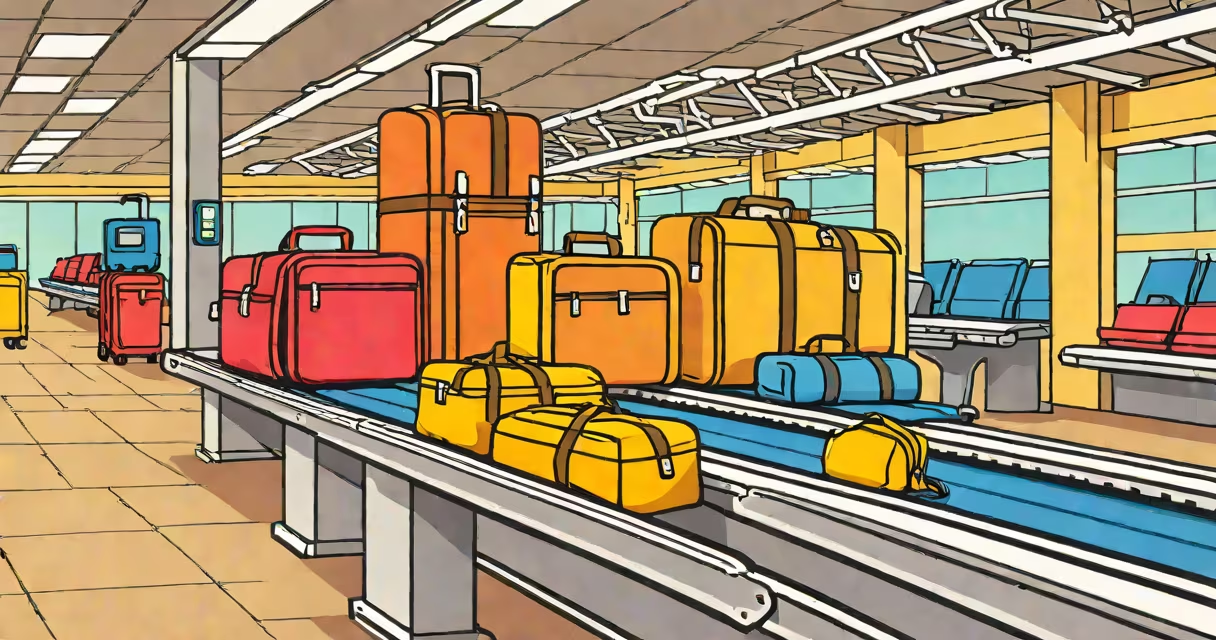
A checked bag typically measures 27 inches long, 21 inches wide, and 14 inches tall (68 x 53 x 35 cm), though airlines vary. Most U.S. carriers impose a 50-70 pound (23-32 kg) weight limit.
While dimensions follow general patterns, weight limits differ more dramatically. Delta and United allow 50 pounds (23 kg) for domestic flights but increase to 70 pounds (32 kg) for international routes. American Airlines maintains a consistent 50-pound (23 kg) limit globally, while budget carriers like Spirit and Frontier often restrict bags to 40 pounds (18 kg).
Some airlines measure linear inches (length + width + height) rather than cubic inches. For example, Southwest's free checked bags cannot exceed 62 linear inches (157 cm) combined. This creates a trade-off between dimensions: a taller bag may require reducing width or length to stay within limits.
| Type | Dimensions | Weight Limit | Example Airlines |
|---|---|---|---|
| Standard | 27 x 21 x 14 in (68 x 53 x 35 cm) | 50 lbs (23 kg) | Delta, United, American |
| Oversized | 32 x 23 x 14 in (81 x 58 x 35 cm) | 70 lbs (32 kg) | International routes |
| Budget Carrier | 26 x 20 x 14 in (66 x 50 x 35 cm) | 40 lbs (18 kg) | Spirit, Frontier |
Checked bags must fit on airport conveyor belts and in cargo holds, which have standardized dimensions. The International Air Transport Association (IATA) recommends 32 x 20 x 11 inches (81 x 50 x 28 cm) for cargo compatibility, though most airlines allow slightly larger bags. Weight limits exist because planes have strict payload capacities, and heavier bags increase fuel consumption.
Most airlines charge $30-$50 for the first checked bag on domestic U.S. flights. Exceeding size or weight limits typically costs $50-$200 extra. Overweight fees apply even if the bag fits within dimensional limits.
Another mistake is assuming all airlines use the same measurement system. Some European carriers use kilograms and centimeters exclusively, while U.S. airlines often mix pounds and inches. Always check your airline's specific policies before packing.
To stay within limits, use a luggage scale to weigh bags before leaving home. Distribute heavy items evenly between bags if traveling with a partner. Wear bulky clothing instead of packing it, and use packing cubes to maximize space efficiency.
When in doubt, pack light. Many budget airlines charge for even the first checked bag, making carry-ons more economical. For international trips, consider shipping excess luggage separately or using a luggage delivery service.
Pro tip: If your bag is slightly overweight, remove non-essentials like books or toiletries and carry them onboard. I once avoided a $100 fee by repacking a 52-pound bag down to 49 pounds at the check-in counter.
The Transportation Security Administration (TSA) allows most everyday items in checked luggage, including electronics, medications, and baby supplies. Always declare lithium batteries and other potentially dangerous goods to avoid fines.