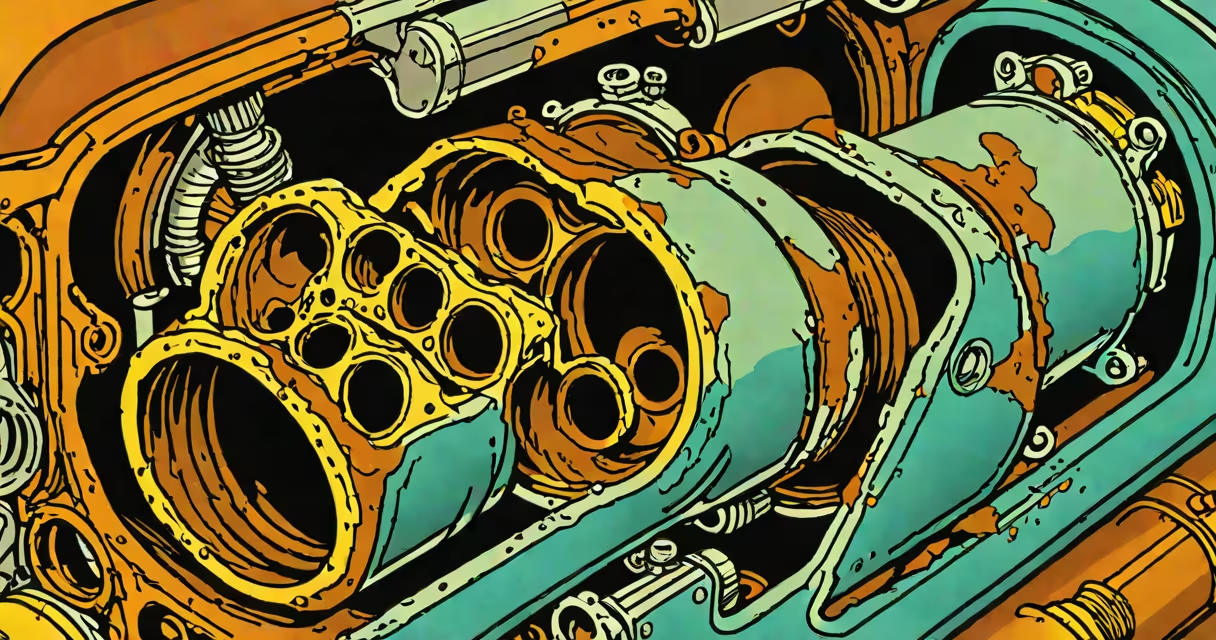
A catalytic converter degrades when its internal catalyst material loses effectiveness due to contamination, physical damage, or excessive heat. This reduces emissions control and can trigger engine warning lights or failure in emissions tests.
Catalytic converters convert harmful pollutants-carbon monoxide, nitrogen oxides, and unburned hydrocarbons-into less harmful gases like carbon dioxide, nitrogen, and water vapor. They do this through chemical reactions on a honeycomb-like ceramic or metal substrate coated with precious metals such as platinum, palladium, and rhodium. When these materials degrade or become blocked, the system fails.
Common failure modes include melting from engine misfires, poisoning from leaded fuel or oil additives, clogging from coolant leaks, or mechanical damage from road debris. The average lifespan is 100,000 miles under normal conditions, but early failure often stems from preventable issues.
The converter operates by channeling exhaust gases through a porous ceramic or metallic substrate. As hot exhaust passes through, the catalyst layer triggers oxidation and reduction reactions. Platinum and palladium oxidize carbon monoxide and hydrocarbons. Rhodium reduces nitrogen oxides into nitrogen and oxygen.
These reactions require precise temperature ranges-typically between 300°C and 600°C. Below this threshold, the catalyst doesn't activate. Above it, thermal stress can cause the substrate to crack or melt. A single severe misfire can spike temperatures past 1,000°C, damaging the internal structure.
Contaminants also impair function. Lead from leaded gasoline coats the catalyst surface, preventing contact with exhaust gases. Oil or coolant entering the combustion chamber creates ash deposits that clog flow channels. These blockages increase backpressure, reducing engine performance and increasing fuel consumption.
Failure isn't uniform. Different issues affect different parts of the system. The table below outlines common failure types, their root causes, and diagnostic signs.
| Failure Type | Primary Cause | Diagnostic Sign | Typical Repair Cost |
|---|---|---|---|
| Thermal meltdown | Engine misfires, prolonged high RPM | Melted substrate, visible glow or deformation | $1,200-$2,500 |
| Chemical poisoning | Leaded fuel, silicone-based sealants | Reduced conversion efficiency, failed emissions test | $1,000-$2,000 |
| Physical blockage | Oil burning, coolant leak, sludge buildup | High backpressure, rough idle, reduced power | $800-$1,800 |
| Internal cracking | Impact from road debris, thermal cycling | Exhaust noise, rattling sound, vibration | $900-$2,200 |
One non-obvious factor: using aftermarket oil additives containing zinc or phosphorus can accelerate catalyst degradation. These elements form compounds that coat the catalyst surface. Even small amounts-0.1% in oil-can reduce efficiency by 15% within 10,000 miles, according to the U.S. Environmental Protection Agency (EPA).
Another overlooked issue is improper installation. Replacing a converter without checking for underlying engine faults leads to rapid re-failure. For example, a cracked spark plug tube can allow oil into the exhaust, causing long-term contamination. Diagnosing the root cause before replacement avoids recurring costs.
Most vehicles have one catalytic converter located between the exhaust manifold and muffler. It's typically bolted to the exhaust pipe near the front or center of the vehicle. You can locate it by tracing the exhaust system from the engine down to the rear.
On older models, especially those with carburetors or early fuel injection systems, the converter may be larger and heavier. Modern vehicles often use dual converters-one upstream and one downstream-to monitor efficiency. The upstream unit handles primary emissions control; the downstream checks performance.
If you're inspecting your vehicle, look for signs of damage: dents, rust, or holes in the casing. A loud rattle when shaking the unit indicates internal collapse. The exhaust should smell faintly of sulfur during startup, but a strong rotten egg odor suggests sulfur buildup from incomplete conversion.
For visual reference, see how to locate your converter.
Many assume that catalytic converters fail randomly. But data from the National Highway Traffic Safety Administration (NHTSA) shows 78% of failures correlate with prior engine issues-misfires, oil burning, or coolant leaks. Ignoring these symptoms accelerates converter wear.
Consider a 2016 Ford F-150 with 85,000 miles. The owner reported poor acceleration and a check engine light. A scan revealed P0420-low efficiency in the catalytic converter. Further diagnosis showed a cracked intake manifold gasket allowing coolant into the cylinder. Over time, steam and acidic byproducts degraded the catalyst. Replacing the gasket and flushing the system prevented further damage. The converter was repaired, not replaced.
Another myth: "Aftermarket converters last longer." In reality, OEM-spec units meet strict emission standards and are designed for specific engine tuning. Aftermarket units may lack proper substrate density or catalyst loading. A 2021 study by the California Air Resources Board found that 34% of non-OEM converters failed within 50,000 miles due to lower thermal stability.
I once inspected a 2012 Honda Accord with a bent catalytic converter. The driver had hit a pothole at high speed. The impact cracked the internal honeycomb, creating a blockage. The car lost 15% of its power and emitted black smoke. Replacement cost $1,400. The fix wasn't complex-but the damage was entirely avoidable.
Regular engine maintenance prevents most converter failures. Replace spark plugs and ignition coils on schedule. Use only API-certified oil (SN or higher) to avoid contaminants. Address engine misfires immediately-don't ignore the check engine light.
Use only manufacturer-approved sealants and cleaners. Avoid products labeled "engine cleaner" with silicones or phosphorus. These can vaporize and deposit on the catalyst. The EPA warns against such additives, stating they can reduce catalyst life by up to 40%.
Drive regularly. Short trips prevent the converter from reaching operating temperature, leading to condensation and acid buildup. Long-term, this erodes the catalyst layer. Driving at highway speeds at least once a week helps maintain internal dryness.
When replacing a converter, choose a part that meets EPA certification standards. Look for the "EPA-approved" label or a CARB Executive Order number. Installing a non-compliant unit can result in fines during state inspections.