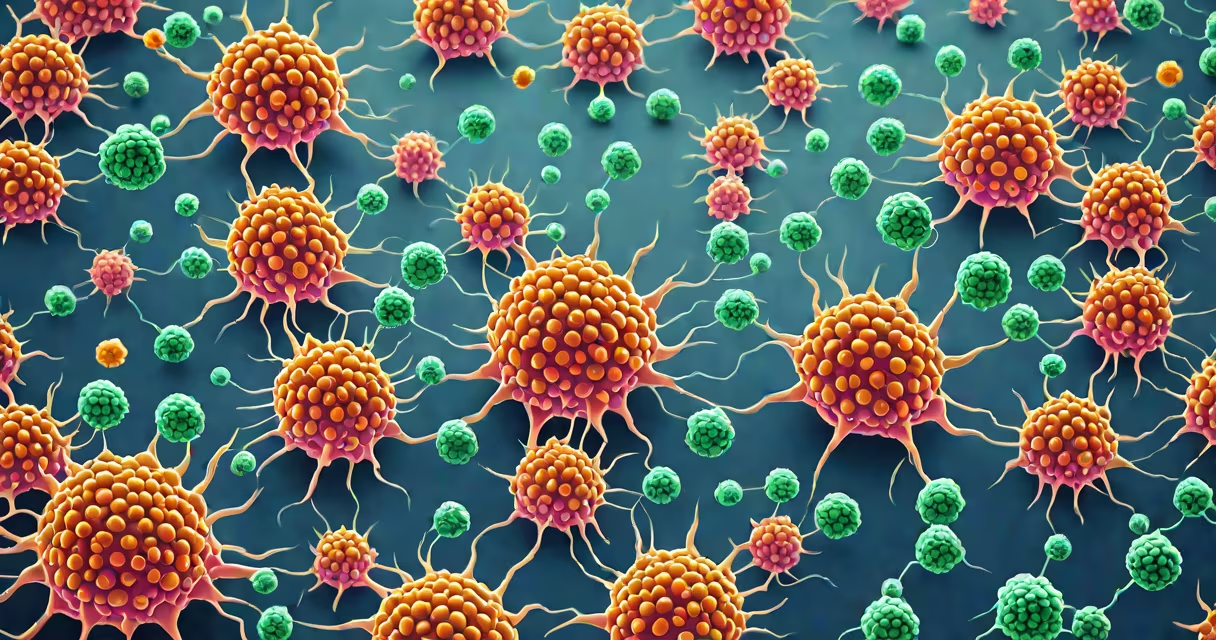
Cancer grows due to uncontrolled cell division caused by genetic mutations that disable growth-regulating mechanisms. These mutations activate oncogenes or deactivate tumor suppressor genes, creating tumors that invade nearby tissues and spread.
Normal cells follow strict division rules, but cancer cells bypass these controls. Mutations in DNA repair genes allow errors to accumulate, while mutations in cell cycle regulators cause rapid, unchecked proliferation. For example, mutations in the TP53 gene-found in over half of human cancers-disable a critical tumor suppressor.
| Type | Mechanism | Example |
|---|---|---|
| Oncogenes | Genes that promote cell growth when mutated | RAS gene mutations in 30% of cancers |
| Tumor Suppressors | Genes that prevent cancer when functional | BRCA1/2 in breast and ovarian cancers |
| DNA Repair Genes | Genes that fix DNA errors | MLH1 in colorectal cancer |
Mutations can be inherited or caused by external factors like UV radiation, smoking, or viruses. The more divisions a cell undergoes, the higher the risk of mutations. For example, lung cells exposed to cigarette smoke accumulate mutations 10 times faster than normal.
Many believe cancer is a single disease, but it's over 100 distinct diseases with different growth patterns. Another myth is that cancer always spreads quickly-some tumors grow slowly for years before becoming aggressive.
I once worked with a researcher studying pancreatic cancer. She found that some tumors grew invisibly for a decade before sudden, rapid expansion. This highlights why early detection is important.
Therapies target specific growth mechanisms. Chemotherapy kills fast-dividing cells, while immunotherapy boosts the immune system to attack cancer. For example, drugs like palbociclib block proteins that drive cell division in breast cancer.
According to the National Cancer Institute, targeted therapies have improved survival rates by 30% in some cancers by focusing on mutations like EGFR in lung cancer.