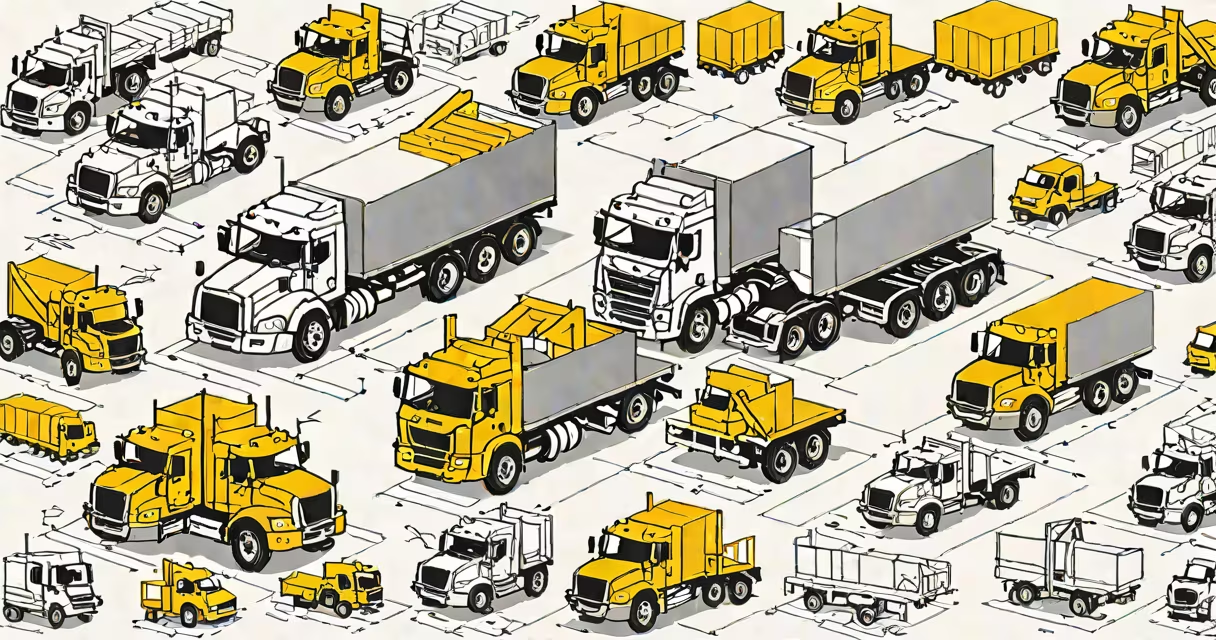
A truck is a heavy-duty vehicle designed for transporting goods, constructed with a sturdy chassis, useful engine, and high payload capacity. It differs from passenger cars through specialized features like reinforced suspension systems, larger tires, and enclosed cargo areas.
Trucks share key components with other vehicles but are engineered for durability and load-bearing:
Trucks prioritize utility over comfort. For example, the Ford F-150 has a maximum payload of 3,325 pounds, while most SUVs max out at 1,500 pounds. Trucks also feature higher ground clearance for off-road navigation and reinforced frames to handle stress from towing.
Many assume all trucks are identical, but they vary widely. Light-duty trucks (e.g., Toyota Tacoma) serve personal use, while Class 8 trucks (e.g., Kenworth W900) haul interstate freight. Another misconception is that trucks lack safety features-modern models include adaptive cruise control and lane-keeping assist.
I once observed a fleet of Mack Anthem trucks unloading at a warehouse. Their air-ride suspensions leveled automatically, demonstrating how specialized features improve efficiency. This practical design separates trucks from other vehicles.