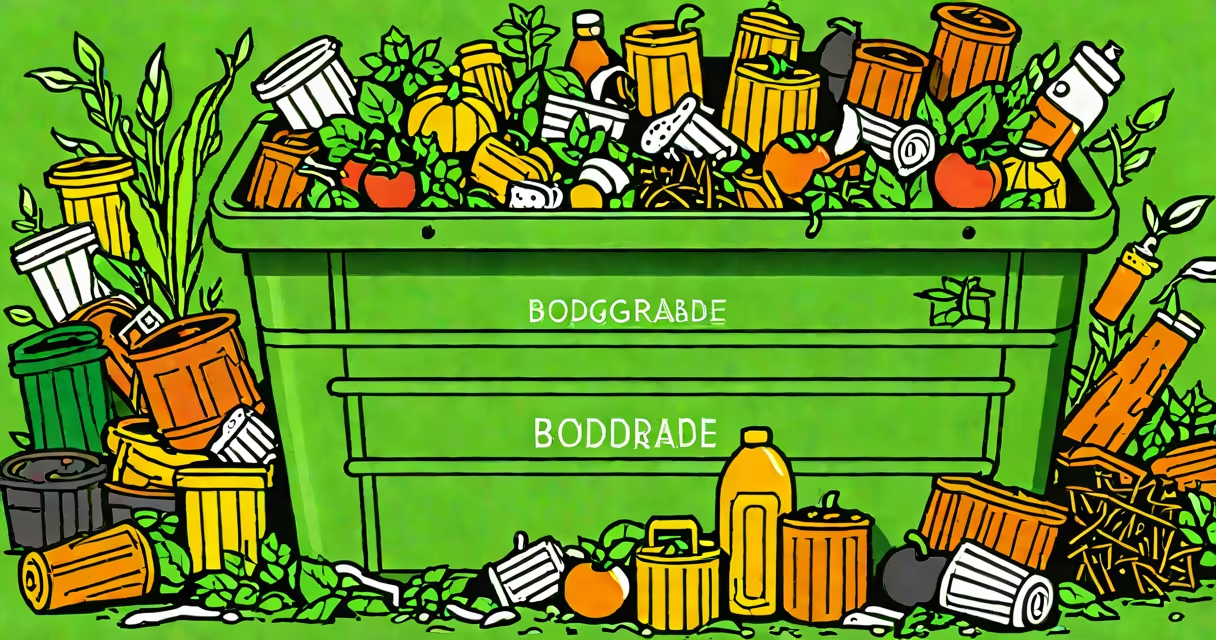
Biodegradable products are items made from organic materials that decompose naturally within months, unlike plastic which takes centuries. These products typically contain plant-based components like corn starch, sugarcane, or cellulose.
Biodegradation occurs when microorganisms like bacteria and fungi break down organic material into water, carbon dioxide, and biomass. This process requires oxygen, moisture, and the right temperature. For example, a banana peel left in soil will decompose within weeks, while a plastic bag may take 450 years.
| Category | Examples | Decomposition Time |
|---|---|---|
| Food Packaging | Compostable food containers, PLA cutlery | 60-180 days |
| Personal Care | Toothbrushes, cotton swabs, shampoo bottles | 3-6 months |
| Household Items | Trash bags, sponges, cleaning wipes | 90-120 days |
Many people confuse biodegradable products with compostable ones. While all compostable products are biodegradable, not all biodegradable products are compostable. Compostable items meet specific standards for decomposition in commercial composting facilities, whereas biodegradable products may break down in various environments, including landfills or oceans.
Another myth is that biodegradable products always decompose quickly. The speed depends on environmental conditions. For instance, a biodegradable plastic bag left in a dry, airless landfill may take years to degrade, whereas the same bag left in a garden would decompose within months.
Biodegradable products reduce landfill waste and pollution. According to the Environmental Protection Agency, Americans generate about 292 million tons of waste annually, with plastics making up 12%. Switching to biodegradable alternatives can lower this impact.
For example, replacing conventional plastic straws with biodegradable ones reduces marine pollution. A study by Science Advances found that over 8 million tons of plastic enter the ocean yearly, harming marine life. Biodegradable straws dissolve harmlessly, protecting aquatic ecosystems.
Non-biodegradable products, like most plastics, persist in the environment for centuries. Polyethylene terephthalate (PET), commonly used in water bottles, takes 450 years to decompose. In contrast, a biodegradable water bottle made from polylactic acid (PLA) breaks down in 6 months under the right conditions.
Microsoft has explored biodegradable materials for packaging, aiming to reduce electronic waste. Their efforts show how even large corporations are shifting toward sustainability.
Choosing biodegradable products supports a circular economy, where waste is minimized, and resources are reused. This shift is important for reducing landfill waste and protecting the environment for future generations.