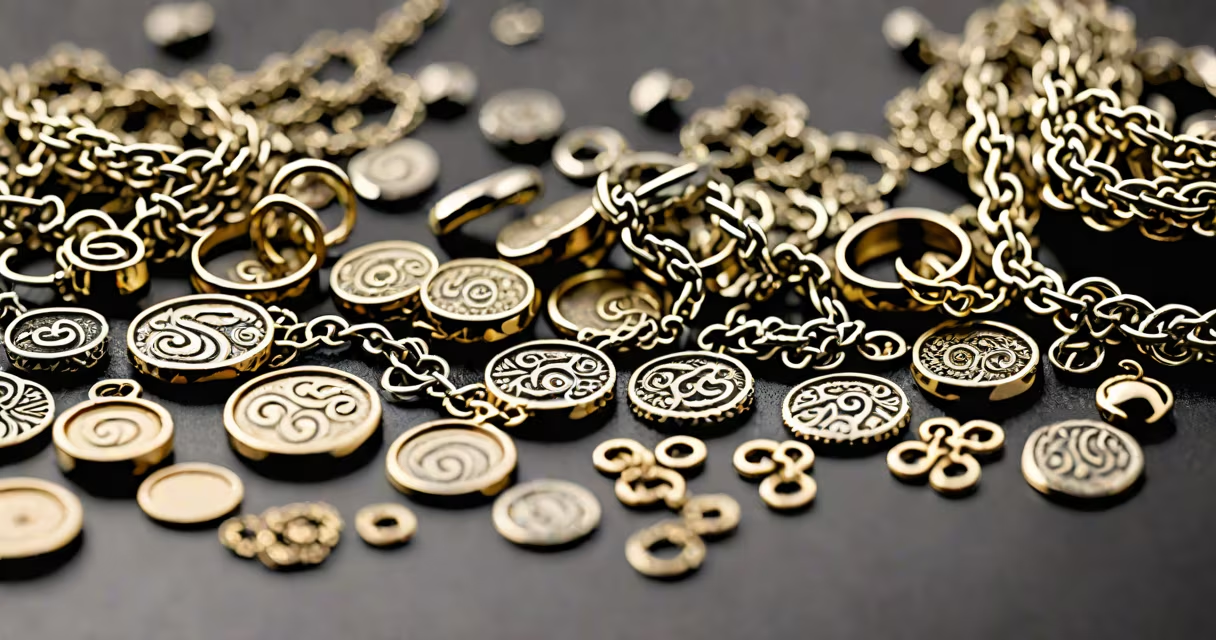
Sterling silver is an alloy containing 92.5% pure silver and 7.5% other metals, usually copper. This mixture creates a durable material used in jewelry, tableware, and decorative items.
Pure silver (99.9% fine silver) is too soft for practical use. By adding other metals, sterling silver gains strength while retaining most of silver's beauty and workability. The most common alloy is 92.5% silver and 7.5% copper, but other metals like zinc, nickel, or germanium may substitute for copper in some cases.
| Alloy Type | Composition | Common Uses |
|---|---|---|
| Standard Sterling Silver | 92.5% silver, 7.5% copper | Jewelry, flatware, decorative objects |
| Argentium Sterling Silver | 92.5% silver, 7.5% germanium/copper/zinc | Jewelry (tarnish-resistant) |
| Nickel Silver | 60% silver, 20% copper, 20% nickel | Costume jewelry, musical instruments |
Sterling silver's durability and aesthetic appeal make it ideal for high-end jewelry, luxury tableware, and decorative items. Its malleability allows artisans to craft complex designs. The alloy's tarnish resistance (especially Argentium) extends its lifespan compared to pure silver.
A common misconception is that all sterling silver contains nickel. While some alloys do, standard sterling silver uses copper. Nickel is sometimes added for specific properties like hardness or to reduce tarnishing, but it's not universal.
Many confuse sterling silver with other silver alloys like coin silver (90% silver, 10% copper) or Britannia silver (95.8% silver). These differ in purity and use cases. For example, coin silver was historically used for currency, while sterling silver is preferred for jewelry due to its higher silver content and better workability.
When I crafted my first sterling silver ring, I used standard 92.5% silver and 7.5% copper alloy. The copper added necessary hardness while preserving the silver's luster. After casting and polishing, the ring displayed the classic white sheen of sterling silver, distinct from the brighter shine of pure silver.