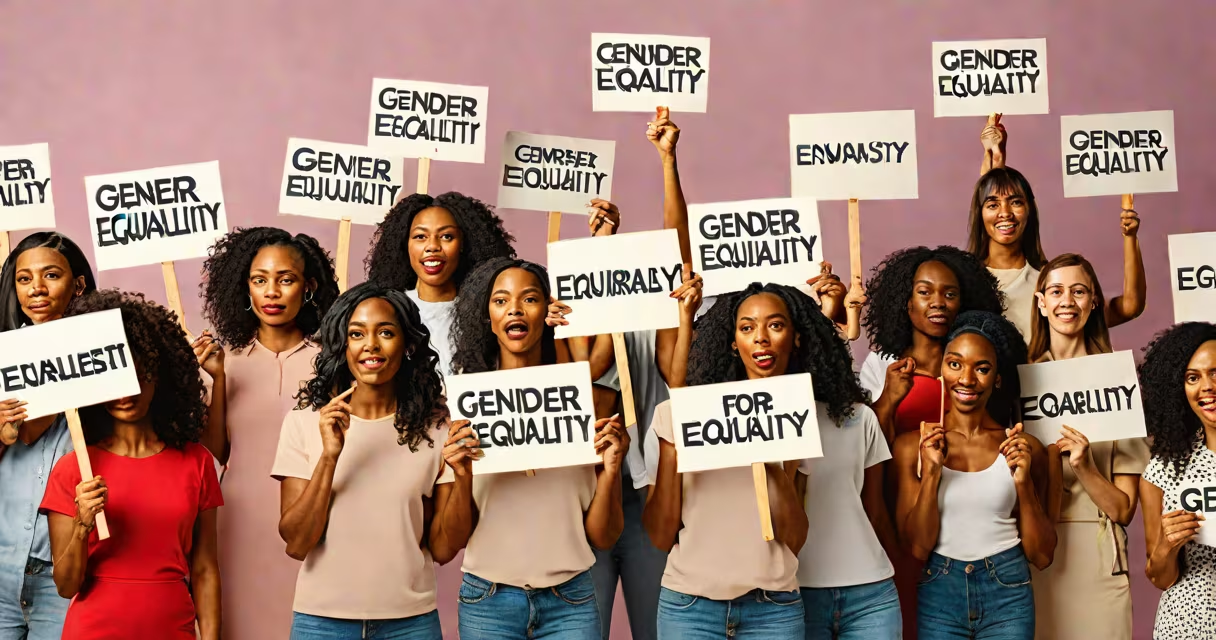
Feminism is a social, political, and cultural movement advocating for equal rights and opportunities for all genders, with a particular focus on women's rights. At its core, feminism seeks to challenge and dismantle systemic inequalities that disadvantage women and other marginalized groups.
Feminism operates through advocacy, activism, education, and policy reform. It challenges societal norms that perpetuate gender inequality, such as wage gaps, underrepresentation in leadership roles, and cultural expectations around caregiving and domestic labor. Feminists work to create systemic changes that ensure equal access to education, healthcare, and economic opportunities.
For example, the fight for suffrage-a movement led by feminists-resulted in women gaining the right to vote in many countries, including the United States in 1920. Similarly, the push for equal pay has led to laws like the U.S. Equal Pay Act of 1963, which prohibits wage discrimination based on sex.
Feminism isn't a monolithic movement; it encompasses various branches, each with distinct focuses and methods. Here are the most prominent types:
| Type | Key Focus | Example Advocacy Area |
|---|---|---|
| Liberal Feminism | Equality within existing systems | Advocating for women in corporate leadership |
| Radical Feminism | Root causes of patriarchy | Challenging male dominance in politics |
| Intersectional Feminism | Overlapping identities (race, class, gender) | Supporting Black women facing racial and gender bias |
| Eco-Feminism | Connection between women's rights and environmental issues | Promoting sustainable agriculture led by women |
Intersectional feminism, a term coined by Kimberlé Crenshaw, emphasizes that gender inequality cannot be addressed in isolation from other forms of oppression, such as racism, homophobia, and classism. This approach helps feminist movements are inclusive and address the unique challenges faced by women of color, LGBTQ+ women, and low-income women.
Feminism is often misunderstood as a movement that seeks to dominate men or undermine traditional gender roles. However, true feminism advocates for balance and equality, not superiority. Many people confuse feminism with misandry-the hatred of men-but this is a false assumption. Feminism aims to create a society where both men and women can thrive without being constrained by outdated gender stereotypes.
Another misconception is that feminism is only relevant to women. In reality, men benefit from feminism as well. For instance, challenging toxic masculinity-expectations that men must be aggressive or emotionally detached-helps men lead healthier, more fulfilling lives. Feminism also advocates for shared parenting responsibilities, allowing men to participate more actively in family life.
When I worked in a male-dominated industry, I witnessed firsthand how gender bias affected career progression. Women were often overlooked for promotions despite having the same qualifications as their male counterparts. Recognizing this disparity, I joined a local feminist group that advocated for workplace equality. Through their efforts, our company implemented blind hiring practices, which improved gender diversity in leadership roles.
Feminism remains important because gender inequality persists globally. According to the World Economic Forum, it will take approximately 140 years to close the global gender gap at the current rate of progress. Feminism continues to push for change in areas such as reproductive rights, workplace equity, and representation in government. Movements like #MeToo have highlighted the prevalence of sexual harassment and assault, further emphasizing the need for feminist advocacy.