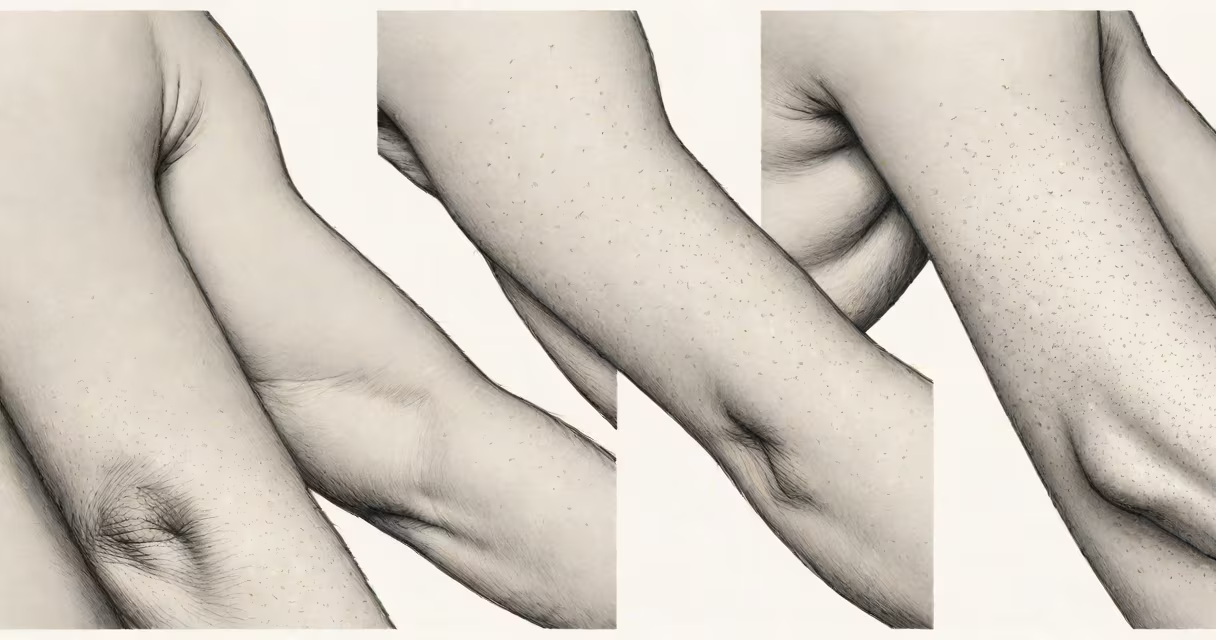
Keratosis pilaris (KP) is a common skin condition causing small, rough bumps, often on the arms, thighs, or cheeks. To treat it, use gentle exfoliants, moisturizers with ceramides, and products containing lactic acid or urea.
KP occurs when keratin builds up around hair follicles, blocking them. Treatments focus on loosening and removing dead skin cells while hydrating the area. Exfoliants like alpha hydroxy acids (AHAs) or beta hydroxy acids (BHAs) dissolve the keratin plugs. Moisturizers with humectants (like glycerin) and emollients (like shea butter) soften the skin.
The most effective treatments combine exfoliation and hydration. Here's a breakdown:
| Treatment Type | Key Ingredients | How It Helps |
|---|---|---|
| Exfoliants | Lactic acid, glycolic acid, salicylic acid | Dissolves dead skin cells and unclogs pores |
| Moisturizers | Ceramides, urea, shea butter | Restores skin barrier and reduces roughness |
| Retinoids | Adapalene, tretinoin | Speeds up cell turnover and reduces bumps |
KP appears most often on the back of the upper arms, thighs, and cheeks. It's harmless but can cause discomfort or self-consciousness. The best approach is consistent skincare. For example, applying a lactic acid lotion daily can gradually smooth the skin over weeks.
Many people confuse KP with acne or eczema. Unlike acne, KP doesn't involve inflammation or pus. Unlike eczema, it's not caused by allergies or irritants. KP is genetic and linked to dry skin. Another mistake is over-exfoliating, which can worsen irritation. Stick to gentle, regular exfoliation and moisturizing.
I tested several products on my arms, including a 10% lactic acid lotion and a ceramide-rich moisturizer. After four weeks of daily use, the bumps softened, and my skin felt smoother. The key was consistency-skipping days slowed progress.