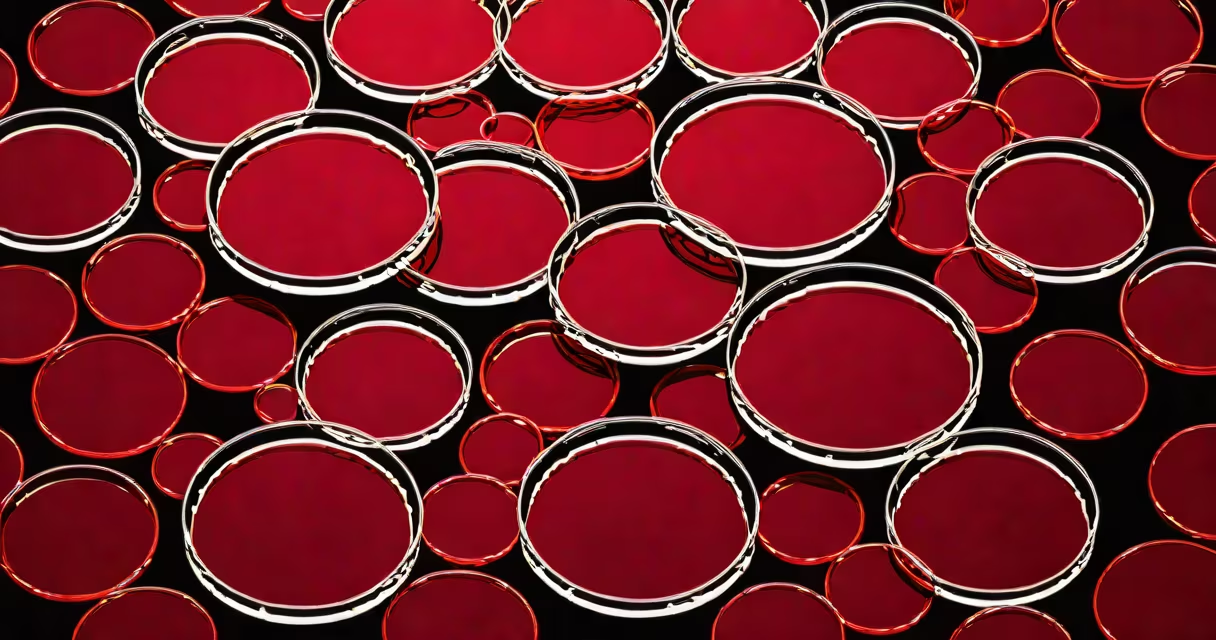
Blood agar is a type of growth medium used in microbiology labs to cultivate bacteria and study their characteristics. It contains sheep, horse, or cow blood to support microbial growth and reveal hemolytic reactions.
This medium is essential for identifying bacteria based on their ability to break down blood cells. It's particularly useful for differentiating streptococcus species, which exhibit distinct hemolytic patterns on blood agar.
Blood agar provides nutrients and a red cell-rich environment for bacterial growth. When bacteria are streaked onto the surface, they may lyse (break down) the red blood cells, creating clear zones around colonies. This hemolysis indicates the bacterium's enzymatic activity.
The medium's preparation involves melting agar base, cooling it to 45-50°C, adding defibrinated blood, and pouring it into Petri dishes. The blood must stay liquid during mixing to avoid clotting, which would make the medium unusable.
Blood agar comes in two primary forms:
Some specialized versions include:
Microbiologists rely on blood agar for several key reasons:
For example, Streptococcus pyogenes shows complete beta-hemolysis (clear zone), while Staphylococcus aureus exhibits partial alpha-hemolysis (greenish zone). These patterns aid in preliminary identification.
Many assume blood agar is only for streptococci, but it supports a broad spectrum of bacteria. While it's excellent for hemolysis studies, it's not the sole medium for bacterial cultivation. Other media like MacConkey or EMB agar serve different purposes, such as differentiating gram-negative bacteria.
Another misconception is that all blood agar contains human blood. In reality, sheep and horse blood are more common due to availability and consistent results. Human blood agar exists but is less frequently used.
I once observed a lab technician mistakenly using expired blood agar, leading to poor bacterial growth. Always check expiration dates to ensure medium potency.