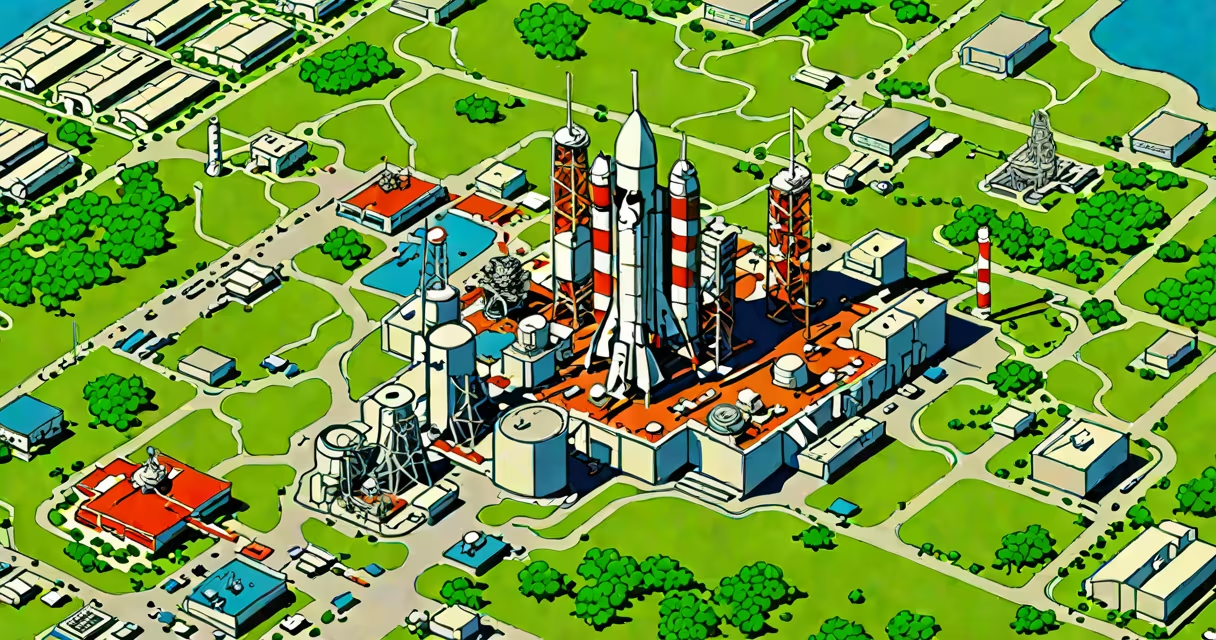
NASA operates from multiple locations across the United States, with each site specializing in different aspects of space exploration and research. The agency's headquarters is in Washington, D.C., while major centers like Johnson Space Center in Houston handle astronaut training and mission control.
The NASA Headquarters (HQ) in Washington, D.C., serves as the administrative hub for the agency. It oversees policy, planning, and budget management for all NASA activities. The HQ coordinates efforts between the various field centers and ensures alignment with national space policies.
NASA's work is distributed across several major centers, each with specific responsibilities:
| Center Name | Location | Primary Function |
|---|---|---|
| Johnson Space Center (JSC) | Houston, Texas | Astronaut training, mission control, and human spaceflight operations |
| Kennedy Space Center (KSC) | Florida | Launch operations and spacecraft assembly |
| Jet Propulsion Laboratory (JPL) | Pasadena, California | Robotic spacecraft missions and deep-space exploration |
| Marshall Space Flight Center (MSFC) | Huntsville, Alabama | Propulsion systems, spacecraft design, and scientific research |
Johnson Space Center's Mission Control Center (MCC) is the nerve center for human spaceflight operations. It monitors and manages missions in real-time, communicating with astronauts aboard the International Space Station (ISS) and other spacecraft. The MCC coordinates with other NASA centers and international partners to ensure mission success.
During my visit to Johnson Space Center, I observed a simulation of mission control operations. The room was filled with screens displaying data from various systems, and controllers worked in shifts to monitor every aspect of the mission. This hands-on experience highlighted the complexity and precision required for space missions.
Kennedy Space Center in Florida is NASA's primary launch site. It features the iconic Vehicle Assembly Building (VAB) and multiple launch pads. KSC handles the preparation, assembly, and launch of spacecraft, including the Space Shuttle program and upcoming Artemis missions to the Moon.
Jet Propulsion Laboratory (JPL) in Pasadena, California, focuses on robotic spacecraft missions and deep-space exploration. JPL has developed numerous spacecraft, including the Mars rovers and the Voyager probes. The center also conducts research in Earth science, astronomy, and planetary science.
According to NASA's official website, JPL collaborates with universities and research institutions worldwide to advance space exploration technologies. The lab's new projects have led to significant discoveries, such as evidence of water on Mars and detailed studies of distant exoplanets.
Many people assume that NASA is solely based in Washington, D.C., or that all its operations are centered in one location. In reality, NASA's work is distributed across multiple centers, each specializing in different aspects of space exploration. For example, while the headquarters in Washington, D.C., manages policy and administration, the Johnson Space Center in Houston is responsible for astronaut training and mission control.
Another misconception is that NASA only focuses on human spaceflight. While human spaceflight is a significant part of NASA's mission, the agency also conducts extensive research in robotics, Earth science, and astrophysics. The Jet Propulsion Laboratory, for instance, specializes in robotic spacecraft missions and deep-space exploration.
NASA collaborates with space agencies from around the world, including the European Space Agency (ESA), the Japan Aerospace Exploration Agency (JAXA), and the Canadian Space Agency (CSA). These partnerships enable shared resources, expertise, and technology, leading to more ambitious and successful space missions.
For instance, the International Space Station (ISS) is a joint project involving NASA, Roscosmos (Russia), ESA, JAXA, and CSA. The ISS serves as a microgravity laboratory where scientists conduct research in biology, physics, astronomy, meteorology, and other fields.
NASA's operations are spread across multiple locations, each playing a important role in space exploration and research. From the administrative headquarters in Washington, D.C., to the launch facilities in Florida and research centers in California, NASA's diverse sites work together to advance our understanding of the universe. Understanding where NASA is located helps appreciate the scale and complexity of its missions.