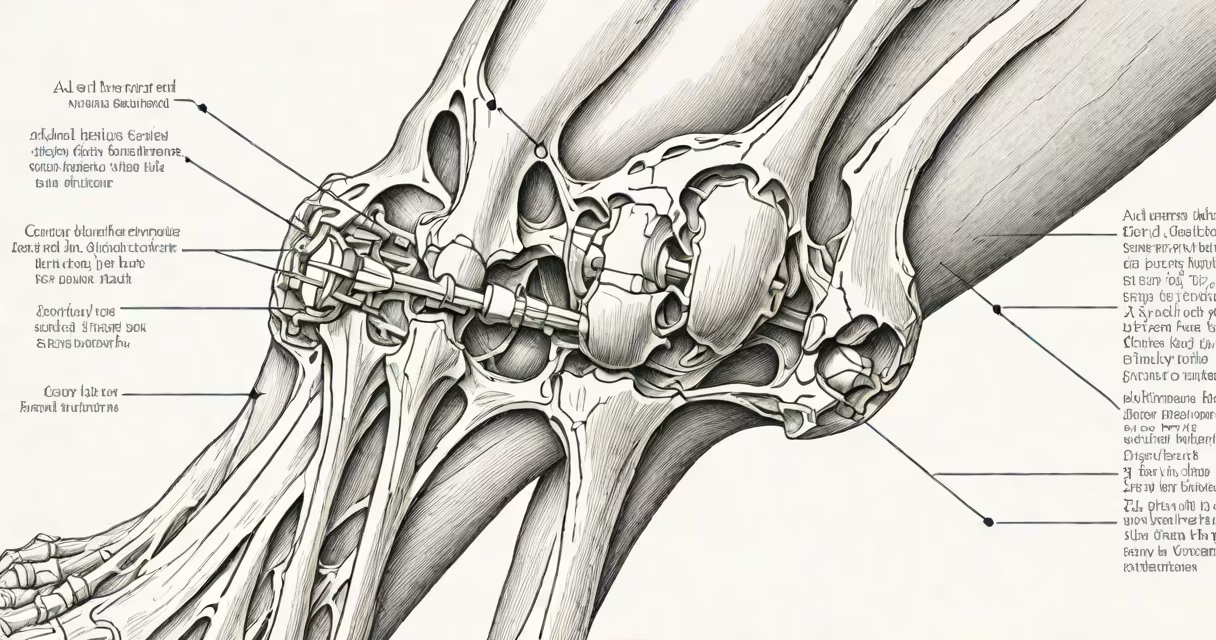
The anterior cruciate ligament (ACL) connects your thighbone (femur) to your shinbone (tibia) deep inside the knee joint. This ligament crosses in front of another ligament called the posterior cruciate ligament (PCL), forming an "X" pattern that stabilizes your knee during rotation and forward/backward movements.
The ACL prevents excessive forward movement of the tibia relative to the femur and limits rotational forces. It works with other knee structures like the medial collateral ligament (MCL) and lateral collateral ligament (LCL) to provide stability during activities such as running, jumping, and pivoting.
ACL injuries typically occur through sudden stops, changes in direction, or direct contact to the knee. The most common types include:
| Type | Description |
|---|---|
| Partial Tear | Some fibers are torn, but others remain intact |
| Complete Tear | All fibers are torn, causing significant instability |
| Chronic Injury | Long-term wear and tear leading to gradual degeneration |
Many people confuse the ACL with the PCL, which runs behind the ACL and prevents backward movement of the tibia. Unlike the ACL, the PCL is less prone to sports-related injuries but can be injured in high-impact situations like car accidents.
When I played soccer in college, I witnessed several teammates suffer ACL injuries. One player tore their ACL during a game while attempting to pivot quickly. The injury occurred when their foot stayed planted while their knee twisted inward, placing excessive strain on the ACL. Recovery involved surgery and months of physical therapy to restore knee stability and strength.
The ACL's position within the knee makes it vulnerable to injury during high-demand activities. Understanding its role and location helps athletes and active individuals take preventive measures, such as strengthening surrounding muscles and using proper techniques during sports.
For more details on recovering from ACL injuries, see managing pain after ACL surgery.