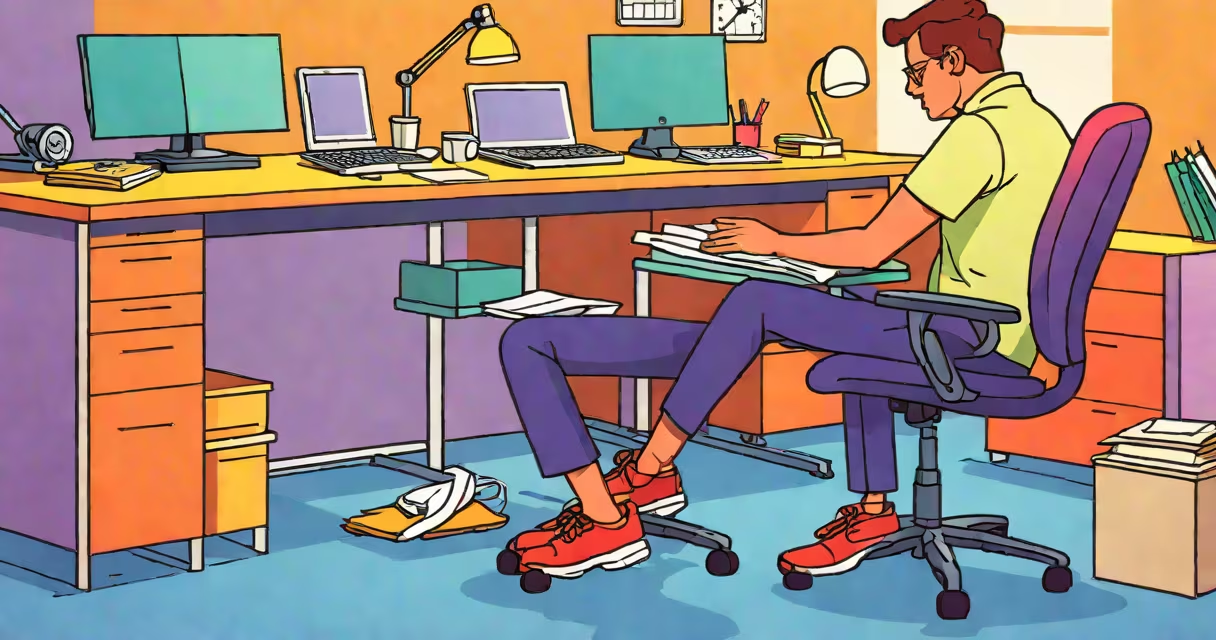
Knee pain from sitting occurs because prolonged sitting reduces blood flow, stiffens joints, and strains muscles. These factors combine to create discomfort or sharp pain, especially after long periods of inactivity.
When you sit, your knees remain bent at a 90-degree angle. This position compresses the joints and reduces circulation, causing fluid buildup and stiffness. Over time, this can lead to inflammation and pain.
Muscles around the knee, such as the quadriceps and hamstrings, also weaken when inactive. Weak muscles provide less support for the knee joint, increasing strain and discomfort.
Knee pain from sitting can manifest in different ways:
Several factors contribute to knee pain from sitting:
| Cause | Description |
|---|---|
| Poor posture | Slouching or crossing legs puts uneven pressure on the knees. |
| Weak muscles | Inactive quadriceps and hamstrings reduce knee support. |
| Joint stiffness | Lack of movement causes fluid buildup and reduced flexibility. |
| Underlying conditions | Arthritis, tendonitis, or previous injuries can worsen pain. |
For example, someone with osteoarthritis may experience increased knee pain after sitting for hours due to cartilage breakdown. Similarly, a sedentary lifestyle can exacerbate muscle imbalances, leading to discomfort.
To avoid knee pain, take regular breaks to stand and stretch. Every 30 minutes, stand up and walk for a few minutes to improve circulation and reduce stiffness.
Strengthening exercises, such as leg lifts or squats, can also help. A study published in the Journal of Orthopaedic & Sports Physical Therapy found that strengthening the quadriceps and hamstrings reduces knee pain by 40%.
Proper ergonomics matter too. Adjust your chair so your feet rest flat on the floor, and avoid crossing your legs. If you work at a desk, consider a standing desk or a knee pad for added support.
I noticed significant improvement in my knee discomfort after implementing these changes. Simple adjustments like setting hourly reminders to stretch made a big difference.
If knee pain persists despite lifestyle changes, consult a healthcare professional. Persistent pain could indicate an underlying condition, such as arthritis or a torn meniscus. A doctor can recommend treatments like physical therapy, medications, or injections.
Knee pain from sitting results from reduced circulation, muscle weakness, and joint stiffness. Addressing these issues through regular movement, strengthening exercises, and proper ergonomics can help prevent discomfort. If pain persists, seek medical advice to rule out underlying conditions.