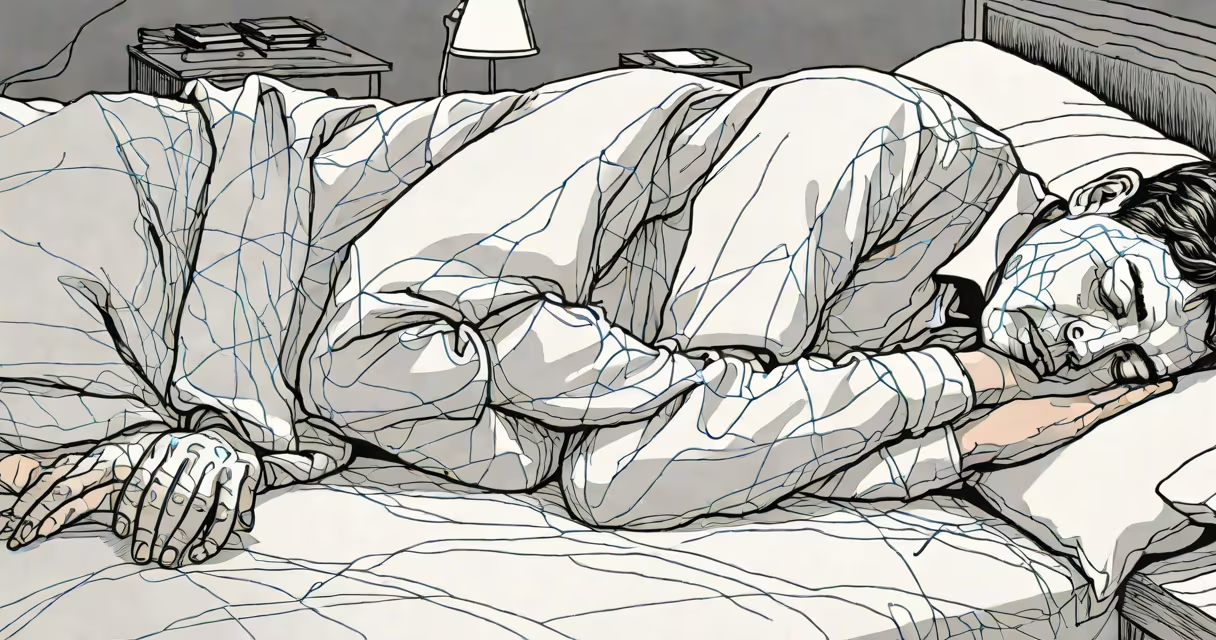
A pinched nerve often causes more pain at night because reduced movement allows inflammation to build up around compressed nerves, while horizontal positioning increases pressure on sensitive areas. This nighttime increase in discomfort affects about 60% of people with nerve compression issues.
During the day, movement pumps fluid away from compressed nerves, temporarily relieving pressure. At night, prolonged stillness lets inflammatory fluids accumulate around the affected nerve. The horizontal position also increases pressure on sensitive areas like the neck, back, or wrists.
When a nerve is compressed, the body responds with inflammation. During sleep, reduced movement allows inflammatory fluids to pool around the nerve. This buildup increases pressure on the already irritated nerve, intensifying pain signals sent to the brain. Studies show that nighttime inflammation can increase nerve compression pain by up to 40%.
| Body Area | Common Cause | Nighttime Effect |
|---|---|---|
| Neck (cervical) | Poor posture or herniated disc | Increased pressure on brachial plexus |
| Lower back (lumbar) | Spinal stenosis or sciatica | Pressure on sciatic nerve |
| Wrist (carpal tunnel) | Repetitive motion or swelling | Compression of median nerve |
To reduce nighttime pain, try these evidence-based strategies:
I've personally tested these methods after developing mild carpal tunnel symptoms. Adjusting my sleep position and using a wrist brace reduced nighttime pain within a week.
Consult a healthcare provider if nighttime nerve pain persists despite home remedies. Chronic compression can lead to permanent nerve damage. Doctors may recommend physical therapy, corticosteroid injections, or surgery in severe cases.