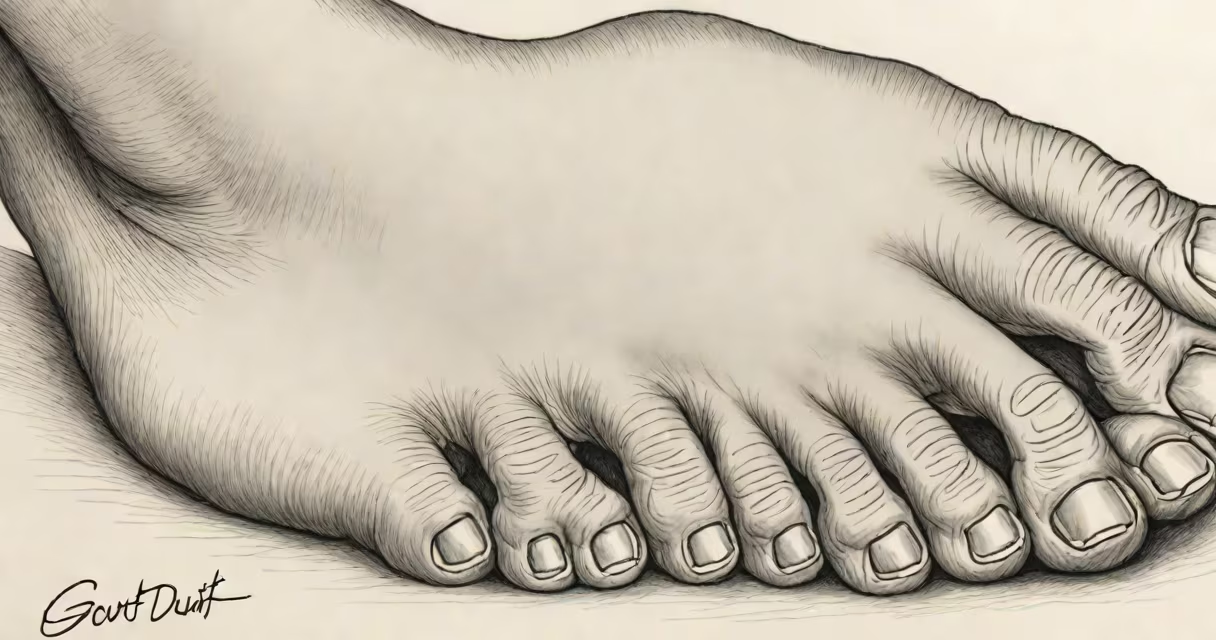
Gout pain often intensifies at night due to circadian rhythms slowing urine production and the body's inflammatory response peaking during sleep. The condition occurs when uric acid crystals accumulate in joints, typically the big toe, causing sudden, severe pain.
Gout develops when excess uric acid in the blood forms sharp crystals that deposit in joints. These crystals trigger inflammation, leading to swelling, redness, and intense pain. The big toe is commonly affected because it's the coolest part of the body, and uric acid crystals form more easily at lower temperatures.
| Type | Description |
|---|---|
| Acute gout | Sudden, severe attacks lasting days to weeks |
| Interval gout | Period between attacks when no symptoms are present |
| Chronic gout | Recurrent attacks with persistent symptoms |
| Tophaceous gout | Visible lumps (tophi) under the skin due to uric acid crystal deposits |
Several factors contribute to increased gout pain at night:
Research published in Arthritis & Rheumatology confirms that gout attacks often begin at night or early morning, with 75% occurring between midnight and sunrise.
To alleviate nighttime gout pain:
I've found that keeping a heating pad nearby and elevating my foot on a pillow reduces nighttime gout pain during flare-ups.
Consult a doctor if:
Early diagnosis and treatment can prevent joint damage and kidney stones, which are common complications of untreated gout.