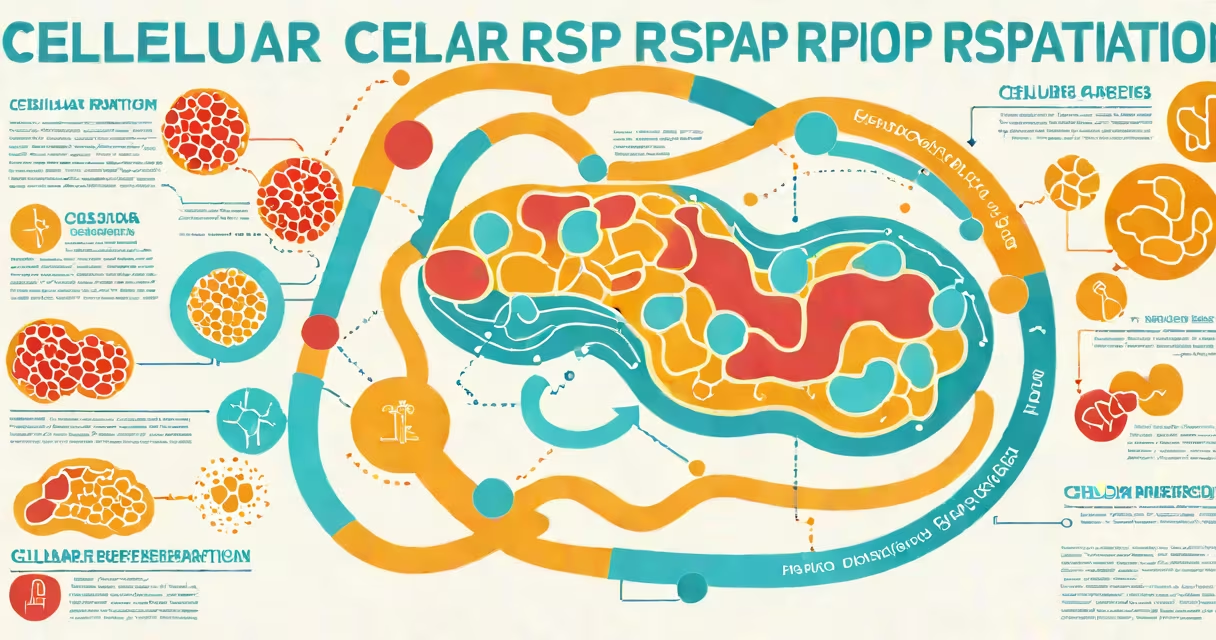
Cellular respiration is the set of metabolic reactions that convert biochemical energy from nutrients into adenosine triphosphate (ATP), the cell's energy currency. This process sustains all biological functions, from muscle movement to cognitive processes.
Cellular respiration occurs in three main stages: glycolysis, the Krebs cycle, and oxidative phosphorylation. Glycolysis breaks down glucose in the cytoplasm, producing pyruvate. The Krebs cycle further metabolizes pyruvate in the mitochondria, generating electron carriers. Finally, oxidative phosphorylation uses these carriers to produce ATP through the electron transport chain.
| Type | Process | Location | ATP Yield |
|---|---|---|---|
| Aerobic Respiration | Requires oxygen | Mitochondria | 36-38 ATP |
| Anaerobic Respiration | Does not require oxygen | Cytoplasm | 2 ATP |
| Fermentation | Produces lactic acid or ethanol | Cytoplasm | 2 ATP |
Every living organism, relies on cellular respiration. In humans, it occurs primarily in muscle cells, liver cells, and brain cells-tissues with high energy demands. Without it, cells couldn't maintain homeostasis, repair damage, or perform specialized functions like neurotransmission or contraction.
Many confuse cellular respiration with breathing, but they're distinct. Breathing supplies oxygen, while cellular respiration uses that oxygen to produce ATP. Another misconception is that only animals perform cellular respiration-plants do too, though they primarily use photosynthesis for energy.
For example, during intense exercise, muscles switch to anaerobic respiration when oxygen is scarce, producing lactic acid. This causes fatigue and soreness, demonstrating the body's reliance on efficient aerobic respiration for sustained energy.
According to the National Institutes of Health, cellular respiration generates about 90% of the body's ATP. Without it, even basic functions like pumping blood or thinking would be impossible.
To learn more about the chemical equation behind this process, see here.