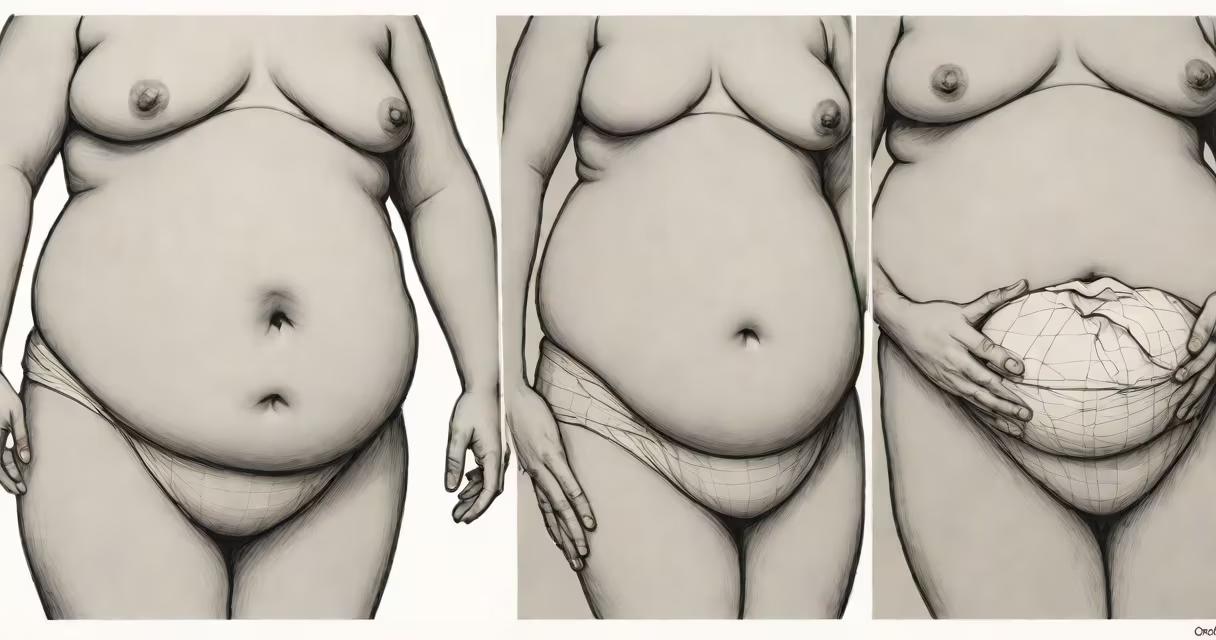
A protruding belly can result from bloating, excess fat, or both. Bloating occurs when gas or fluid temporarily distends the abdomen, while fat accumulation happens when calories exceed energy needs over time.
Your abdomen can protrude due to two distinct mechanisms:
| Type | Cause | Duration |
|---|---|---|
| Visceral fat | Diet, genetics, sedentary lifestyle | Long-term |
| Subcutaneous fat | Same as visceral fat | Long-term |
| Bloating | Food intolerances, constipation, swallowing air | Short-term |
Many people assume a protruding belly is always due to fat. However, bloating accounts for many cases of sudden abdominal distension. Unlike fat, bloating often resolves within hours or days.
Bloating typically feels tight and pressure-like, while fat accumulation creates a firmer, more constant bulge. A common test is pressing gently on the abdomen: bloating may feel soft and hollow, whereas fat feels denser.
For example, if your belly sticks out more after a meal but returns to normal by the next morning, bloating is likely the cause. Persistent protrusion suggests fat accumulation.
Similarly, sudden unexplained weight gain or a rapidly enlarging belly may require medical evaluation.
For bloating, identify trigger foods (common culprits include beans, dairy, and carbonated drinks) and adjust your diet accordingly. Increasing fiber intake and staying hydrated can also help regulate digestion.
To reduce fat, focus on a balanced diet and regular exercise. Core-strengthening exercises like planks and leg raises can improve posture and muscle tone, making the belly appear flatter.
I once helped a friend distinguish between bloating and fat by tracking their meals and symptoms for a week. They noticed their belly protruded most after eating certain foods, confirming bloating as the primary issue.