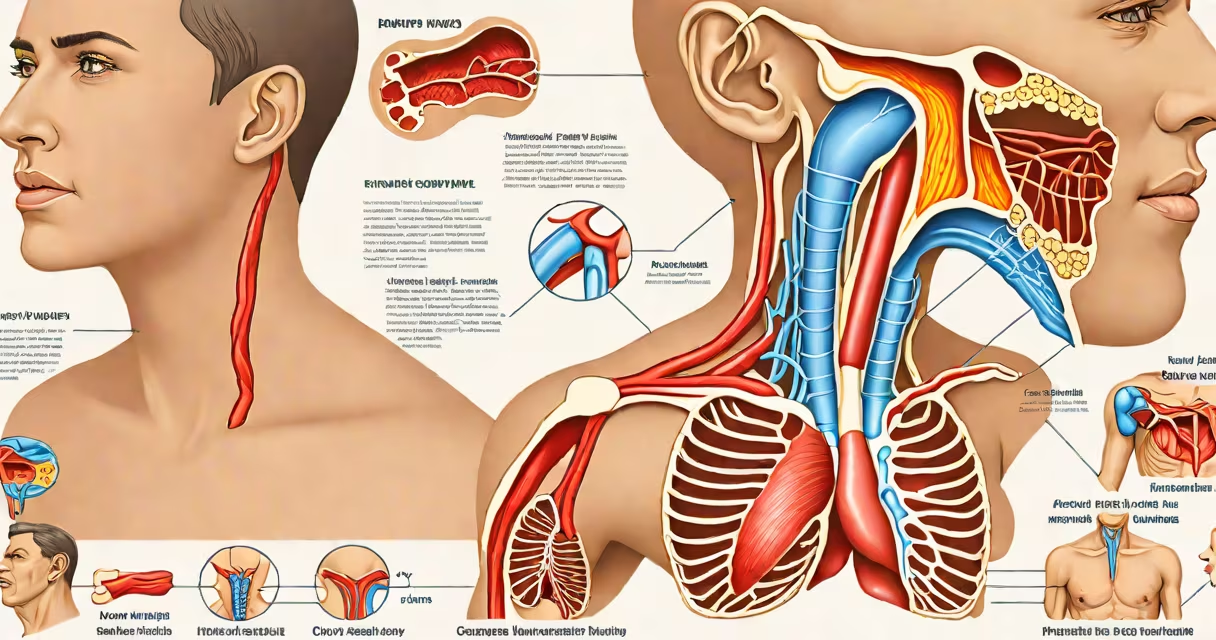
Throat and chest pain often occur together due to shared nerve pathways and nearby anatomical structures. Common causes include infections, acid reflux, muscle strain, or anxiety.
Nerves in your throat and chest share connections, so irritation in one area can cause pain in both. The vagus nerve, which runs through your neck and chest, can transmit pain signals from multiple sources.
| Type | Common Causes | Duration |
|---|---|---|
| Infections | Strep throat, cold viruses, flu | 3-10 days |
| Acid Reflux | GERD, hiatal hernia | Minutes to hours |
| Muscle Strain | Overuse, poor posture | Days to weeks |
| Anxiety | Stress, panic attacks | Minutes to hours |
Consult a doctor if pain persists beyond a week, worsens suddenly, or occurs with difficulty breathing, swallowing, or chest pressure. These could indicate serious conditions like heart attack or pneumonia.
I once experienced persistent throat and chest pain that turned out to be severe acid reflux. After adjusting my diet and taking medication, symptoms resolved within days.
Many people assume chest pain always signals a heart problem. However, only about 15% of chest pain cases are cardiac-related, according to the American Heart Association. Non-cardiac causes are far more common.
Another misconception is that throat pain only comes from infections. While infections are common, other causes include allergies, irritants, or even vocal strain from excessive talking or singing.
For infection-related pain, rest and hydration help. Gargling warm salt water can ease throat discomfort. For acid reflux, avoid trigger foods like spicy or fatty meals, and don't lie down immediately after eating.
If muscle strain is the cause, gentle stretching and proper posture can help. For anxiety-related pain, relaxation techniques like deep breathing may provide relief.