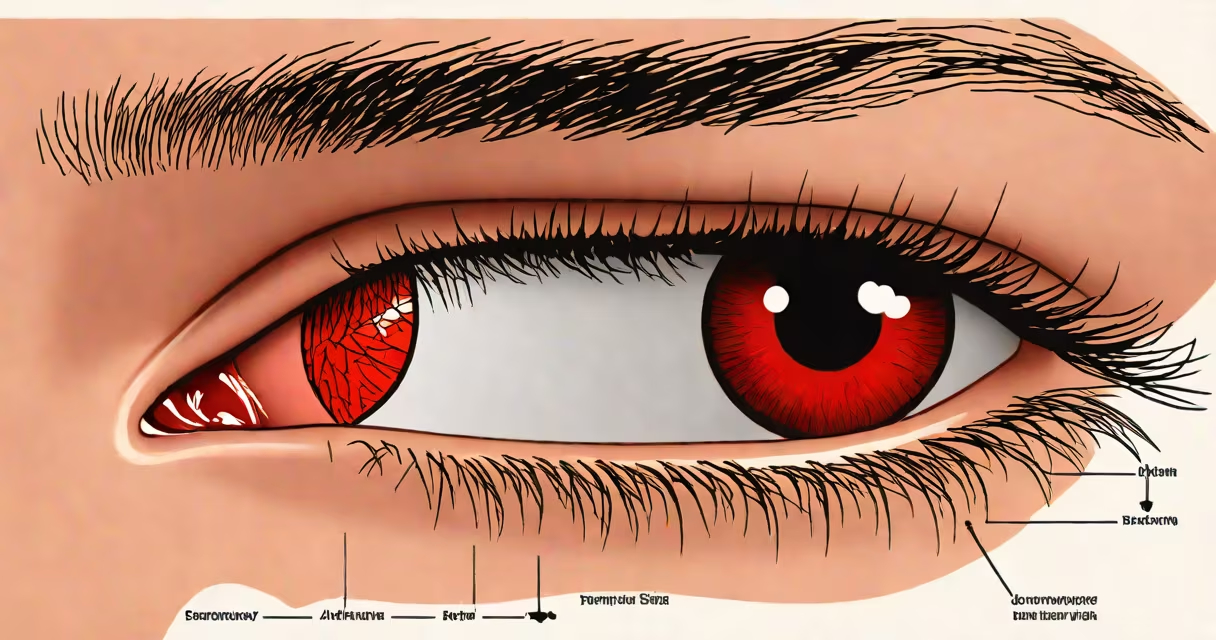
A stye is a red, painful bump on the eyelid caused by a bacterial infection in an oil gland. The itchiness comes from inflammation and irritation as your body fights the infection.
Styes develop when bacteria, usually Staphylococcus aureus, infect the glands along the eyelids. These glands produce oils that keep your eyes moist. When blocked, they become inflamed, leading to swelling, redness, and itching. The infection causes your immune system to react, which triggers the itchy sensation.
| Type | Location | Key Feature |
|---|---|---|
| External stye | Outside the eyelid | More common, forms at the base of an eyelash |
| Internal stye | Inside the eyelid | Less common, deeper infection within the oil gland |
The itching happens because your body releases histamines to fight the infection. Histamines cause blood vessels to swell, increasing pressure and irritation. Scratching makes it worse by introducing more bacteria and causing further inflammation.
Many people think styes are caused by poor hygiene or stress, but they're primarily due to bacterial infections. While stress can weaken your immune system, making you more susceptible, it's not the direct cause.
To relieve itching, apply a warm compress for 10-15 minutes, 3-4 times a day. This helps drain the stye and reduce swelling. Avoid touching or squeezing it, as this can spread the infection. Over-the-counter pain relievers like ibuprofen can help with discomfort. If the stye persists beyond a week, see a doctor for antibiotic ointment or oral medication.
I once had a stye that wouldn't go away for nearly two weeks. A warm compress and gentle cleaning with mild soap helped it finally drain. Since then, I've kept my hands away from my face to avoid spreading bacteria.
If you're experiencing persistent itching or multiple styes, consult a doctor to rule out conditions like blepharitis or rosacea, which can cause recurring styes.