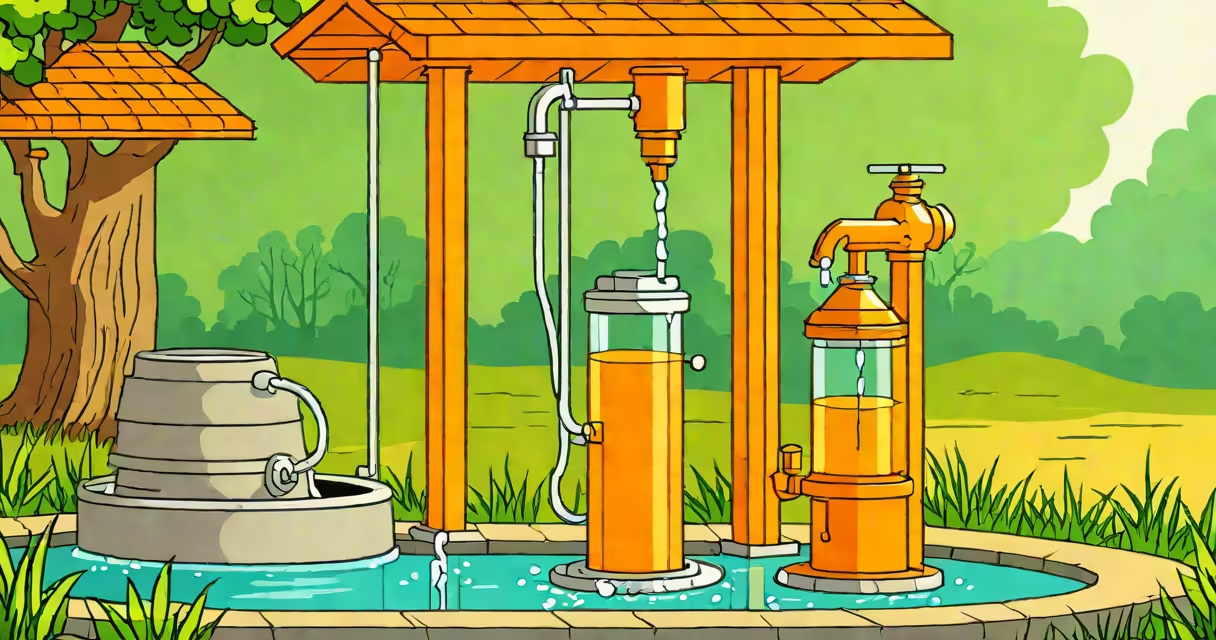
Orange well water results from dissolved iron, manganese, or sediment in your water supply. These minerals leach into groundwater from surrounding rocks and soil, turning your water a reddish-brown color.
When groundwater flows through iron-rich rock formations, it dissolves iron particles. This iron then oxidizes when exposed to air or chlorine, forming rust-colored particles that make your water look orange. The same process happens with manganese, though it typically produces a darker brown tint.
The most common reasons for orange well water are:
To confirm the cause, test your water using a home kit or send samples to a certified lab. Common treatments include:
| Treatment Method | Effectiveness | Cost |
|---|---|---|
| Water softener | Removes dissolved iron and manganese | $$$ |
| Oxidation filter | Converts dissolved iron into insoluble particles for filtration | $$ |
| Sediment filter | Removes sand, silt, and other particles | $ |
For example, a homeowner in a rural area with known iron deposits might install an oxidation filter to convert dissolved iron into particles that can be filtered out.
Many people assume orange water is always due to rust or iron bacteria. However, sediment from recent heavy rainfall or flooding can also cause discoloration. Another mistake is using a standard water filter that doesn't address dissolved iron or manganese.
I once helped a neighbor troubleshoot their orange well water. They had replaced their pipes, assuming rust was the issue. Testing revealed high levels of dissolved iron, which required an oxidation filter rather than a sediment filter.