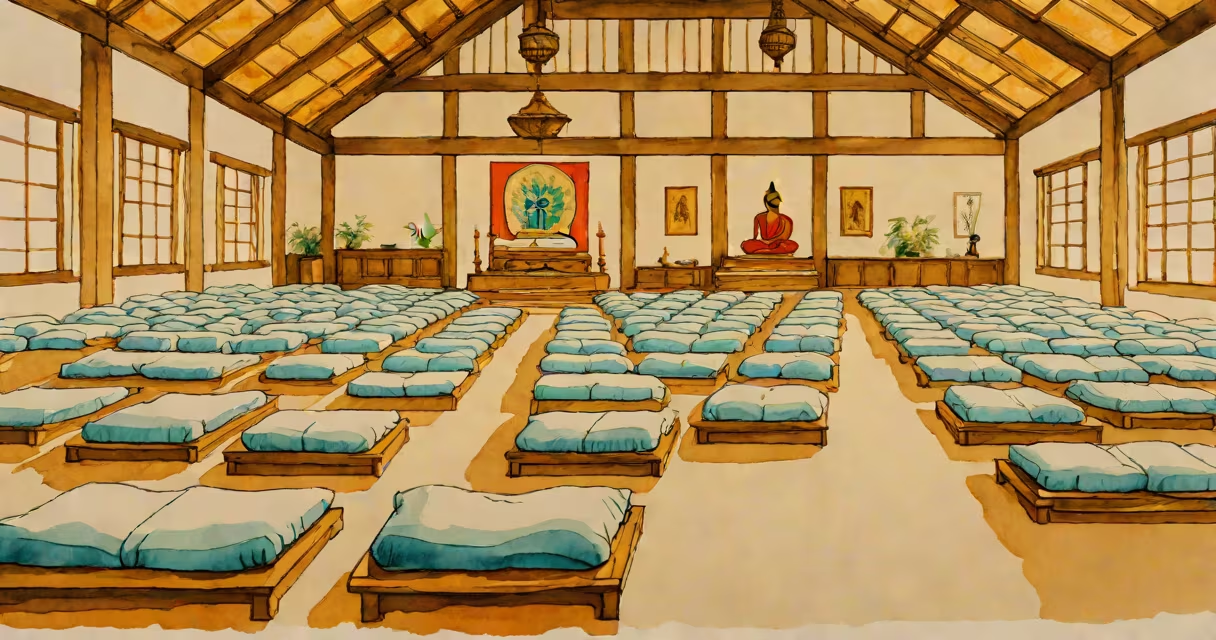
The Ananda Dharma Center is a spiritual organization teaching Hindu meditation, yoga, and service practices based on the teachings of Paramhansa Yogananda and Swami Kriyananda.
The center's practices include daily meditation, group chanting, and community service. Yoga classes focus on physical postures, breath control, and ethical principles. The center also offers spiritual retreats and workshops on topics like stress management and relationships.
Ananda Dharma Centers operate worldwide, with locations in the United States, Europe, and India. People attend for personal spiritual growth, stress relief, and to connect with a supportive community. The centers often host public events, such as free meditation classes and lectures on Hindu philosophy.
Some confuse the Ananda Dharma Center with other yoga or meditation schools. Unlike commercial yoga studios, Ananda centers focus on spiritual development through a structured path of meditation and service. Another misconception is that the center requires members to convert to Hinduism. In reality, it welcomes people of all faiths who seek inner peace and self-realization.
I visited an Ananda Dharma Center during a retreat in Northern California. The atmosphere was calm and welcoming, with participants of all ages and backgrounds. The daily schedule included meditation, yoga, and group discussions on spiritual topics. The most memorable part was the evening chanting session, which created a sense of unity and peace among the attendees.
During a weekend retreat at an Ananda Dharma Center, participants follow a structured schedule:
This schedule balances physical, mental, and spiritual practices to promote complete well-being.
Many people assume that the Ananda Dharma Center is exclusively for advanced practitioners. However, the center welcomes beginners and offers introductory courses to help newcomers start their spiritual process. The center's inclusive approach makes it accessible to people at all levels of experience.
According to the Ananda Sangha website, the centers follow a non-profit model, relying on donations and volunteer work to support their operations. This helps spiritual teachings remain accessible to everyone, regardless of financial status.