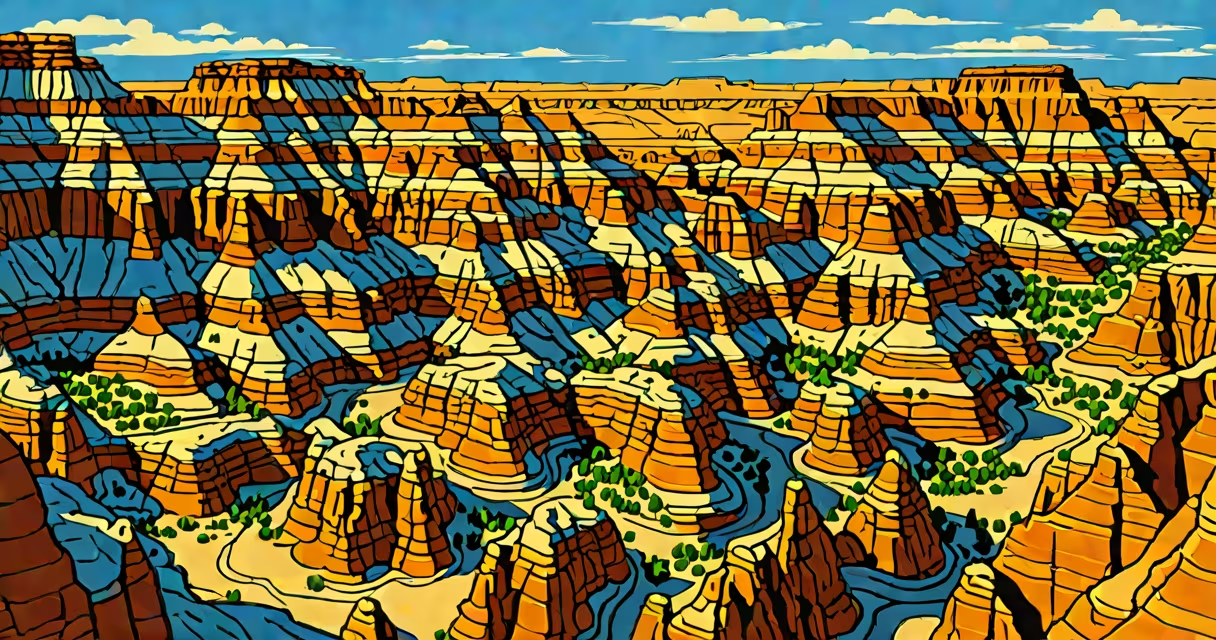
Badlands National Park South Dakota images showcase striking geological formations created by erosion over 500,000 years. The park's rugged beauty includes layered sedimentary rocks, deep canyons, and towering spires.
The park's distinctive field began forming 69 million years ago during the Late Cretaceous period. Sediments deposited by ancient rivers and seas hardened into rock layers. Over time, wind and water erosion carved the soft clay and sandstone into the dramatic formations seen today.
Erosion continues at a rate of about 0.5 inches per year, according to the National Park Service. This ongoing process creates new features while altering existing ones, making each visit potentially different from the last.
The park contains several distinct landform types:
| Formation Type | Characteristics | Notable Examples |
|---|---|---|
| Tablelands | Flat-topped mesas surrounded by steep cliffs | Conata Creek Table |
| Pinnacles | Sharp, pointed formations | Spire Rock |
| Canyons | Deep, narrow valleys | Red Valley Overlook |
| Buttes | Isolated hills with flat tops | Big Badlands Overlook |
The park supports diverse wildlife adapted to its harsh environment. Bison, pronghorn, and bighorn sheep roam the prairies, while black-footed ferrets and swift foxes inhabit the grasslands. Over 300 bird species have been recorded, including golden eagles and wild turkeys.
I once spotted a family of bison near the Fossil Exhibit Trail. Their shaggy coats stood out against the pale rock formations, creating a striking contrast that my camera struggled to capture accurately.
For the best images, visit during the golden hours of sunrise or sunset when light enhances the colors of the formations. Early morning light creates dramatic shadows that accentuate the geological details.
Photographers often overlook the park's winter season, which offers unique opportunities. Snow highlights the rock formations' textures, and fewer visitors mean better access to popular viewpoints.
When photographing wildlife, maintain a safe distance. The park recommends using a telephoto lens to capture animals without disturbing them.
Another misconception is that the park is entirely barren. In reality, it supports different plant life, including prairie grasses, cacti, and wildflowers that bloom in spring and summer.
The park protects over 64,000 acres of fossil-rich deposits. Paleontologists have discovered remains of ancient mammals, reptiles, and fish dating back to the Oligocene epoch. These fossils provide valuable insights into prehistoric ecosystems.
Visitors can see fossil exhibits along the park's trails, including the Fossil Preparation Lab where scientists clean and study specimens. The National Park Service works to balance access with preservation, ensuring these resources remain available for future generations.