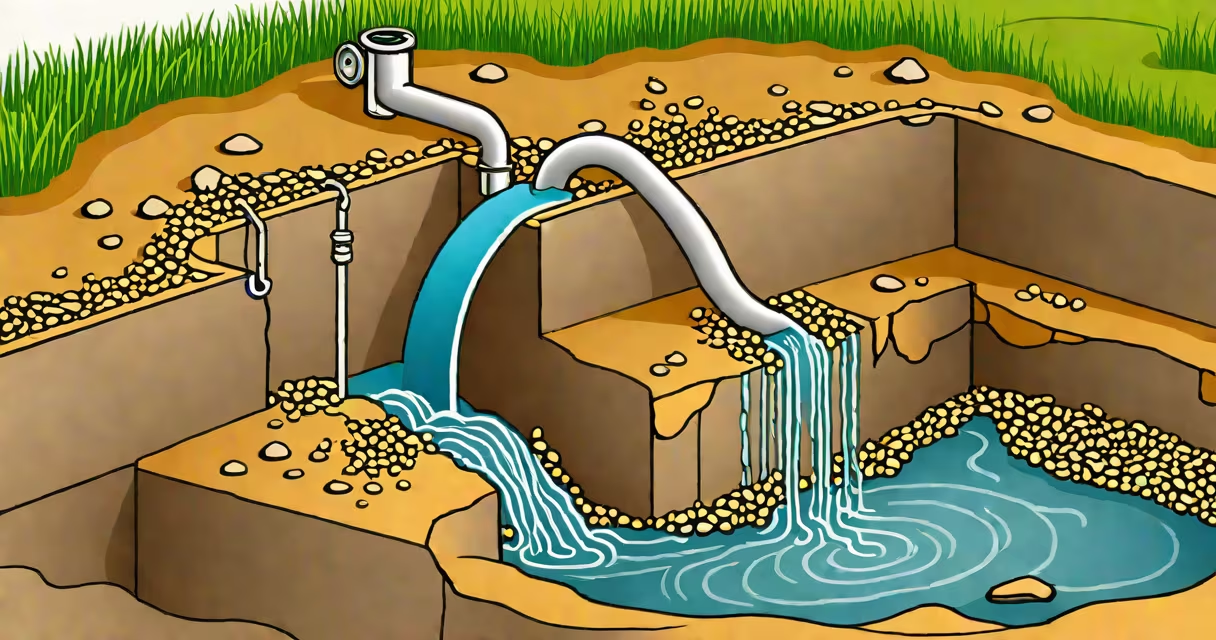
Yes, French drains can get clogged, though they're designed to resist blockages better than standard drainage systems. Clogs typically form when sediment, debris, or roots invade the perforated pipe or surrounding gravel.
A French drain is a trench filled with gravel containing a perforated pipe. Water enters through the gravel, flows into the pipe, and exits away from the problem area. The gravel acts as a filter, slowing water flow and catching debris before it reaches the pipe.
| Clog Type | Cause | Solution |
|---|---|---|
| Sediment buildup | Fine soil particles entering the pipe over time | Regular flushing with high-pressure water |
| Root invasion | Tree roots seeking moisture penetrate the pipe | Replace damaged sections and install root barriers |
| Debris accumulation | Leaves, twigs, or other large debris blocking flow | Manual removal and adding a filter fabric layer |
Most clogs are preventable. Installing a non-woven geotextile fabric around the pipe and gravel prevents debris from entering while allowing water through. For areas with heavy root systems, choose a drain pipe wrapped in a root-resistant membrane.
I once installed a French drain in a clay-heavy yard. Without fabric, fine particles clogged the pipe within months. After reinstalling with fabric, it functioned perfectly for years.
Some assume French drains never clog, but neglecting maintenance or poor installation invites problems. Others think they require frequent digging for cleaning, but well-built drains rarely need intervention for decades.
According to the Home Depot, proper slope (at least 1% grade) is critical. A flat drain collects standing water, increasing clog risks.
If flushing doesn't clear the clog or roots have damaged the pipe, consult a professional. They use cameras to inspect pipes and specialized tools to remove obstructions without extensive digging.